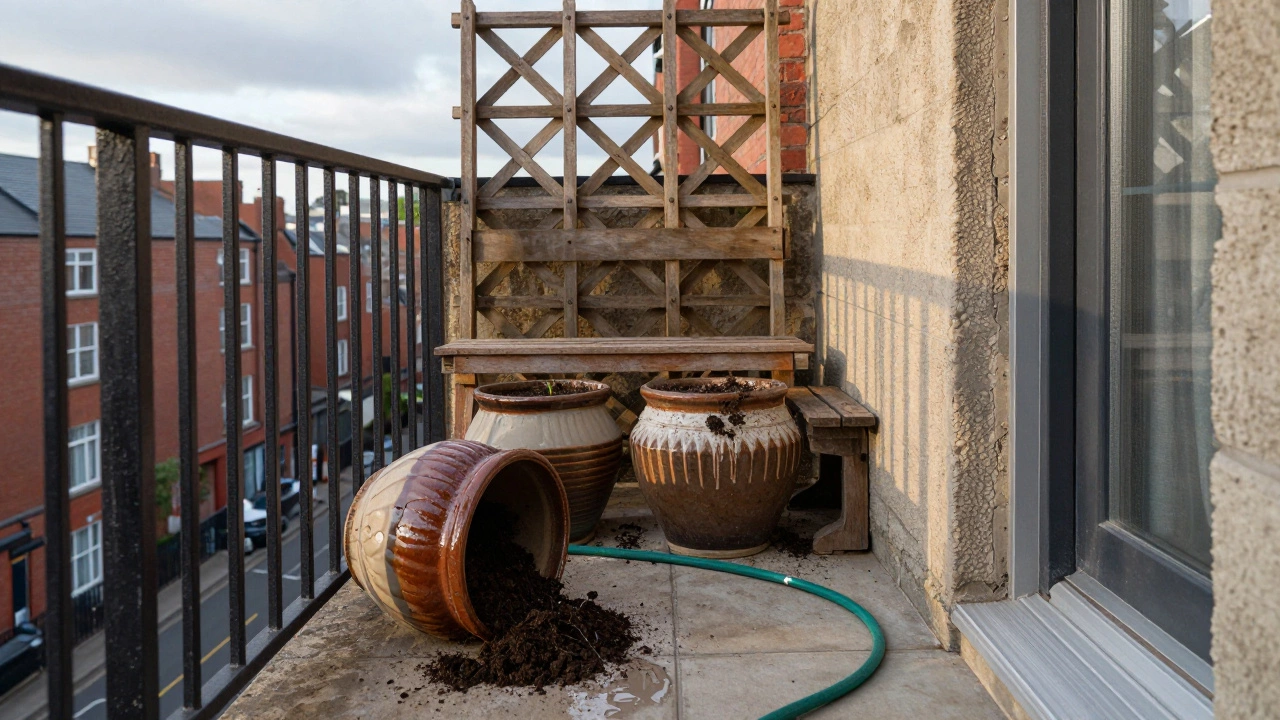
Balcony Gardening Disadvantages: Real Problems and How to Fix Them
When you think of balcony gardening, growing plants on a small outdoor space in an urban home. Also known as container gardening, it's a smart way to grow food and greenery where land is scarce. But here’s the truth: not every plant thrives up there. Balcony gardening sounds perfect until you’re fighting wind-burned leaves, cracked pots, or plants that die because you forgot to water for two days. It’s not just about space—it’s about conditions you can’t control.
One big issue is soil quality, the medium that holds nutrients and water for container plants. In a balcony garden, you’re stuck with pots, and most potting mixes break down fast. They dry out in hours under the Indian sun, then turn into hard bricks after rain. Unlike ground soil, which breathes and regenerates, balcony soil gets exhausted quickly. Then there’s wind, a constant force that dries out leaves and topples unsecured containers. A light breeze on the ground is nothing. On a 10th-floor balcony? It’s a daily storm. Plants like tomatoes or peppers get battered, their stems thin out, and flowers drop before fruit even forms.
Watering is another nightmare. You can’t just leave a hose running. drip irrigation, a system that delivers water slowly to plant roots. Also known as micro-irrigation, it helps—but it clogs, leaks, or freezes in winter. And if you’re away for a weekend? Your plants are toast. Plus, balconies often have weight limits. Heavy clay pots, wet soil, and big water tanks can push you over the edge. And let’s not forget pests. Without natural predators like birds or frogs, aphids and spider mites take over fast.
Some people think balcony gardening means you can grow anything. But the truth? You’re limited. Deep-rooted veggies like carrots or potatoes? Forget it. Tall plants like corn? They’ll snap in the wind. Even herbs can struggle if they don’t get enough sun. Your balcony might look full of green, but half the plants are barely surviving. And then there’s the cost—special pots, soil mixes, fertilizers, and tools add up. It’s not the cheap hobby it’s sold as.
But here’s the good part: knowing the problems means you can fix them. You don’t need to quit. You just need to adjust. Pick the right plants. Use lighter pots. Add windbreaks. Set up smart watering. Test your soil. The posts below show you exactly what fails—and what works—in real Indian balconies. From which veggies refuse to grow to how one gardener saved her entire setup with a $5 shade cloth, you’ll find fixes that actually work. No fluff. No theory. Just what happens when you grow food in a city apartment—and how to make it stick.
Balcony gardening offers green space in cities, but it comes with real challenges: wind, weight limits, constant watering, poor soil, and pests. Learn the hidden downsides and how to work with them - not against them.
Continue reading...