Balcony Load Capacity Calculator
Your balcony has a typical load limit of 150-250 kg per square metre. This calculator helps you determine if your planned garden setup is safe.
People love balcony gardens. They turn concrete corners into green escapes, grow herbs within reach of the kitchen, and make city living feel a little more alive. But if you’ve ever spent a windy afternoon chasing a pot that flew off your railing, or watched your tomatoes wilt despite daily watering, you know it’s not all sunshine and basil. Balcony gardening comes with real, everyday problems - and most guides skip them.
Weight Limits Can Destroy Your Plants Before They Start
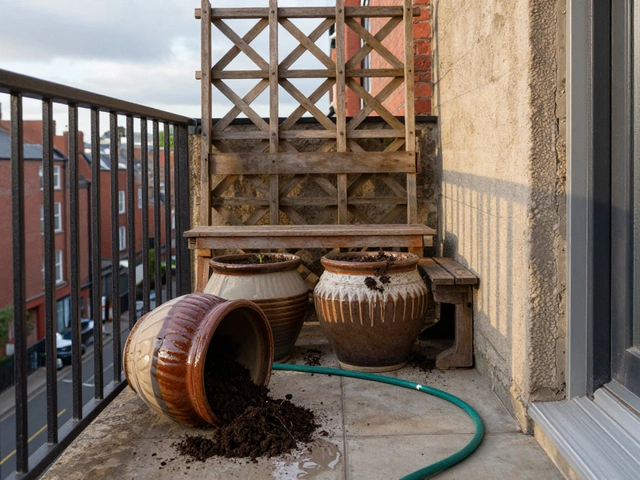
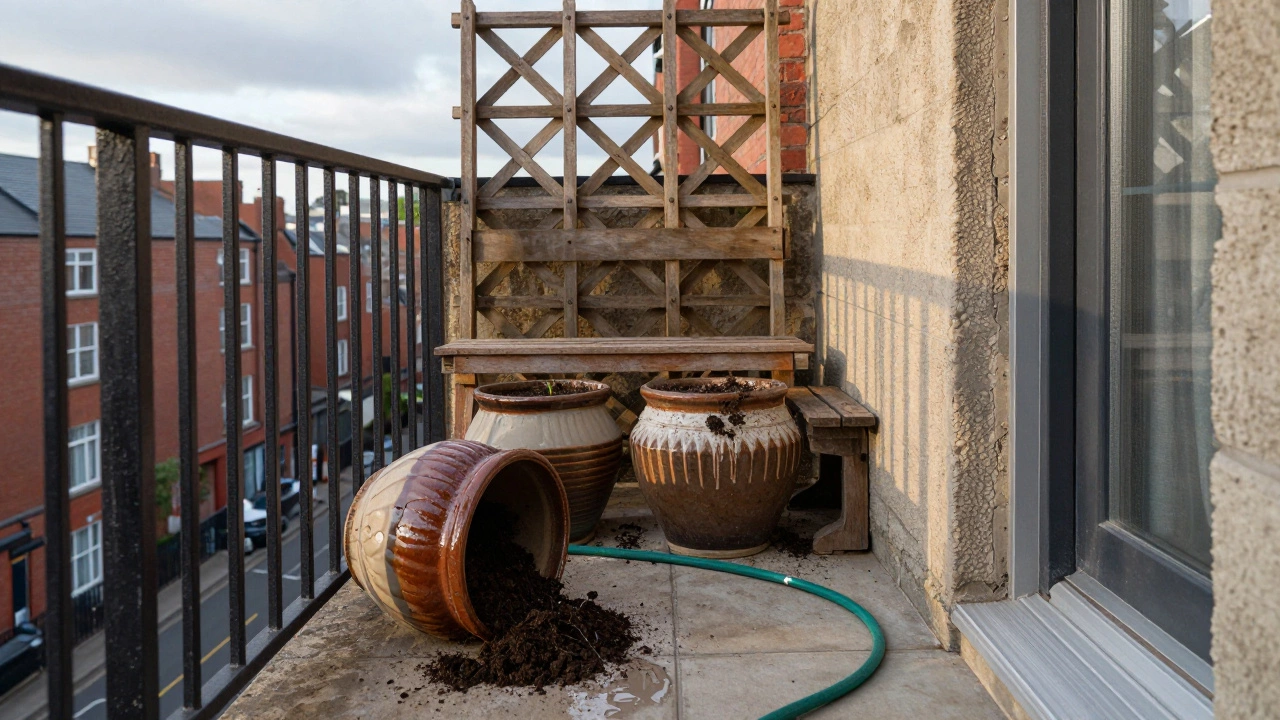
Your balcony wasn’t built to hold 20 heavy planters, a soil compost bin, and a water barrel. Most residential balconies in the UK have a load limit of 150-250 kg per square metre. That sounds like a lot - until you do the math. One 50-litre pot filled with wet potting mix weighs about 40 kg. Add two more, plus a wooden trellis, a small bench, and a drip irrigation tank, and you’re already at 180 kg. Do that across 2 square metres? You’re pushing the limit. Many older buildings, especially in Manchester’s terraced housing, have balconies that weren’t designed for modern gardening trends. Ignoring this can lead to structural damage, or worse - your landlord asking you to remove everything. Always check your lease or building regulations before buying large planters. Lightweight options like fabric pots or hollow plastic containers are safer, but even those add up.
Wind Turns Your Garden Into a War Zone
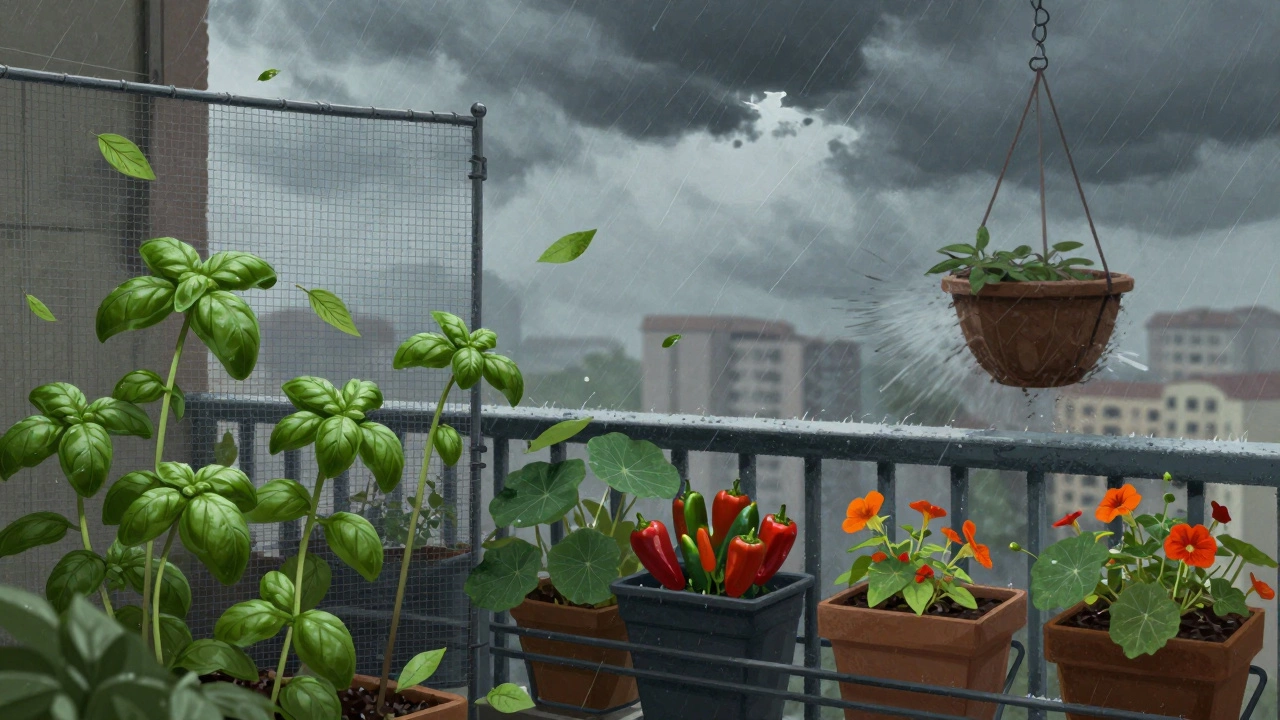
Manchester isn’t known for calm afternoons. If you’re on the third floor or higher, wind is your constant enemy. It doesn’t just blow leaves around - it snaps stems, dries out soil in hours, and flips lightweight pots sideways. I’ve seen basil plants reduced to bare stalks after one gusty Tuesday. Tall plants like tomatoes or sunflowers are especially vulnerable. Even staking them doesn’t always help - the wind finds a way to twist the stake and snap the plant at the base. The fix? Go low and dense. Choose compact varieties: dwarf peppers, bush beans, trailing nasturtiums. Use windbreaks like trellises with climbing vines or even a simple mesh screen. Avoid placing pots right at the edge. Keep them 30-40 cm back from the railing. Wind doesn’t hit hard until it’s right at the edge.
Watering Is a Full-Time Job
Soil in containers dries out faster than ground soil - sometimes in under 24 hours during summer. Unlike in a yard where rain soaks deep and roots spread wide, balcony plants are trapped in small volumes of soil. A 10-litre pot can go from moist to crispy in a single hot afternoon. Daily watering isn’t optional - it’s mandatory. But here’s the catch: you can’t just dump water on top. Without proper drainage, water pools at the bottom, rotting roots. Too much drainage, and you’re soaking your neighbour’s balcony below. Many landlords ban watering after 8 PM to prevent leaks. That means you’re racing the clock. Self-watering planters help, but they’re not magic. You still need to refill them every 3-5 days. And if you go away for a weekend? Your plants die. A drip irrigation system with a timer is the only real solution - but installing one on a rented balcony? That’s a whole other battle with your landlord.
Space Is Always Too Small - Even When You Think It’s Enough
You buy three big pots. You think you’ve got room. Then you try to add a second tier with hanging baskets. Then a small shelf for seedlings. Then a compost bin for kitchen scraps. Suddenly, you can’t walk to the railing without knocking over a pot. Balconies are deceptive. What looks like plenty of space turns into a cluttered obstacle course. And you can’t just plant deeper - roots need horizontal room too. Root vegetables like carrots or parsnips need at least 30 cm of depth. Most standard planters are only 20-25 cm. You end up with stunted, misshapen crops. The solution? Vertical gardening. Use wall-mounted pockets, tiered plant stands, or railing planters. But even then, you’re trading space for complexity. You’ll spend more time rearranging pots than actually gardening.
Soil Quality Is Out of Your Control
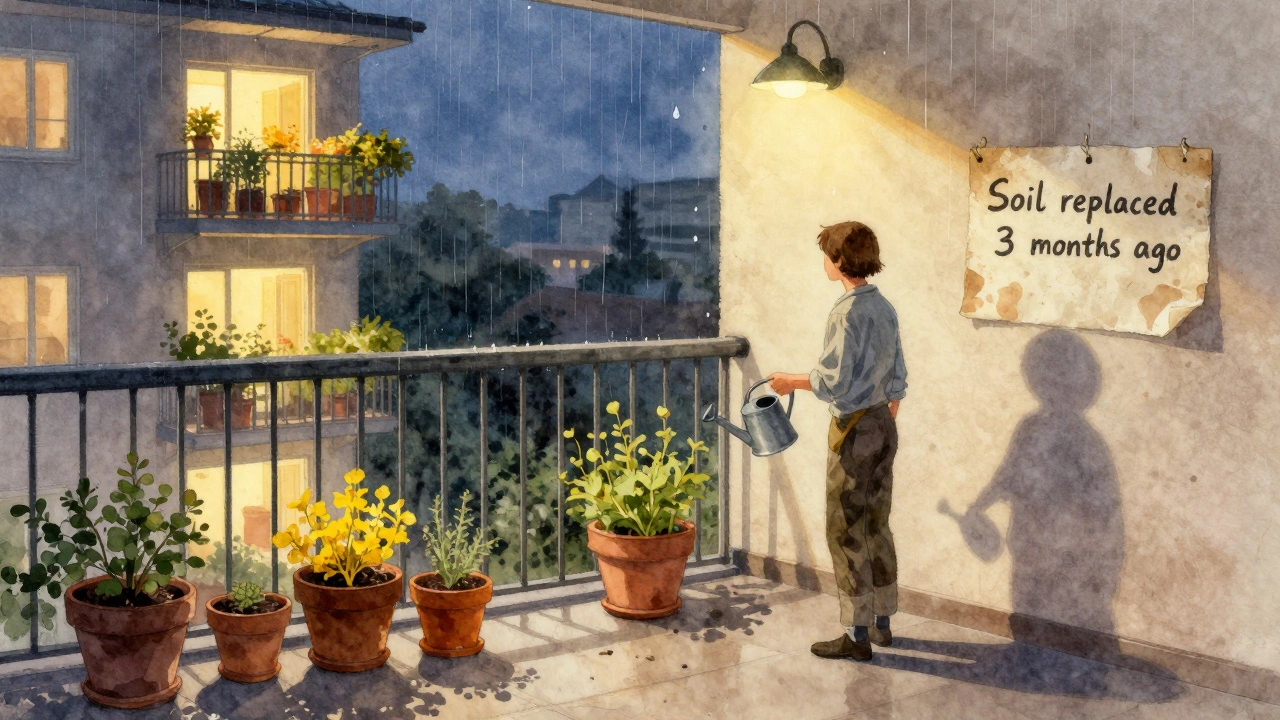
Unlike in a backyard where you can dig down and amend the earth, balcony soil is whatever you buy in a bag. Most bagged potting mixes are designed for short-term use. After 4-6 months, they break down, compact, and lose nutrients. You can’t easily add compost or manure without risking leaks or odours. And if you reuse old soil? You risk pests, diseases, and salt buildup from fertilisers. Many balcony gardeners don’t realise their soil is dead until their plants turn yellow and stop growing. Replacing soil every season is expensive - and heavy. One 50-litre bag of premium compost mix costs £15-£20 and weighs over 25 kg. Carrying that up three flights of stairs? It’s a workout. The best fix is to use high-quality, slow-release fertiliser pellets mixed into fresh soil each spring. But that’s an ongoing cost - not a one-time setup.
Pests and Diseases Spread Faster Than You Think
On the ground, natural predators like ladybugs and birds help keep pests in check. On a balcony? You’re isolated. Aphids don’t care. They’ll crawl from your neighbour’s geraniums to yours through the air or via your watering can. Fungal diseases like powdery mildew thrive in crowded, poorly ventilated spaces. One infected plant can wipe out your entire collection in days. And you can’t just spray chemicals - you’re above a shared space. Neighbours complain about drips, smells, and residue. Organic sprays like neem oil work, but they need consistent, careful application. You can’t just spray once and forget it. Regular inspection is non-negotiable. Check undersides of leaves weekly. Remove dead foliage immediately. Quarantine new plants for 7-10 days before adding them to your collection.
Seasons Don’t Wait for You
In a garden, you can move plants around, shade them with trees, or mulch the soil to protect roots. On a balcony? You’re stuck. A sudden frost in October can kill tender herbs overnight. Summer heat reflects off windows and brick walls, turning your balcony into an oven. You can’t easily move heavy pots indoors without help. Many people lose their entire summer crop because they didn’t realise their balcony gets 8 hours of direct afternoon sun - far too much for lettuce or spinach. The answer? Know your microclimate. Track sun patterns for a week. Note which spots get shade in the morning vs. afternoon. Use shade cloth in summer. Move pots to sheltered corners before frost. But that means planning ahead - and having the strength to lift pots when you’re tired.
It’s Lonely Work
Most gardening communities are outdoors - parks, allotments, backyards. Balcony gardeners are often alone. You don’t get the casual advice from neighbours, the shared tools, or the swap days. You’re stuck Googling how to fix yellow leaves at 11 PM. Online forums help, but they’re not the same as having someone show you how to prune a tomato plant in person. And when things go wrong? You don’t have a community to turn to. You’re the only one responsible. That isolation can make you quit - even if you love the plants.
Is It Worth It?
Yes - if you’re realistic. Balcony gardening isn’t about growing a whole vegetable patch. It’s about growing a few herbs, a couple of chillies, some flowers that make you smile. It’s about the smell of mint after rain, or the pride of picking your own basil. The disadvantages aren’t deal-breakers - they’re just part of the job. Accept them. Plan for them. Choose the right plants. Use the right pots. Water on schedule. And don’t try to turn your balcony into a greenhouse. Keep it simple. Keep it light. Keep it small. That’s how you win.
Can I grow vegetables on my balcony in the UK?
Yes, but only certain types. Compact varieties like bush beans, dwarf tomatoes, chillies, lettuce, radishes, and herbs like basil and parsley work well. Avoid large root crops like carrots or parsnips unless you use deep planters (at least 30 cm). Focus on plants that thrive in containers and don’t need deep soil.
How often should I water my balcony plants?
In spring and autumn, water every 2-3 days. In summer, especially during heatwaves, you may need to water daily - sometimes twice a day. Always check the top 2 cm of soil. If it’s dry, it’s time to water. Self-watering planters can extend this to every 4-5 days, but they still need refilling.
What’s the best soil for balcony gardening?
Use a high-quality potting mix with added perlite or vermiculite for drainage. Avoid garden soil - it compacts too easily in containers. Look for mixes labelled for containers or vegetables. Add slow-release fertiliser pellets at planting time. Replace the soil entirely every 12-18 months to prevent nutrient depletion and disease buildup.
Do I need permission to set up a balcony garden?
It depends on your lease or building rules. Many landlords restrict heavy planters, irrigation systems, or structures like trellises. Always check your tenancy agreement. If you’re renting, avoid permanent fixtures. Use lightweight pots, removable hanging systems, and avoid drilling into railings or walls.
Why are my balcony plants dying even though I water them?
Overwatering is the most common cause. Poor drainage leads to root rot. Check if your pots have holes. Are you watering too often? Are the plants getting too much sun or wind? Yellow leaves, wilting, and a foul smell from the soil are signs of root rot. Let the soil dry out between waterings, and ensure pots drain properly.
Can I compost on my balcony?
Yes, but only with a sealed, odour-free system like a bokashi bin or electric composter. Traditional compost piles attract pests and smell - not allowed on most balconies. Bokashi ferments food waste in a sealed bucket and produces liquid fertiliser you can dilute and use on plants. It’s compact, quiet, and doesn’t attract flies.
What plants survive best on windy balconies?
Choose low, tough plants: thyme, oregano, succulents, dwarf marigolds, nasturtiums, and compact peppers. Avoid tall or floppy plants like sunflowers, tall zinnias, or standard tomatoes. Use windbreaks like trellises with climbing plants or mesh screens to reduce wind speed near your pots.
If you’re serious about balcony gardening, start small. One pot of herbs. One hanging basket. Learn how your space behaves - the sun, the wind, the water flow. Build from there. Don’t try to do everything at once. The best balcony gardens aren’t the biggest - they’re the ones that last.