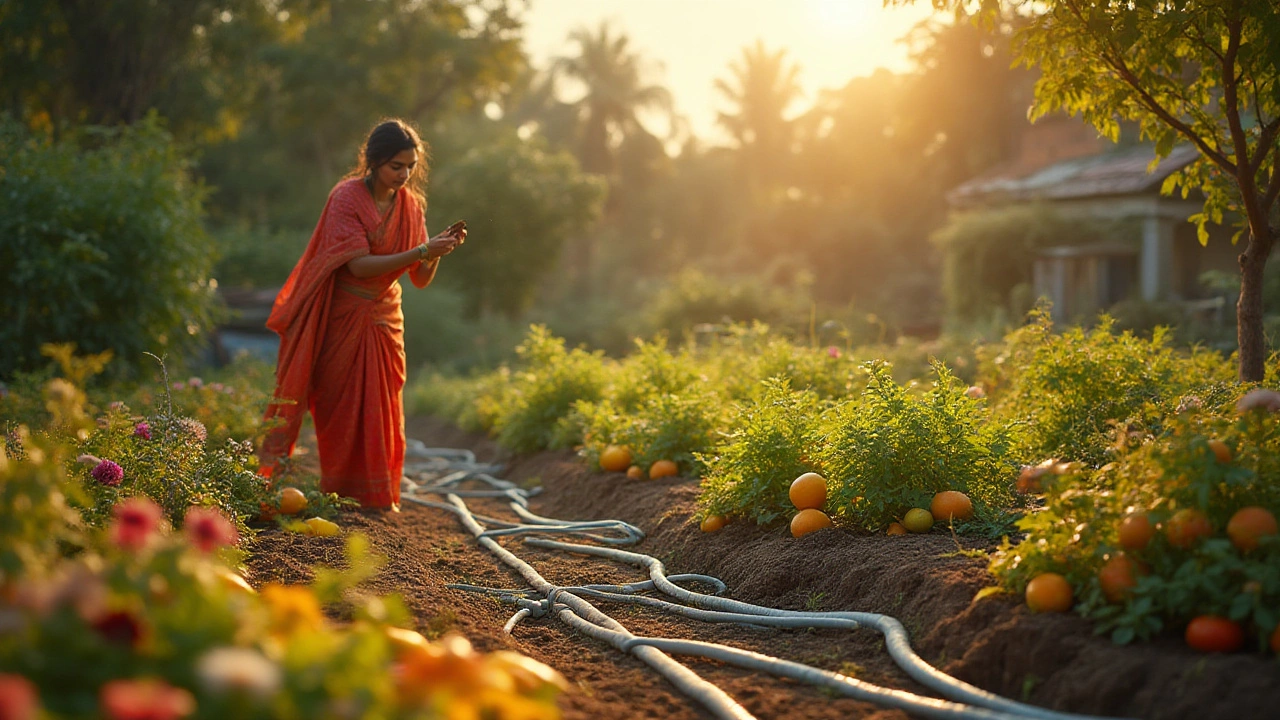
Buried Drip Lines: How to Install and Maintain Them for Better Water Efficiency
When you install buried drip lines, a type of subsurface irrigation system that delivers water directly to plant roots through tubes hidden beneath the soil. Also known as subsurface drip irrigation, it’s one of the most efficient ways to water gardens without wasting a single drop. Unlike surface drip lines that dry out, get clogged, or get stepped on, buried drip lines stay protected, last longer, and deliver water exactly where plants need it—deep in the root zone. This isn’t just theory; it’s what smart gardeners in India are using to cut water use by 40% and still grow healthy veggies, flowers, and fruit trees even in hot, dry months.
What makes buried drip lines work so well is how they connect to other key gardening tools and practices. For example, they work best with mulch, a layer of organic material like wood chips or straw that covers soil to hold moisture and block weeds. Together, mulch and buried lines reduce evaporation and keep soil cool. They also pair perfectly with soaker hoses, a porous tubing system that slowly leaks water along its length—though buried drip lines are more precise and last longer. And if you’re serious about saving water, these systems work hand-in-hand with rainwater harvesting, collecting and storing rain for later use in your garden. You don’t need fancy tech—just a barrel, a filter, and a little planning.
But here’s the catch: buried drip lines aren’t set-and-forget. If you bury them wrong—too shallow, without proper filters, or without a flush valve—you’ll end up with clogged emitters or uneven watering. That’s why the posts below show real fixes: how to test your system for leaks, how to choose the right emitter spacing for different plants, and how to clean or replace lines without digging up your whole garden. You’ll also find comparisons between drippers and emitters, tips on zoning your system for different plant types, and why running your drip system every day is usually a mistake. Whether you’re growing tomatoes on a balcony, mango trees in your yard, or herbs in a small terrace garden, buried drip lines can cut your water bills and make your plants happier. The key isn’t just installing them—it’s understanding how to make them work for your soil, your climate, and your plants. What you’ll find here isn’t guesswork. It’s what works.