Drip Irrigation Disadvantages: What No One Tells You About Watering Your Garden
When you think of drip irrigation, a system that delivers water slowly and directly to plant roots to reduce waste. It’s often called the gold standard for water-efficient gardening. Also known as micro-irrigation, it’s sold as a miracle solution for busy gardeners and drought-prone areas. But here’s the truth: drip irrigation isn’t magic—it’s mechanical, and like any machine, it breaks, clogs, and misbehaves.
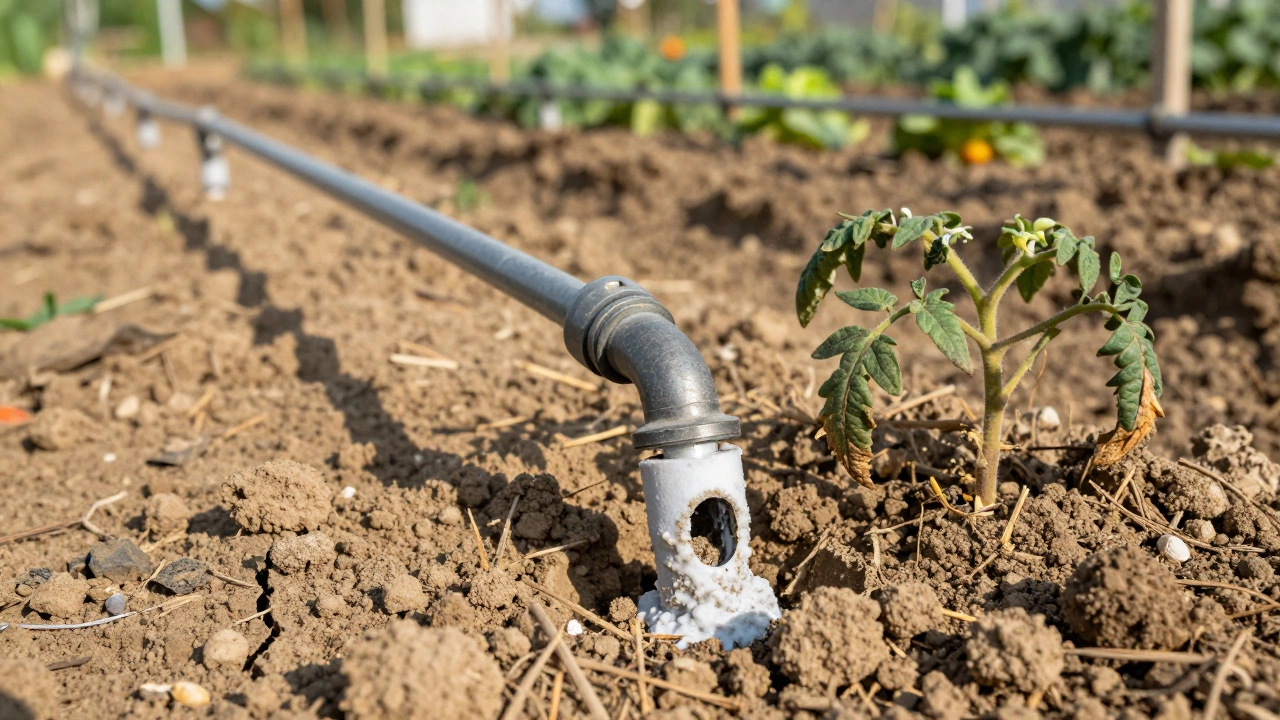
One of the biggest hidden problems is clogging, when tiny particles in water block the emitters. This isn’t rare—it happens in hard water areas, with poorly filtered sources, or even with organic fertilizers you think are safe. A single clogged dripper can starve a whole row of tomatoes. And fixing it? It’s not just turning a knob. You’re crawling on your knees, flushing lines, replacing parts, and praying the next one doesn’t plug up tomorrow. Then there’s the maintenance burden, the regular checks and cleaning required to keep the system running. Unlike sprinklers you forget about until summer, drip systems demand attention every few weeks. Roots grow into lines. Algae forms in dark tubing. Sunlight degrades plastic. If you’re not willing to do this, you’re not saving water—you’re just wasting time and money on a system that stops working.
Cost is another surprise. Sure, the initial setup looks cheap—hoses, emitters, a timer. But add filters, pressure regulators, backflow preventers, and replacement parts over three years? You’re spending close to what a smart sprinkler system costs. And if you live in a windy area like many Indian balconies, the water doesn’t even reach the soil—it evaporates before it lands. Plus, drip systems don’t work well for large, shallow-rooted plants like lettuce or cabbage. They’re designed for trees, vines, and deep-rooted veggies. If you’re growing a mixed garden, you’ll end up with two systems: one drip for your tomatoes, and a separate method for everything else.
And here’s something no sales video shows: drip irrigation makes you lazy about learning your soil. You set the timer, walk away, and assume your plants are happy. But soil isn’t a one-size-fits-all thing. Clay holds water. Sand drains fast. Mulch changes evaporation. If you don’t check the soil yourself, you might be drowning your basil while your chili plants beg for a drink. The best gardeners don’t rely on gadgets—they learn their land. Drip irrigation can help, but only if you’re still paying attention.
That’s why the posts below don’t just talk about drip irrigation—they expose its flaws. You’ll find real stories from gardeners who tried it, got frustrated, and found better ways. Some swapped to soaker hoses. Others switched to rainwater harvesting. A few just learned to water by hand and saved more water in the end. This isn’t about ditching drip irrigation—it’s about knowing when it’s the right tool, and when it’s just another thing to fix.
Drip irrigation saves water and reduces weeds, but it has real downsides: clogging, high maintenance, poor flexibility, and winter vulnerability. Know the drawbacks before you install one.
Continue reading...