Drip Irrigation Downsides: What No One Tells You About Watering Systems
When you think of drip irrigation, a system that delivers water slowly to plant roots through tubes and emitters. It's the go-to for water-wise gardeners, especially in dry places like India. But here’s the truth: drip systems aren’t magic—they come with real, annoying problems that most guides ignore. You might think it’s the perfect solution for your balcony or backyard, but if you don’t watch out, it can waste more water than it saves—or even kill your plants.
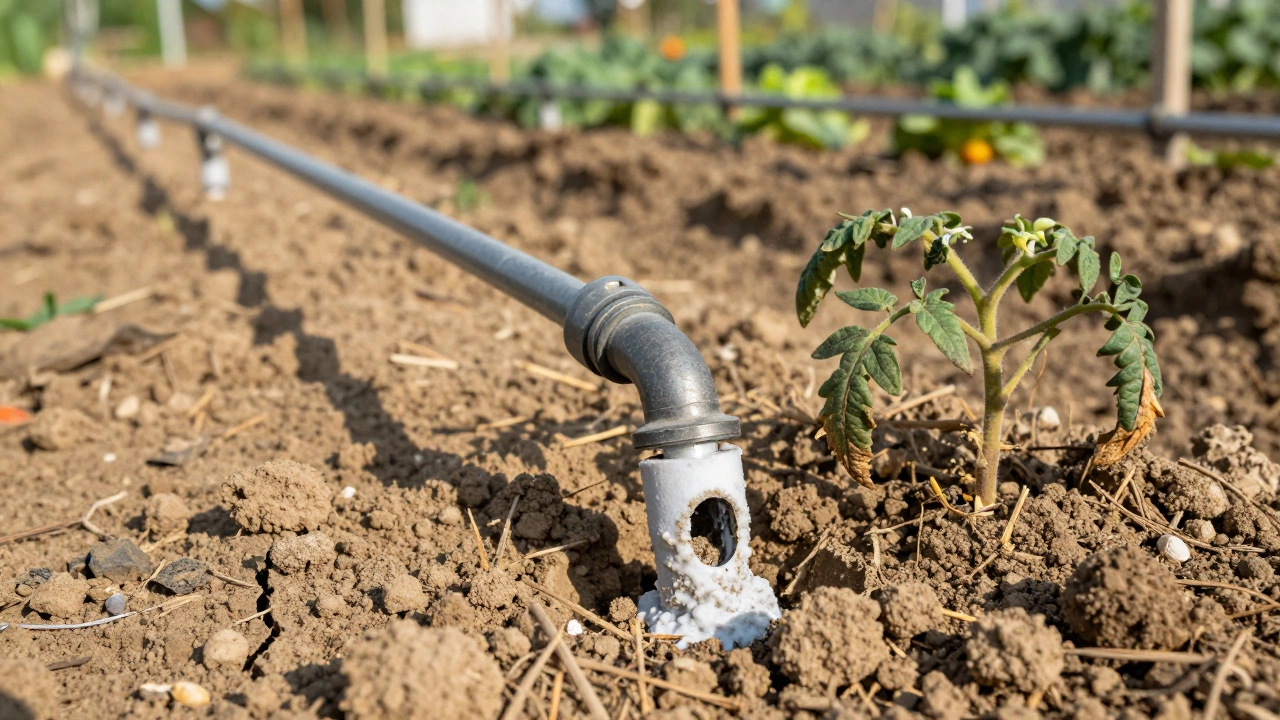
The biggest issue? clogging, when dirt, minerals, or algae block the tiny holes in drip lines. emitters are designed to release just a few drops per hour, so even a speck of sand can shut them down. I’ve seen gardeners spend hours cleaning lines only to find half their plants dry because one emitter got blocked. And it’s not just debris—hard water in many Indian towns leaves white mineral crusts inside tubes, especially if you’re not using filters. This isn’t a one-time fix. You need to flush the system monthly, check every emitter, and replace parts yearly. That’s not low maintenance—that’s a chore. Then there’s soil salinity, the slow buildup of salts around plant roots from constant, slow watering. salt accumulation happens because water evaporates but minerals stay behind. Over time, your soil turns toxic for plants, especially in pots or raised beds where drainage is poor. You won’t see it until your leaves turn brown and your veggies stop growing. By then, it’s too late.
Another hidden cost? setup complexity, the time and tools needed to design and install a proper drip system. drip networks aren’t plug-and-play. You need pressure regulators, filters, timers, and correct tubing layouts for each plant type. A poorly designed system gives some plants too much water and others none at all. If you’re on a balcony with limited space, running lines around pots, walls, and railings gets messy fast. And if a pipe breaks or a connection leaks, you’re digging through mulch and pots to find it. Plus, most people forget that drip systems don’t work well in windy areas. A gust can knock over tubes, dislodge emitters, or dry out the soil before water even reaches the roots. That’s why many urban gardeners end up switching to soaker hoses or hand-watering—because it’s simpler and more reliable.
And here’s something no one talks about: drip irrigation makes you lazy. You set it and forget it—until your plants start dying. Without checking soil moisture daily, you won’t know if the system is working or if your tomatoes are getting drowned while your basil is parched. It’s easy to assume the system is doing its job. It’s not. You still have to be the gardener.
Below, you’ll find real stories from gardeners who’ve dealt with these exact problems. Some fixed their drip systems. Others ditched them entirely. You’ll see what works, what doesn’t, and how to avoid the mistakes most beginners make. This isn’t about pushing you away from drip irrigation—it’s about helping you use it right, or know when to walk away.
Drip irrigation saves water and reduces weeds, but it has real downsides: clogging, high maintenance, poor flexibility, and winter vulnerability. Know the drawbacks before you install one.
Continue reading...