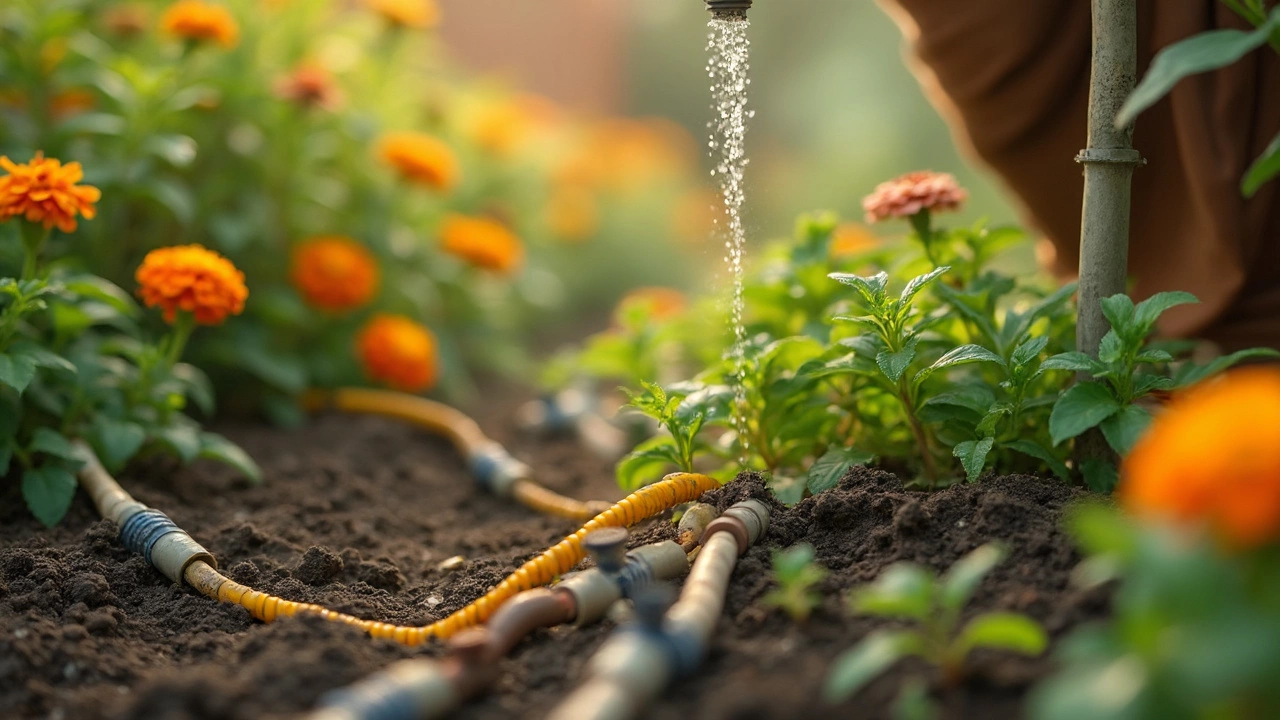
Drip System Problems: Fix Leaks, Clogs, and Uneven Watering
When your drip system, a network of tubes and emitters that deliver water directly to plant roots. Also known as drip irrigation, it's meant to save water and reduce effort—but when it breaks, it wastes both. A single cracked tube or blocked emitter can turn your efficient setup into a soggy mess or a dry desert. You’re not alone. Most gardeners in India face this: water pooling in one spot, plants wilting nearby, and no clear reason why.
These problems usually come down to three things: clogged drip emitters, tiny particles or mineral buildup blocking the water flow, uneven watering, when some plants get too much and others get almost none, and leaky drip lines, often from poor installation or sun damage. You might think it’s the water pressure or your soil, but 80% of the time, it’s the system itself. A clogged emitter isn’t just annoying—it means your tomato plant isn’t getting enough water while your basil is drowning. That’s why knowing how to check each emitter, flush the lines, and balance flow rates matters more than buying new parts.
Fixing this isn’t about replacing everything. It’s about checking what’s already there. Look for white crust around emitters—that’s mineral buildup. Pinch the tubes to feel for weak spots. Run water through the system and watch where it drips where it shouldn’t. You don’t need fancy tools. A toothpick, a bucket of vinegar, and 15 minutes can fix most issues. And if your system was installed in hot sun without shade? It’s aging fast. UV damage cracks plastic over time, especially in Indian summers. That’s why many gardeners now bury lines or cover them with mulch—not just for looks, but to keep them alive longer.
The posts below cover everything from how to calculate the right number of emitters per zone to why your bonsai is dying from a slow leak you didn’t notice. You’ll find real fixes for Indian gardens: how to deal with hard water, how to avoid overwatering in clay soil, and how to tell if your drip system is even working. No fluff. No theory. Just what actually works when your plants are thirsty and your water bill is high.
Drippers and emitters sound like the perfect tools for watering your garden slowly and precisely, but they're not flawless. The most common headache is clogging, but that's just scratching the surface. This article dives into the main drawbacks of using emitters on drip systems and what you can do to avoid major issues. Get tips for checking your system, simple maintenance tricks, and a few workarounds to keep your plants happy. You'll learn what to look out for so you're not caught off guard next growing season.