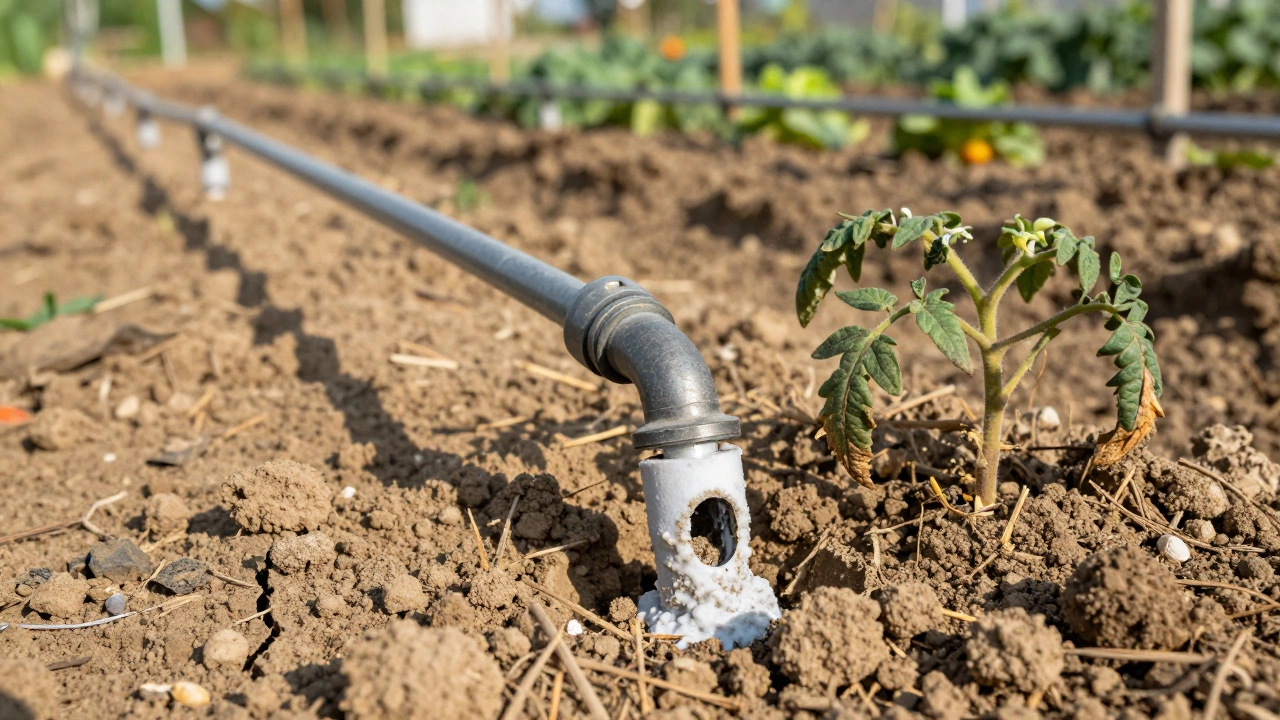
Drip System Problems: Common Issues and How to Fix Them
When your drip system, a targeted watering method that delivers water directly to plant roots. Also known as drip irrigation, it's meant to save water and reduce effort—but when it fails, it causes more work than a hose. The biggest headache? Clogged emitters. Dirt, minerals, algae, or even tiny roots can block the tiny openings. You’ll see dry spots in your garden while other plants drown. It’s not your soil. It’s the system.
Another common issue is uneven watering, when some plants get too much water and others get none. This usually happens because the pressure isn’t balanced. Maybe one line is longer than others, or you mixed different flow rates without a pressure regulator. A 2-gallon-per-hour emitter next to a 1-gallon one? That’s asking for trouble. You need matching emitters on the same zone. And don’t forget pressure regulators—they’re cheap, and they keep your whole system from blowing out or dripping like a sieve.
Leaks are another silent killer. A small crack in a tube, a loose connection, or a worn-out washer can waste gallons a day. Check your lines after watering. Look for wet patches in dry soil. Listen for hissing sounds. Fixing leaks isn’t hard—just cut out the bad section and splice in a new piece with a coupling. But if you ignore it, your water bill and your plants will suffer.
And then there’s the myth that drip systems run every day. They don’t. Running them daily floods roots, invites rot, and wastes water. The right schedule depends on your soil, climate, and plant type. In India’s hot months, you might need water every other day. In winter, once a week might be enough. Always check the soil two inches down before turning it on. If it’s damp, wait.
Low water pressure? That’s often the culprit behind weak drips. If your system runs off a garden tap, pressure drops when other taps are open. Install a filter at the start to catch debris, and a pressure gauge to monitor performance. A good system runs between 15-30 PSI. Too low? Emitters won’t drip. Too high? They blow apart.
Some people skip maintenance because it seems like too much work. But cleaning your drip system takes 10 minutes a month. Flush the lines. Clean the filter. Test each emitter with your finger. It’s faster than replanting dead seedlings.
And don’t ignore the basics: burying lines helps prevent sun damage and keeps them out of the way. But if you bury them without marking their path, you’ll dig right through them next season. Use stakes or spray paint a light line on the ground.
What you’ll find below are real fixes from gardeners who’ve been there—clogged lines, broken timers, uneven patches, and how they got their systems back on track. No theory. No fluff. Just what works in Indian homes and balconies.
Drip irrigation saves water and reduces weeds, but it has real downsides: clogging, high maintenance, poor flexibility, and winter vulnerability. Know the drawbacks before you install one.
Continue reading...