Emitters in Drip Irrigation: What They Are and How to Use Them Right
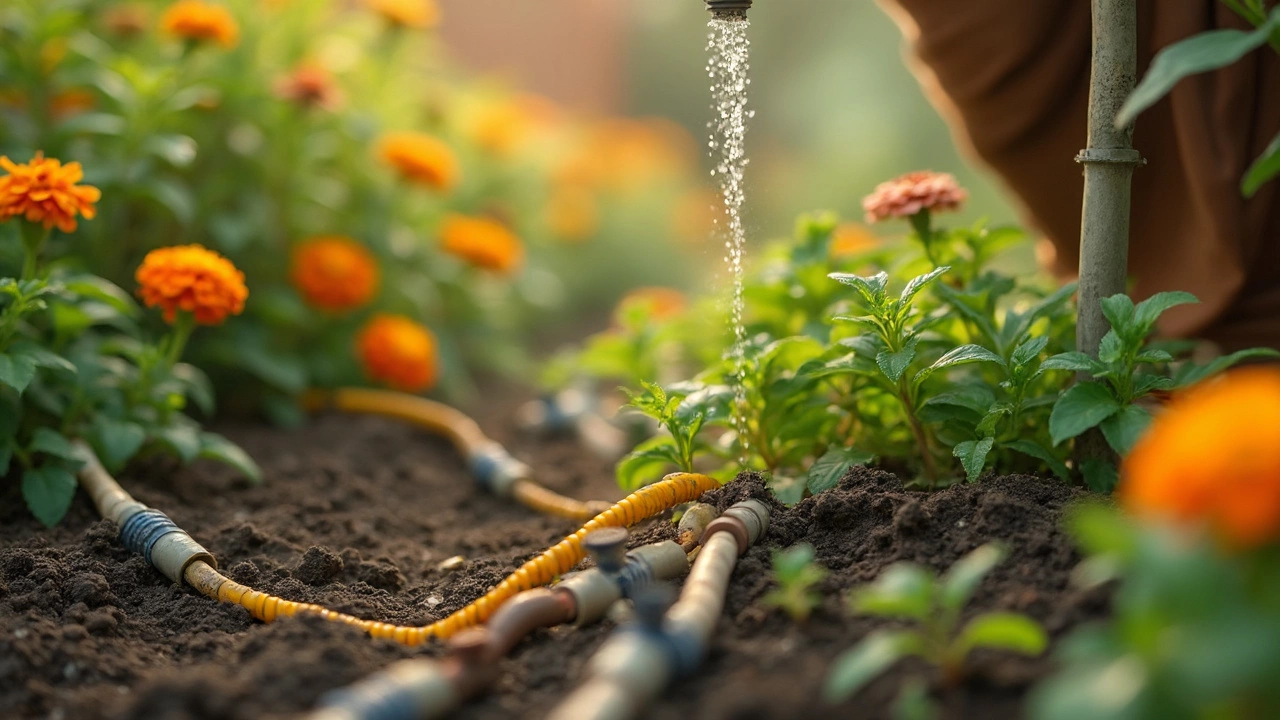
When you think about watering your garden efficiently, emitters, small devices that release water slowly and precisely at the base of plants. Also known as drip emitters, they’re the reason drip irrigation saves up to 60% more water than sprinklers. Unlike drippers—which are often built into tubing—emitters are separate parts you plug in, giving you full control over where and how much water each plant gets. This makes them perfect for gardens with mixed plant types, like a vegetable bed next to a shrub, where one needs 1 gallon per hour and the other only half that.
Emitters come in different flow rates—0.5 GPH, 1 GPH, 2 GPH—and choosing the right one isn’t about what’s easiest, but what your soil and plants actually need. Sandy soil drains fast, so you might need 2 GPH emitters spaced closer together. Clay soil holds water, so 0.5 GPH emitters, spaced farther apart, prevent drowning roots. The key is matching emitter output to plant demand and soil type. If you’re using a mix of plants in one zone, you’re likely over- or under-watering some of them. That’s why irrigation zone spacing, the practice of grouping plants with similar water needs into separate zones matters. A tomato plant and a rose bush should never share the same emitter line unless they’re both getting exactly the same amount of water, which rarely happens.
Another common mistake? Assuming more emitters = better watering. Too many emitters on one line can drop pressure, making the ones at the end barely drip. Most systems work best with 10–20 emitters per zone, depending on line size and water pressure. That’s why emitter flow rate, the exact amount of water each emitter releases per hour is just as important as how many you install. A 1 GPH emitter on a 100-foot line might work fine, but ten of them might not. You need to calculate total flow and match it to your system’s capacity.
And don’t forget clogging. Emitters are tiny, and dirt, minerals, or algae can block them. That’s why filters and regular flushing are non-negotiable, especially in hard water areas. A clogged emitter isn’t just a nuisance—it’s a silent killer for your plants. Check them every few weeks. If one’s dry while others are wet, clean or replace it. Simple. No tools needed.
Emitters aren’t flashy. They don’t look like fancy smart sprinklers or robotic watering arms. But they’re the most reliable, cost-effective way to deliver water exactly where it’s needed—root zone, not sidewalk. If you’ve ever watched water run off your garden or seen plants wilt even after watering, emitters are your fix. They turn guesswork into precision.
Below, you’ll find real-world guides on how to design emitter layouts, how many to use per plant, how to fix uneven watering, and why some systems fail even when installed "correctly." No theory. No fluff. Just what works in Indian gardens, from balconies to backyard plots.
Drippers and emitters sound like the perfect tools for watering your garden slowly and precisely, but they're not flawless. The most common headache is clogging, but that's just scratching the surface. This article dives into the main drawbacks of using emitters on drip systems and what you can do to avoid major issues. Get tips for checking your system, simple maintenance tricks, and a few workarounds to keep your plants happy. You'll learn what to look out for so you're not caught off guard next growing season.