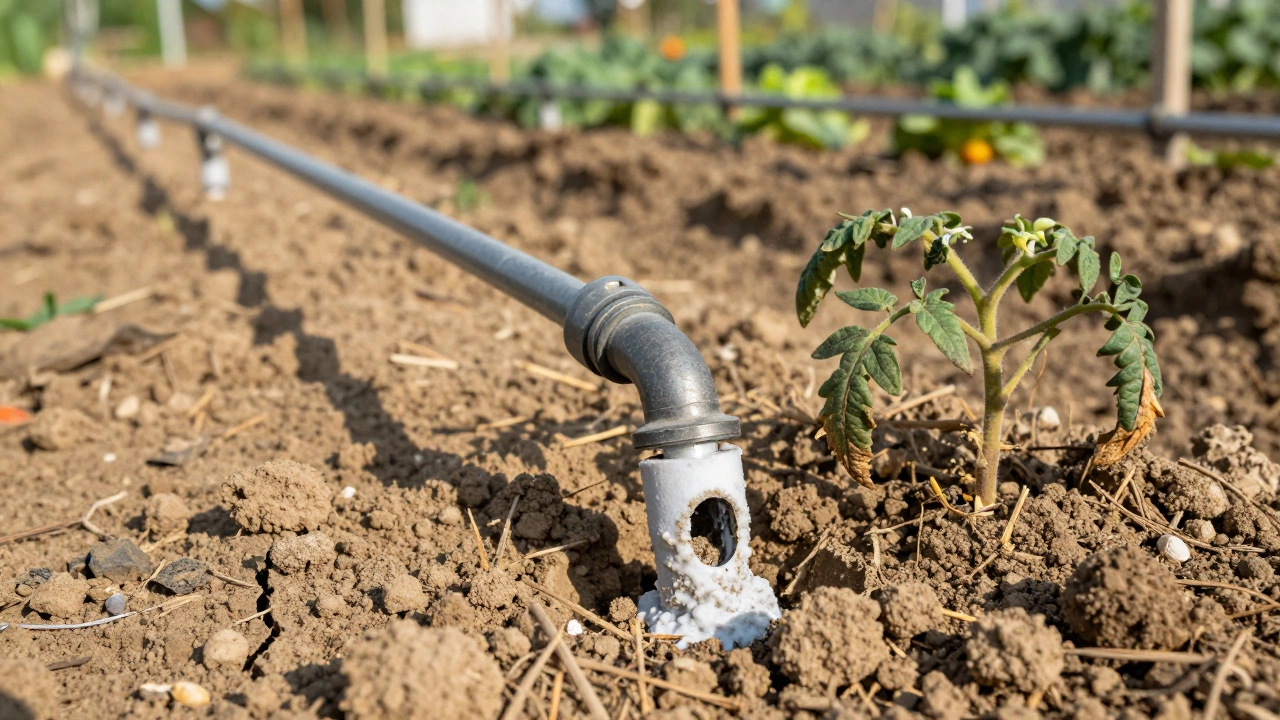
Irrigation Issues: Fix Water Problems in Your Garden
When your plants look sick even though you water them every day, you’re probably dealing with irrigation issues, problems in how water is delivered to plants that lead to poor growth, disease, or death. It’s not about how much water you give—it’s about how, when, and where it goes. Most gardeners in India think watering daily is the answer, but that’s often the problem. Too much water drowns roots. Too little stresses plants. And bad drainage turns good soil into mud.
Drip irrigation, a system that delivers water slowly and directly to plant roots sounds perfect, but even drip systems can fail if they’re run every day or clogged with debris. Overwatering, the silent killer of houseplants and vegetable gardens alike shows up in yellow leaves, soggy soil, and rotting roots—just like in bonsai trees or balcony herbs. And if your soil is compacted, water doesn’t soak in—it runs off, wasting your effort and money. You can’t fix irrigation without fixing the soil underneath.
These aren’t abstract problems. They’re daily struggles for balcony gardeners in Mumbai, farmers in Punjab, and home gardeners in Bangalore. That’s why the posts below cover real fixes: how to tell if your drip system is working, why soaker hoses beat drippers in some cases, how to stop watering every day, and what to do when rainwater harvesting isn’t enough. You’ll find solutions for compacted soil, signs you’re drowning your plants, and why sometimes, doing less is the key to growing more.
Drip irrigation saves water and reduces weeds, but it has real downsides: clogging, high maintenance, poor flexibility, and winter vulnerability. Know the drawbacks before you install one.
Continue reading...