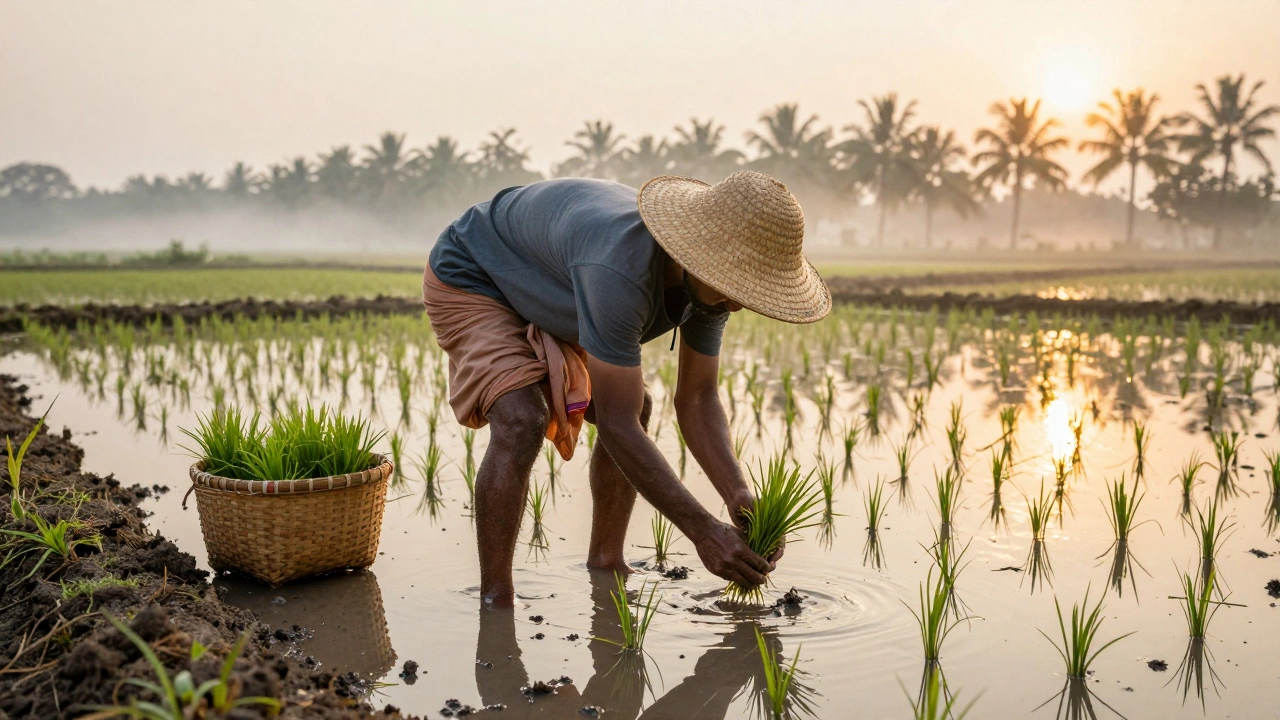
Profitable Rice Farming in India: How to Grow More, Earn More
When it comes to profitable rice farming, a system of growing rice that maximizes yield while minimizing input costs through smart practices and modern tools. Also known as high-yield rice cultivation, it’s not just about planting seeds and waiting—it’s about using the right variety, managing water like gold, and working with India’s climate, not against it. Over 40 million Indian farmers grow rice, but only a fraction are truly profitable. Why? Most still use old methods that waste water, invite pests, and burn through fertilizer. The real winners? They use biotech rice, rice varieties developed with scientific breeding to resist disease, need less water, and produce more grain per plant—like those bred by Indian agri-research centers to thrive in Punjab’s dry spells or West Bengal’s flooded fields.
Sustainable rice farming, a method that cuts chemical inputs, conserves water, and builds soil health over time isn’t just good for the planet—it’s good for your bank account. Farmers who switch to direct seeding or system of rice intensification (SRI) use up to 40% less water and still get higher yields. They’re not using expensive imported seeds either—they’re planting native rice varieties, local strains like Kalanamak, Sona Masuri, or Chinnur that need fewer inputs and sell at premium prices in regional markets. These aren’t just tradition—they’re smart business. One farmer in Odisha doubled his income by switching from hybrid to native rice and selling directly to organic buyers. He didn’t need a tractor or a loan. He just picked the right seed and managed his water better.
What makes rice farming profitable isn’t the size of your land—it’s how you manage the basics. Soil health, timing, and pest control matter more than fancy equipment. Neem oil, for example, cuts down on chemical sprays and keeps pests like stem borers away without harming bees. Compacted soil? Fix it with compost and aeration—no expensive machines needed. And don’t fall for the myth that drip irrigation is the only way to save water. In rice, controlled flooding and alternate wetting and drying (AWD) work better and cost less. The best farmers in India don’t follow trends—they test, track, and tweak. They know when to plant based on monsoon forecasts, not just the calendar. They check soil moisture with their hands, not apps.
Below, you’ll find real stories from Indian farmers who turned small plots into steady income. You’ll see which rice types actually deliver, how to avoid common mistakes in water use, and what tools—simple or high-tech—make the biggest difference. No fluff. No theory. Just what works on the ground in India’s diverse farming zones.
Rice farming can be profitable with the right variety, location, and market. Discover real costs, yields, and profit margins in 2025-and how small farms are making more selling specialty rice than commodity crops.
Continue reading...