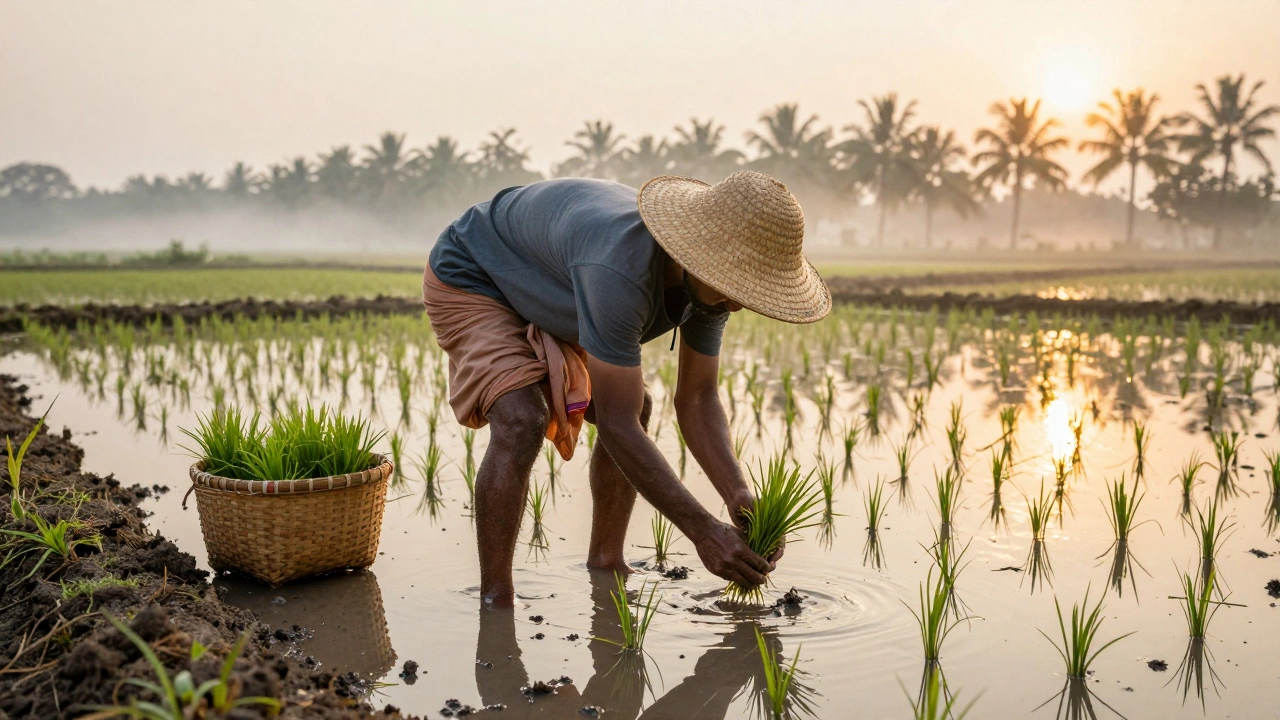
Rice Cultivation Profit: How Indian Farmers Make Money Growing Rice
When you think of rice cultivation profit, the financial return from growing rice as a commercial crop in India. Also known as paddy farming income, it's not just about how much rice you harvest—it's about what you keep after costs, labor, and market swings. In India, rice isn’t just food. It’s the backbone of millions of small farms, especially in states like Punjab, West Bengal, and Andhra Pradesh. But not all rice farmers make the same money. Some barely break even. Others turn a solid profit. What’s the difference?
The real rice cultivation profit depends on three things: yield, cost control, and timing. A farmer in Odisha might get 4 tons per acre using traditional methods. One using hybrid seeds and drip irrigation? Up to 6.5 tons. That’s a 60% boost in income before you even sell. But higher yield means higher costs—better seeds, fertilizers, labor, and water. Then there’s the market. If you sell right after harvest, prices crash. Wait too long, and your rice spoils. Smart farmers store their crop and sell during festivals or when demand spikes.
Organic rice is changing the game. Buyers in cities and export markets pay 30-50% more for certified organic paddy. That’s a huge margin if you can skip chemical inputs. It takes more work—manual weeding, compost instead of urea—but the payoff is real. And it’s not just about big farms. Even a half-acre plot can turn a profit if you cut waste, use local seed varieties, and avoid middlemen.
Weather, water access, and government subsidies play big roles too. In drought-prone areas, rice farming can lose money fast. But with rainwater harvesting and mulching, some farmers cut water use by half and still get good yields. And yes, subsidies help—especially for irrigation equipment and seed loans. But the real winners? Those who combine low-cost methods with smart timing.
Below, you’ll find real stories and practical guides from Indian gardeners and small-scale farmers who’ve cracked the code on rice profit. You’ll see what works, what doesn’t, and how to avoid the traps that eat into earnings. Whether you’re growing rice for the first time or looking to boost your current operation, these posts give you the facts—not the fluff.
Rice farming can be profitable with the right variety, location, and market. Discover real costs, yields, and profit margins in 2025-and how small farms are making more selling specialty rice than commodity crops.
Continue reading...