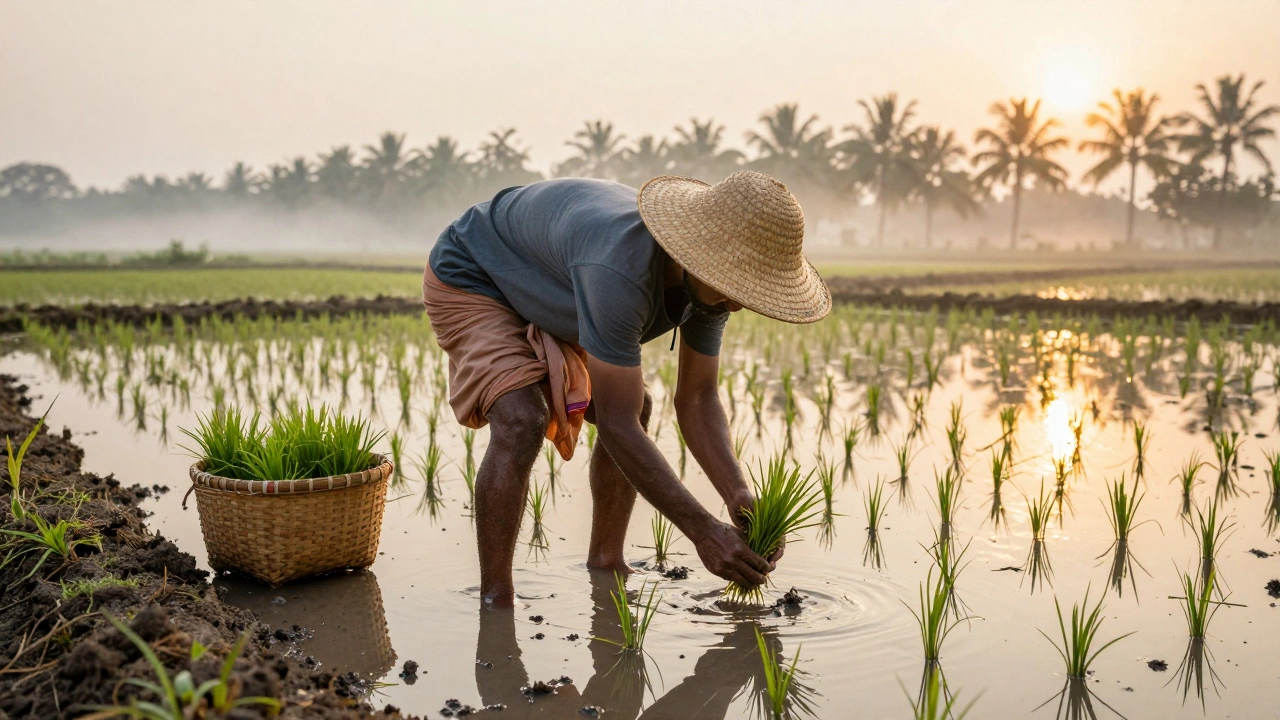
Rice Farming Business in India: How to Start and Succeed
When you think of rice farming business, a large-scale agricultural enterprise focused on growing rice for sale, often using modern techniques to improve yield and reduce waste. Also known as paddy farming, it's one of the most important food industries in India, feeding millions and supporting rural economies. It’s not just about planting seeds and waiting. A successful rice farming business needs smart water use, healthy soil, and the right tools—something many small farmers still struggle with.
Most rice in India is grown in flooded fields, but that’s changing. With water getting scarcer and prices rising, farmers are turning to drip irrigation, a method that delivers water directly to plant roots, reducing waste and improving efficiency—something we’ve seen work well in other crops, and now it’s being tested in rice too. Then there’s organic compost, a natural soil enhancer made from decomposed plant and food waste, used to boost fertility without chemicals. Many farmers still rely on cheap synthetic fertilizers, but those degrade the soil over time. Switching to compost doesn’t just help the land—it cuts costs in the long run.
And it’s not just about what you put in the ground. The rice cultivation, the process of growing rice from seed to harvest, including land prep, planting, irrigation, and pest control cycle has to match India’s seasons. In states like Punjab and West Bengal, farmers plant during monsoon. But in drier areas, they need to time planting with artificial irrigation. That’s where tools like neem oil, a natural pesticide derived from the neem tree, used to control pests without harming bees or soil microbes come in. It’s cheap, safe, and works against the bugs that ruin rice crops—no toxic chemicals needed.
Big farms use machines. Small farms? They need smarter, low-cost tricks. Like using raised beds for better drainage, or planting native rice varieties that need less water. Did you know some traditional Indian rice strains are more resistant to pests and drought than the high-yield hybrids? They’re not flashy, but they’re tougher—and that’s what matters when the weather turns bad.
There’s also the market side. Selling rice isn’t just about harvesting. You need buyers, storage, and transport. Many farmers lose money because their rice spoils before it reaches the market. That’s where biotech solutions like moisture-proof storage bags and low-cost drying units are making a difference. They’re not magic, but they’re real.
What you’ll find below are real stories and practical guides from farmers and experts who’ve tried these methods. Some failed. Some succeeded. All of them learned something. Whether you’re thinking about starting a small rice farm, looking to improve your current setup, or just want to understand how your rice gets to your plate—this collection has the details you won’t find in textbooks. No fluff. No theory. Just what works on the ground in India today.
Rice farming can be profitable with the right variety, location, and market. Discover real costs, yields, and profit margins in 2025-and how small farms are making more selling specialty rice than commodity crops.
Continue reading...