Rice Farming Costs in India: What It Really Takes to Grow Rice
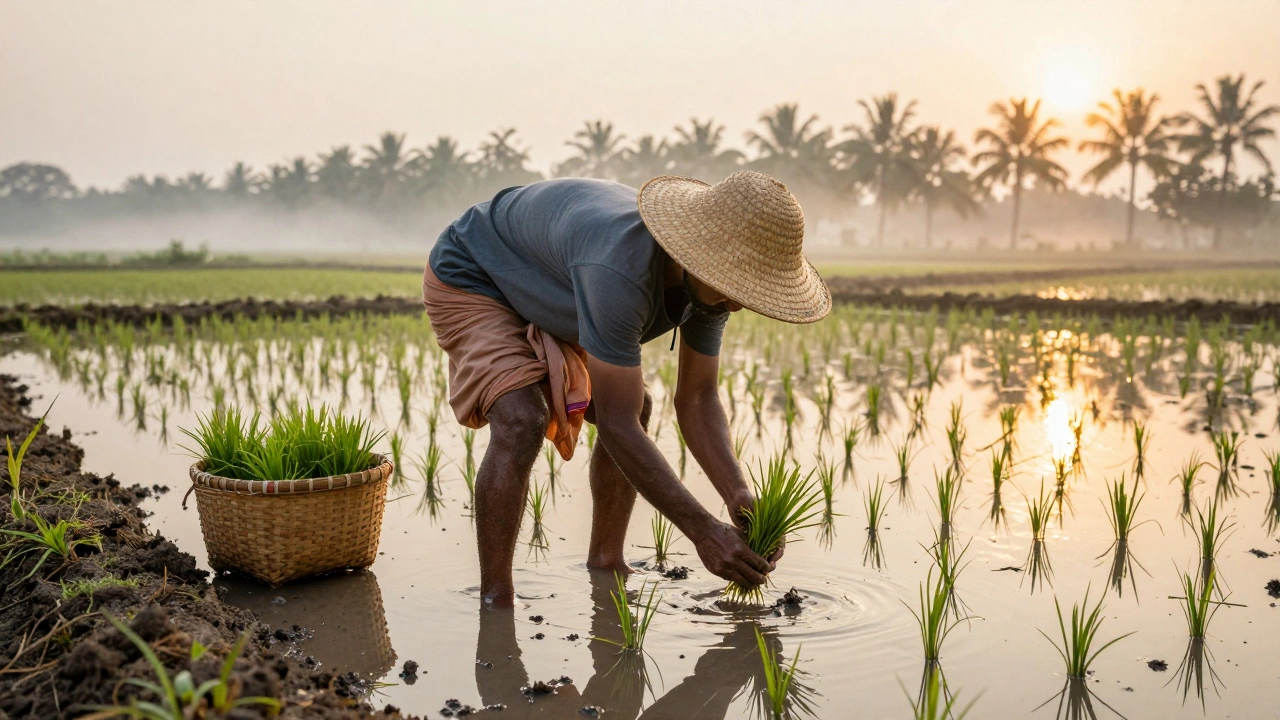
When you think of rice in India, you might picture endless green fields stretching to the horizon. But behind every grain is a complex mix of rice farming costs, the total expenses involved in growing paddy from seed to harvest. Also known as paddy farming cost, it includes everything from seeds and labor to water, fertilizer, and machinery. Most people assume rice is cheap because it’s everywhere—but the truth is, it’s one of the most resource-heavy crops in the country.
Let’s break it down. A typical smallholder farmer spends around ₹25,000 to ₹40,000 per acre on rice cultivation expenses, the direct and indirect inputs needed to produce a rice crop. That’s not just for seeds and fertilizer—it’s for hiring laborers to transplant seedlings by hand, renting tractors for plowing, buying pesticides, and paying for diesel to run water pumps. In places like Punjab or Andhra Pradesh, where water is scarce, irrigation alone can eat up 30% of the total cost. And if you’re using certified hybrid seeds instead of saved grain, that’s another ₹5,000–₹8,000 right off the bat.
Then there’s the hidden stuff: soil health, weather risks, and storage. If your soil’s been overworked, you’ll need more compost or biofertilizers to bring it back—something many farmers skip to save money, only to get lower yields next season. Monsoon delays? That means delayed planting, which can slash your harvest by up to 40%. And if you don’t have proper drying or storage, even a good crop can rot before it sells. That’s why some farmers are switching to rice yield per acre, the amount of rice produced on a single acre of land, measured in quintals. Higher yield isn’t just about more grain—it’s about spreading fixed costs thinner. A farmer getting 40 quintals per acre isn’t just making more money; they’re making the whole operation sustainable.
What you won’t see on price tags are the real trade-offs. Using chemical fertilizers might give you a quick boost, but it kills soil microbes and makes your land dependent on more inputs every year. Organic methods cost more upfront but save money long-term. Drip irrigation for rice? Still rare, but some pilot projects in Tamil Nadu show it cuts water use by half—and that’s a game-changer where groundwater is dropping fast.
Below, you’ll find real posts from farmers and experts who’ve walked this path. They’ve tried everything—from DIY compost to government subsidy tricks—and they’re not just talking theory. These are the stories of what actually works, what breaks, and how to keep growing rice without losing your shirt.
Rice farming can be profitable with the right variety, location, and market. Discover real costs, yields, and profit margins in 2025-and how small farms are making more selling specialty rice than commodity crops.
Continue reading...