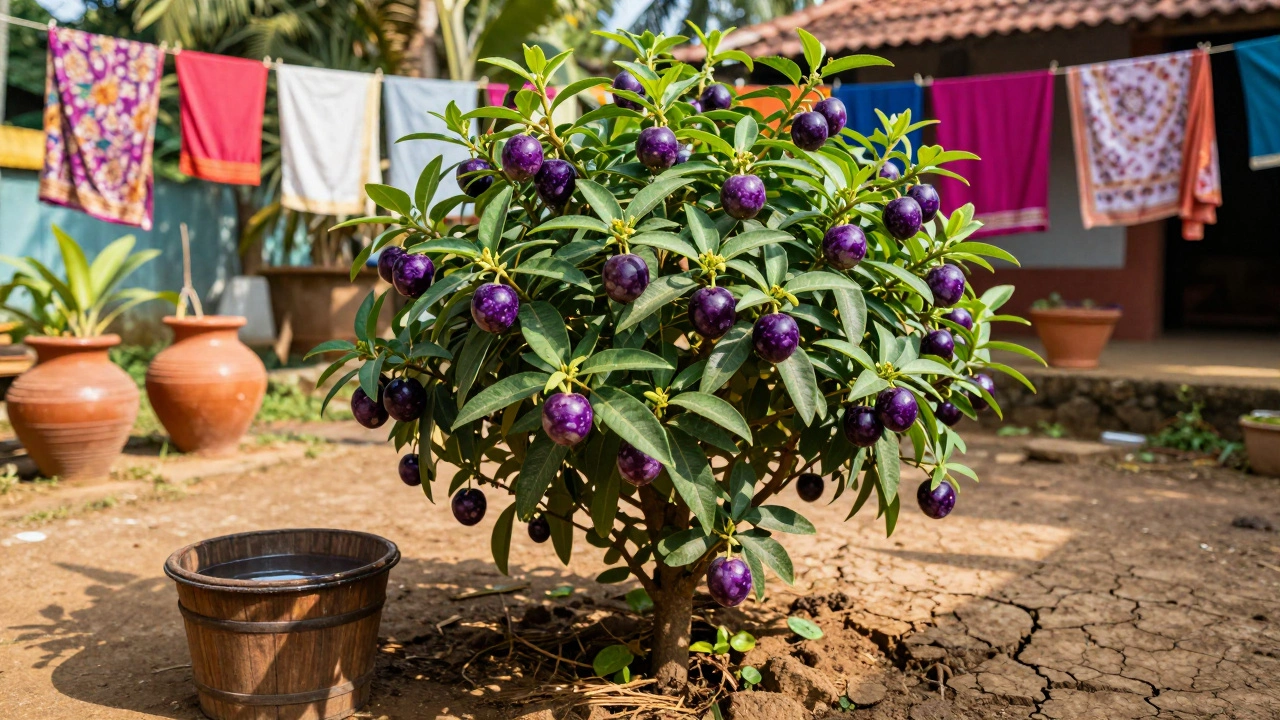
Solanum indicum: The Wild Eggplant That’s Changing Indian Gardens
When you think of eggplant in India, you probably picture the long, purple variety in your curry. But there’s another kind growing wild in backyards, roadside patches, and abandoned fields — Solanum indicum, a tough, native nightshade plant also called Indian nightshade or wild eggplant. Also known as Solanum nigrum, it’s not just a weed — it’s a forgotten superfood with deep roots in Ayurveda and village cooking. Unlike its cultivated cousin, Solanum indicum thrives in poor soil, needs almost no water, and resists pests naturally. It’s the kind of plant that doesn’t ask for much — and gives back more than you expect.
This plant isn’t just surviving in India — it’s thriving because it’s perfectly adapted to the climate. You’ll find it from the dry plains of Rajasthan to the humid coasts of Kerala. Its small, black berries are used in tribal medicines for fever and inflammation, while the leaves are boiled into curries in Odisha and Andhra Pradesh. It’s not glamorous, but it’s reliable. In a country where water scarcity and soil degradation are growing problems, Solanum indicum offers a quiet solution: grow something that doesn’t need fertilizers, drip irrigation, or constant attention. It’s the opposite of the high-maintenance ornamentals that dominate urban balconies. And it connects you to a food tradition that predates supermarkets and imported seeds.
What makes Solanum indicum stand out isn’t just its resilience — it’s how it fits into the bigger picture of Indian gardening. It’s part of a group of native plants — like bitter gourd, drumstick, and amaranth — that are being rediscovered for their low-input growth and nutritional value. These aren’t exotic imports. They’re local heroes. And when you grow them, you’re not just tending a plant — you’re supporting biodiversity, reducing chemical use, and preserving cultural knowledge. The posts below show you exactly how others are using this plant: in raised beds, in organic compost mixes, in seasonal rotations with other native crops. You’ll see how it compares to other tough plants like the Vanda orchid or how it fits into self-sustaining gardens. You’ll also learn what not to plant next to it — because even hardy plants have neighbors they don’t get along with.
The queen of India plant is a small, hardy vegetable native to India, known for its resilience and rich flavor in traditional dishes. Easy to grow in pots or gardens, it's a forgotten gem of Indian kitchen gardening.
Continue reading...