Queen of India Plant Yield Calculator
Calculate Your Harvest
Your Harvest Estimate
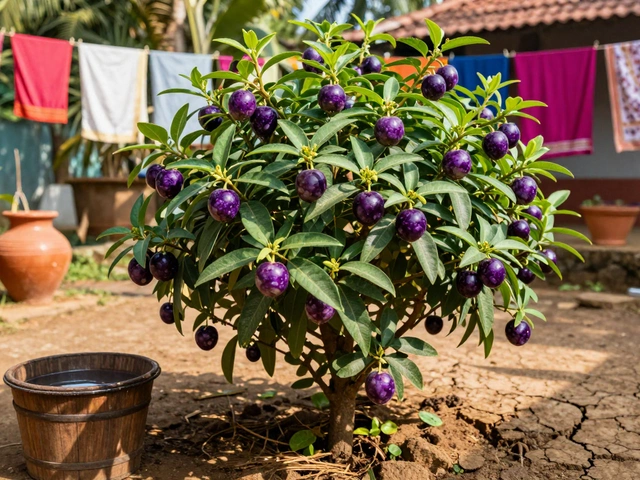
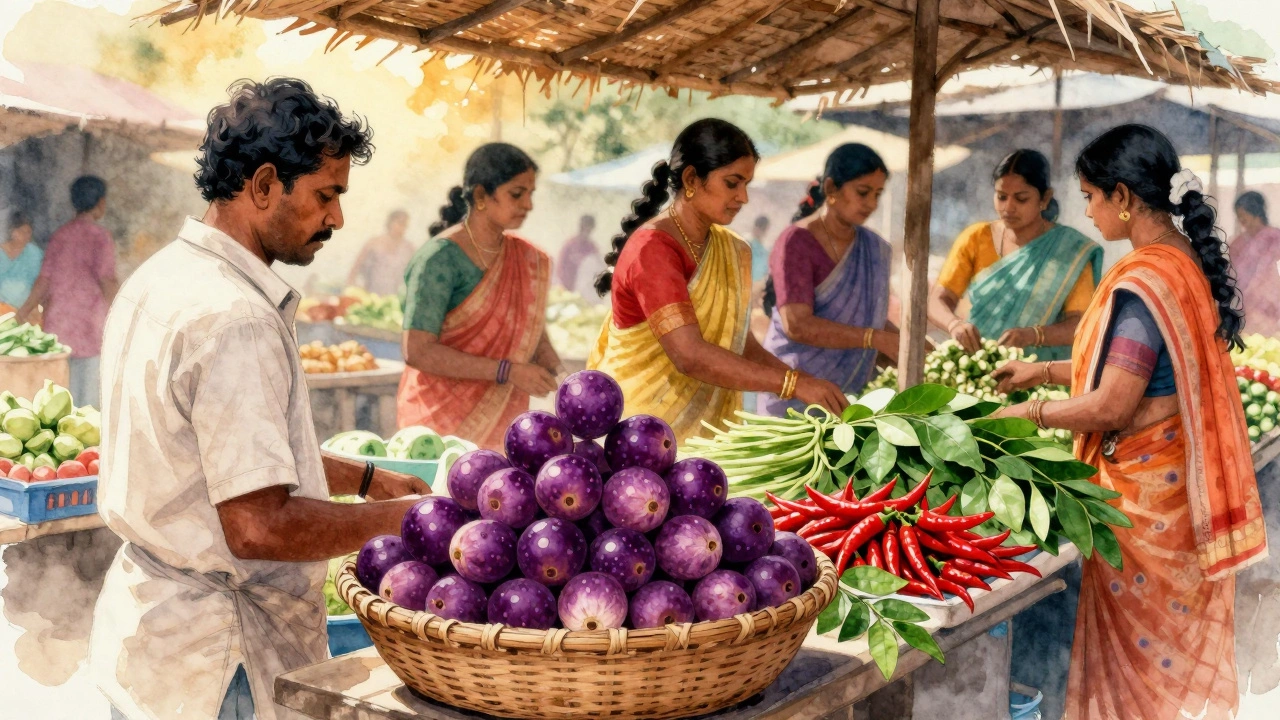
If you’ve ever walked through a market in Kerala, Tamil Nadu, or West Bengal and seen small, round, purple fruits stacked like marbles, you’ve seen the queen of India plant. But what exactly is it? And why do so many home gardeners in India swear by it? This isn’t just another exotic plant-it’s a hardy, high-yield vegetable with deep roots in Indian kitchens and backyards.
The Queen of India Plant Isn’t a Flower
Don’t let the name fool you. The queen of India plant isn’t a decorative blossom or ornamental shrub. It’s a fruiting vegetable, scientifically known as Solanum indicum. In Hindi, it’s called baingan or kantakari; in Bengali, shakoli; in Tamil, parangi kai. It’s a close cousin to the common eggplant (Solanum melongena), but smaller, tougher, and more resilient.
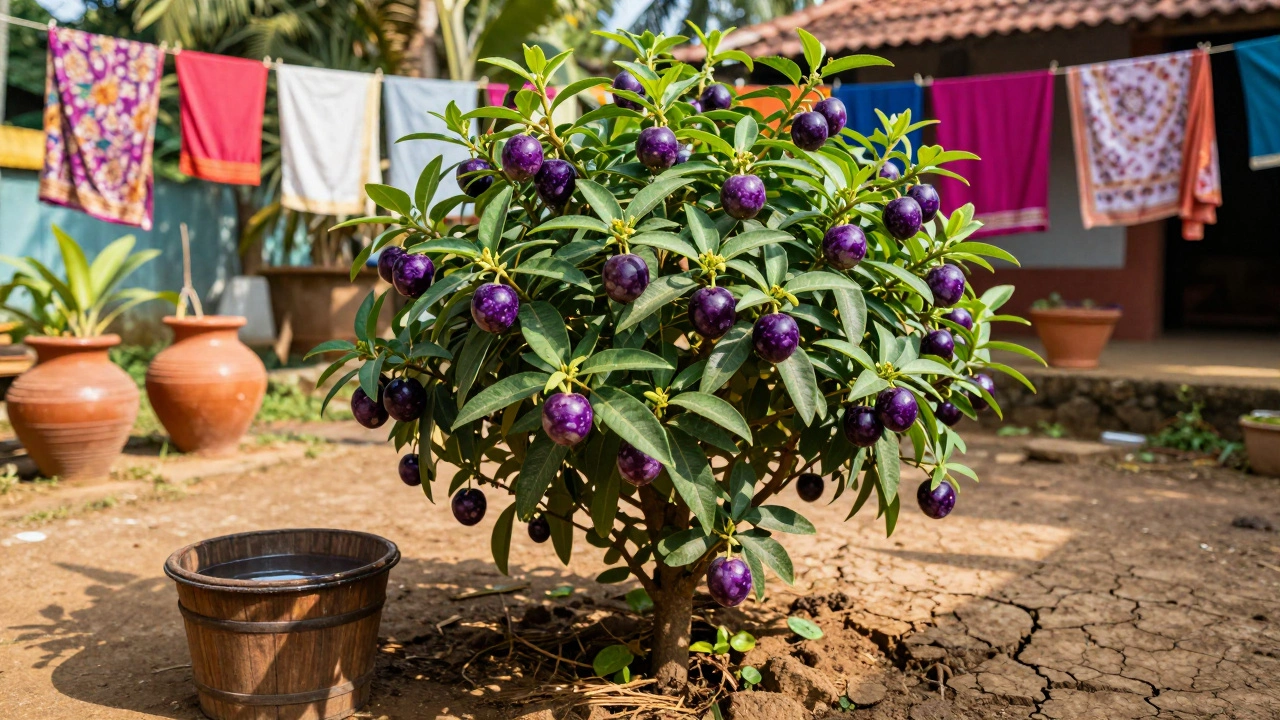
Unlike the large, glossy eggplants you find in supermarkets, the queen of India plant produces tiny, marble-sized fruits-usually 1 to 2 centimeters wide. They’re often a deep purple, sometimes streaked with white or green. The skin is thin but firm, and the flesh is dense with tiny seeds. When cooked, they lose their slight bitterness and develop a rich, earthy flavor that soaks up spices beautifully.
Why Do Indian Gardeners Love It?
For decades, rural and urban gardeners across India have grown the queen of India plant for three simple reasons: it’s easy, it’s productive, and it’s tough.
- Low maintenance: It doesn’t need rich soil or constant watering. A few buckets of water a week and full sun are enough.
- High yield: A single plant can produce 50 to 100 fruits over a 4-month season.
- Pest resistant: Unlike other nightshades, it rarely attracts aphids or whiteflies. Even in humid monsoon conditions, it thrives.
Many families in Kerala grow it along fence lines or in old cement pots. It’s the vegetable that doesn’t ask for much but gives back generously. In Tamil Nadu, it’s a staple in sambar and rasam. In Odisha, it’s fried with mustard seeds and dried red chilies. In Bengal, it’s stuffed with spiced lentils and steamed.
How It Differs From Regular Eggplant
People often confuse the queen of India plant with the common eggplant. Here’s how they compare:
| Feature | Queen of India Plant (Solanum indicum) | Common Eggplant (Solanum melongena) |
|---|---|---|
| Fruit size | 1-2 cm diameter | 5-20 cm long |
| Plant height | 60-90 cm | 90-150 cm |
| Growth time to harvest | 60-70 days | 70-90 days |
| Heat tolerance | Excellent | Moderate |
| Water needs | Low to moderate | High |
| Typical use | Curries, pickles, stir-fries | Grilled, roasted, stuffed |
The queen of India plant doesn’t need staking or pruning. It grows like a wild shrub-compact, bushy, and self-sufficient. That’s why it’s the go-to for balcony gardens in Mumbai or terrace plots in Delhi. You don’t need a big space. Just a pot, some soil, and a sunny corner.
How to Grow It in Your Backyard
If you’re thinking of planting it, here’s how to do it right:
- Choose your time: Plant seeds in early spring (February-March) or after the monsoon (September-October). It grows best in warm, humid conditions.
- Use well-draining soil: Mix garden soil with compost or aged cow dung. Avoid heavy clay.
- Plant seeds shallow: Sow 1 cm deep, 30 cm apart. You can start seeds in small pots and transplant after 3 weeks.
- Water lightly: Keep the soil moist but not soggy. Overwatering causes root rot.
- Harvest early: Pick fruits when they’re still firm and shiny. If they turn dull or soft, they’re overripe and bitter.
Don’t worry about fertilizers. A handful of compost every 4 weeks is enough. The plant thrives on neglect. In fact, too much care can reduce yield.
How to Use It in the Kitchen
The queen of India plant is never eaten raw. Its natural bitterness needs cooking to mellow out. Here are three classic Indian ways to use it:
- Curry: Fry the fruits with cumin, turmeric, and red chilies. Add tamarind paste and water. Simmer until soft. Serve with rice.
- Pickle: Boil fruits briefly, then pack them in salt, mustard oil, fenugreek seeds, and dried red chilies. Let sit for 10 days. The pickle lasts for months.
- Stuffed: Cut fruits in half, scoop out seeds, and fill with a mix of ground peanuts, grated coconut, coriander, and chili powder. Steam or shallow fry.
It’s also used in traditional Ayurvedic remedies. The leaves are crushed and applied to minor skin irritations. The fruits are believed to help with digestion and blood sugar balance-though these uses are based on tradition, not clinical proof.
Where to Find Seeds or Seedlings
You won’t find queen of India plant seedlings at big garden centers. But in India, it’s easy to get them:
- Ask neighbors or local vendors at weekly vegetable markets-they often save seeds from their own plants.
- Visit small nurseries in rural towns or near temple grounds. Many still sell heirloom varieties.
- Online platforms like Indian Seed Exchange or SeedSavers India offer dried seeds for under ₹50 per packet.
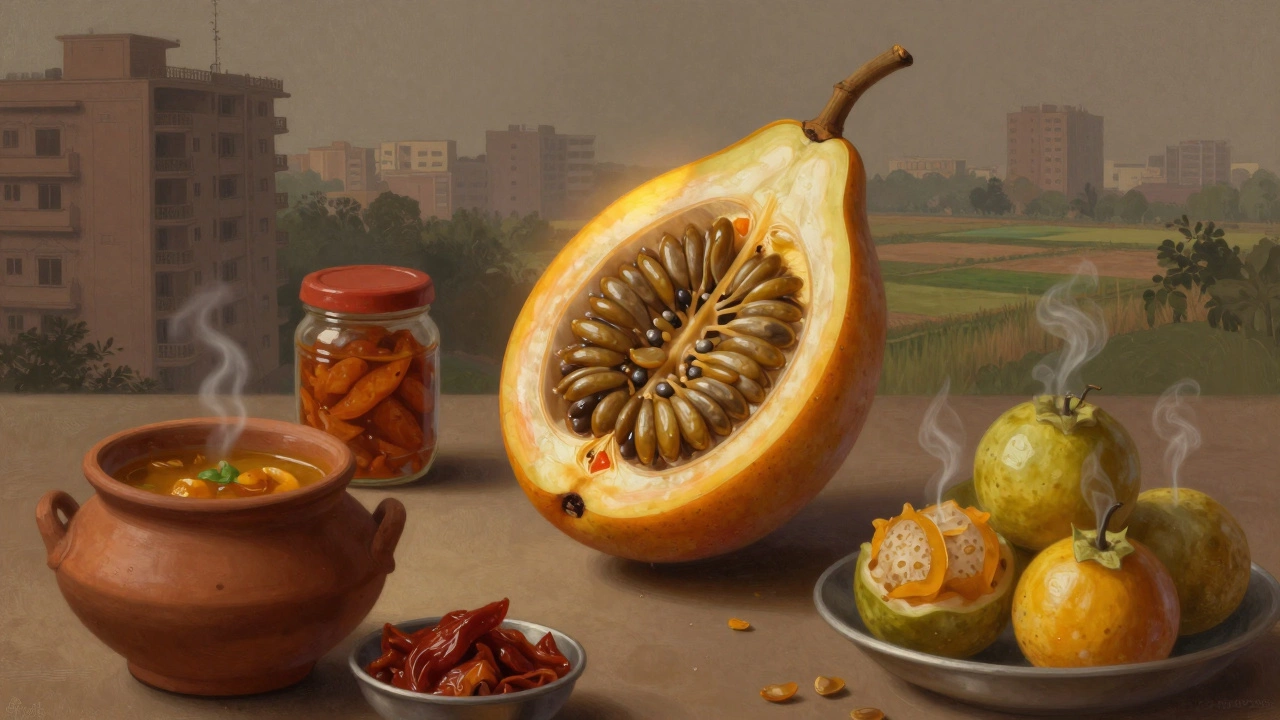
Save your own seeds at the end of the season. Let a few fruits ripen until they turn yellow-orange, then crush them, wash the seeds, and dry them in shade. They’ll stay viable for 3-4 years.
Why It’s Disappearing-and Why That Matters
Over the last 20 years, the queen of India plant has faded from urban gardens. Supermarkets now stock big, uniform eggplants. Younger generations don’t know how to cook it. Seed saving has dropped. It’s becoming a forgotten crop.
But that’s changing. In places like Coimbatore and Cuttack, community gardens are reviving it. Women’s self-help groups are teaching kids how to grow and cook it. It’s not just about food-it’s about preserving biodiversity. This plant doesn’t need chemicals. It doesn’t need imported seeds. It grows with the land, not against it.
If you grow it, you’re not just planting a vegetable. You’re keeping a piece of Indian kitchen history alive.
Is the queen of India plant the same as eggplant?
No. The queen of India plant (Solanum indicum) is a wild relative of the common eggplant (Solanum melongena). It’s smaller, more bitter when raw, and much hardier. It’s not a variety of eggplant-it’s a different species with its own unique flavor and growing habits.
Can I grow the queen of India plant outside India?
Yes. It grows well in tropical and subtropical climates-from southern Florida to northern Australia. It needs at least 6 hours of direct sun and temperatures above 18°C. In cooler areas, grow it in a greenhouse or as a summer annual. It won’t survive frost.
Are the fruits safe to eat?
Yes, when cooked. Raw fruits contain solanine, a natural compound that can cause stomach upset. Cooking breaks it down completely. Always cook the fruits before eating. Never eat the leaves or stems-they’re toxic.
How long does it take to harvest?
From seed to first harvest, it takes about 60 to 70 days. Once it starts fruiting, you can keep picking for 3 to 4 months. Pick fruits while they’re still small and shiny for the best flavor.
Why is it called the queen of India?
The name likely comes from its royal status in traditional kitchens-it’s prized for its flavor, reliability, and cultural importance. It’s not an official botanical name but a folk title used across South India. In many households, it’s the one vegetable that never fails, even in poor soil or dry spells.
What to Do Next
If you want to try growing it, start small. Buy five seeds. Plant them in a 12-inch pot. Place it on a windowsill that gets sun all day. Water every 3 days. In 8 weeks, you’ll have your first fruits. Taste them in a simple curry. You might find yourself hooked.
This plant doesn’t need fancy tools or expensive inputs. It just needs someone willing to plant it, care for it, and cook with it. In a world full of imported vegetables and hybrid seeds, the queen of India plant reminds us that the best food often grows quietly-right outside our door.