Companion Plant Compatibility Checker
Select two plants from your garden to see how they interact. This tool uses established botanical data regarding pest deterrence, nutrient sharing, and chemical interactions.
Imagine walking into your garden and seeing tomatoes that taste sweeter, peppers that stay disease-free, and beans that produce more pods than ever before. It’s not magic, and it’s not because you bought expensive organic fertilizer. It’s because you planted them next to the right neighbors. This is the power of companion planting, a time-tested gardening strategy where specific plants are grown together to mutual benefit.
For years, many gardeners treated their plots like solitary confinement for plants, spacing them out with no regard for who was sitting next to whom. But nature doesn’t work in isolation. In the wild, plants form complex communities. By mimicking these natural relationships, you can boost yields, deter pests naturally, and improve soil health without synthetic chemicals. If you’ve ever wondered why your basil seemed to thrive near your tomato plant or why your lettuce wilted when planted under a large oak tree, you’re about to find out why location matters just as much as sunlight and water.
The Science Behind Plant Neighbors
Before we jump into which veggies go together, it helps to understand why they get along. Plants communicate through chemical signals released into the air and the soil. Some release compounds that repel insects, while others attract beneficial predators. Others fix nitrogen from the air into the soil, acting as free fertilizer for their hungry neighbors. Understanding these mechanisms turns guesswork into strategy.
There are three main ways companion plants help each other:
- Pest Deterrence: Strong-smelling herbs confuse pests looking for their host plants.
- Nutrient Sharing: Legumes add nitrogen to the soil, feeding heavy feeders like corn.
- Physical Support: Tall plants provide shade for cool-weather crops, or sturdy stems support climbing varieties.
When you ignore these dynamics, you risk attracting pests, depleting soil nutrients, or shading out delicate seedlings. Getting it right means working with biology, not against it.
The Classic Trio: The Three Sisters Method
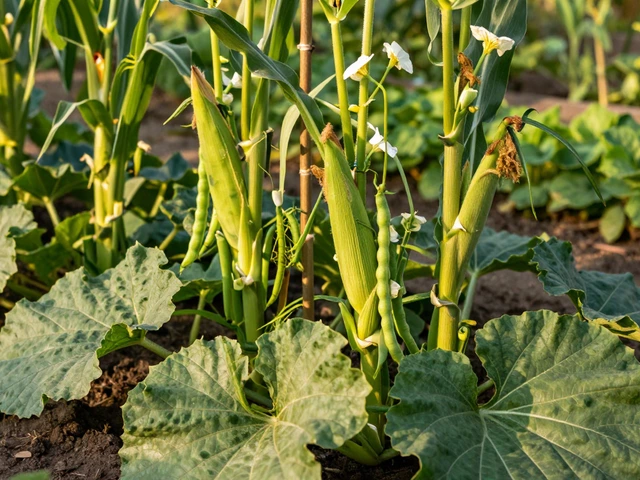
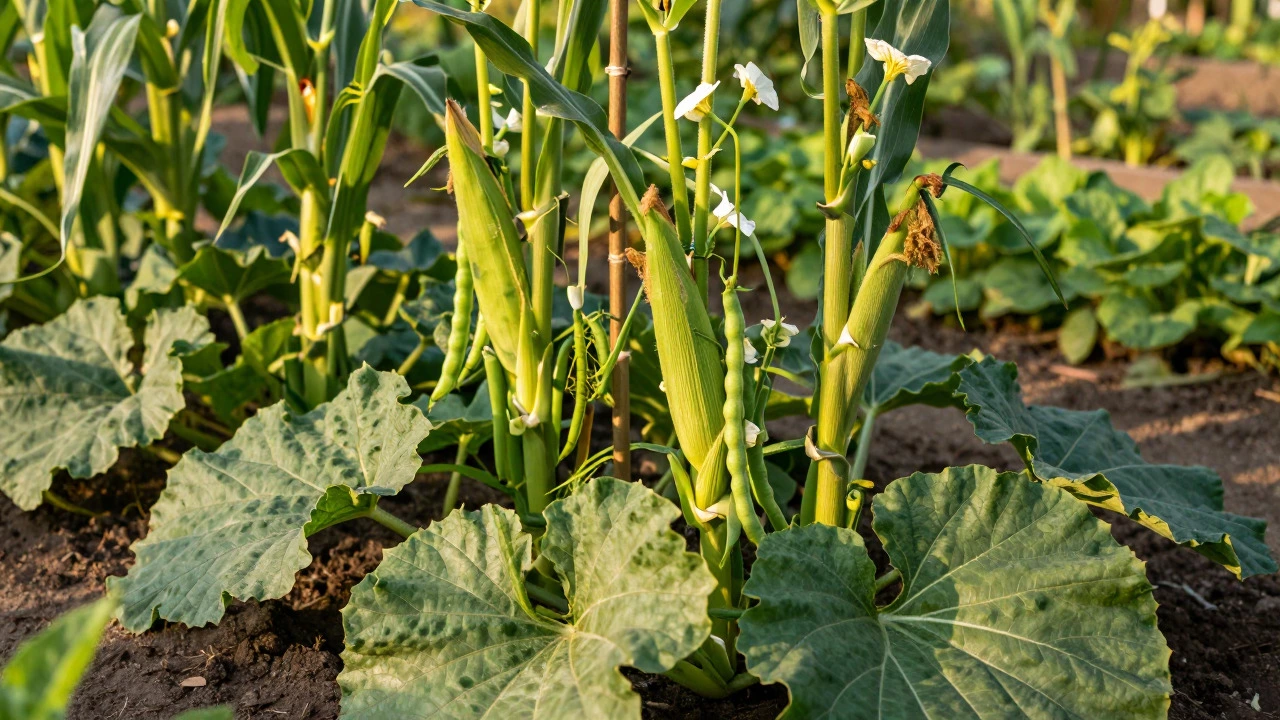
If there’s one golden rule in companion planting, it’s the Native American "Three Sisters" method. This ancient technique pairs corn, beans, and squash in a symbiotic relationship that has fed civilizations for centuries.
Here’s how it works:
- Corn grows tall and strong, providing a natural trellis for the beans to climb.
- Beans (specifically pole beans) fix nitrogen in the soil through bacteria in their root nodules, feeding the nutrient-hungry corn and squash.
- Squash spreads its broad leaves across the ground, creating a living mulch that retains moisture and suppresses weeds.
This trio is so effective because each plant solves a problem for the others. The corn needs support; the beans need structure and food; the squash needs protection from sunburn and drying out. Together, they create a self-sustaining mini-ecosystem. You don’t need a huge field to try this-three pots arranged in a triangle can work perfectly on a balcony or small patio.
Tomatoes: The King of the Garden Needs Friends
Tomatoes are heavy feeders and prone to pests like aphids and whiteflies. Planting them alone is asking for trouble. Instead, surround them with allies.
| Companion Plant | Benefit Provided | Why It Works |
|---|---|---|
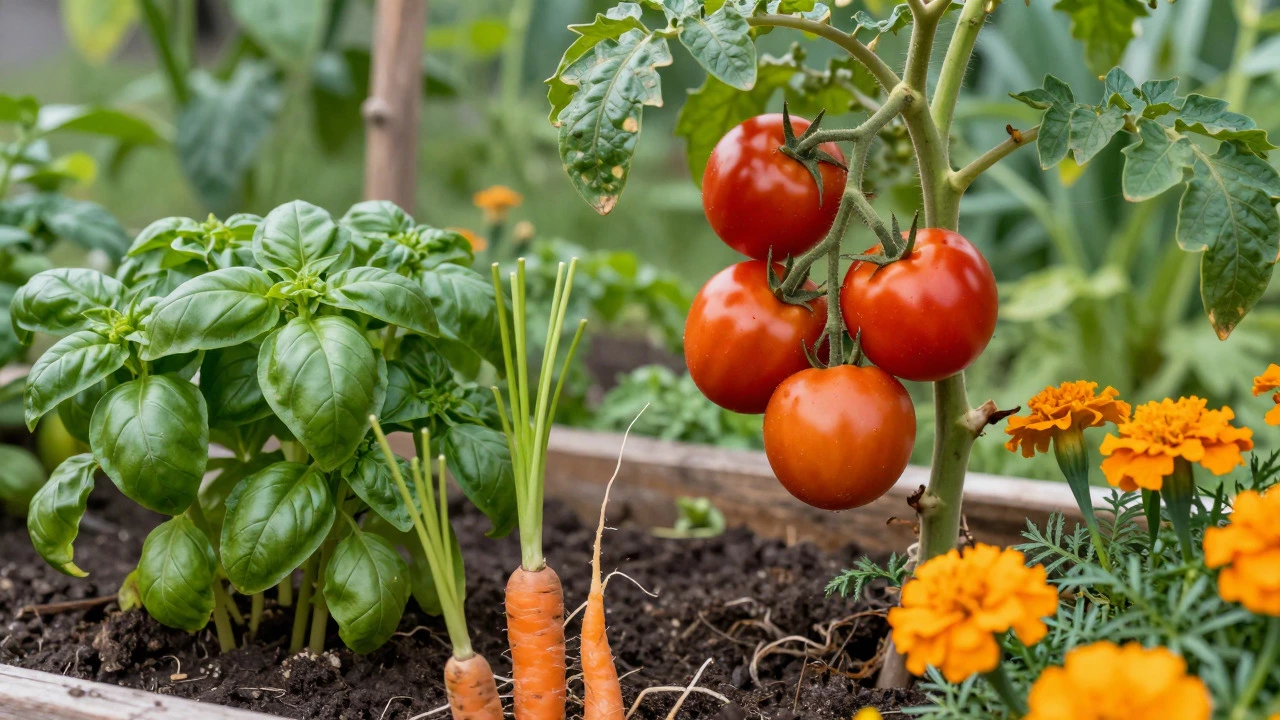
| Basil | Pest repellent & flavor enhancement | Basil’s strong scent masks the smell of tomatoes, confusing pests like hornworms. Many growers swear it improves tomato flavor. |
| Carrots | Soil aeration & pest distraction | Carrot roots break up compacted soil, helping tomato roots access water. They also draw away carrot rust flies that might otherwise bother nearby crops. |
| Marigolds | Nematode control | Marigold roots release alpha-terthienyl, a compound toxic to harmful nematodes in the soil. |
| Spinach | Ground cover & microclimate | Spinach grows low and fast, keeping soil cool and moist around tomato bases. |
Avoid planting tomatoes near fennel or potatoes. Fennel releases allelopathic chemicals that stunt growth in most vegetables, and potatoes share the same blight diseases as tomatoes, increasing infection risk.
Leafy Greens: Lettuce, Spinach, and Kale Strategies
Leafy greens prefer cooler temperatures and consistent moisture. They suffer in direct, hot afternoon sun. That’s why planting them near taller crops is smart.
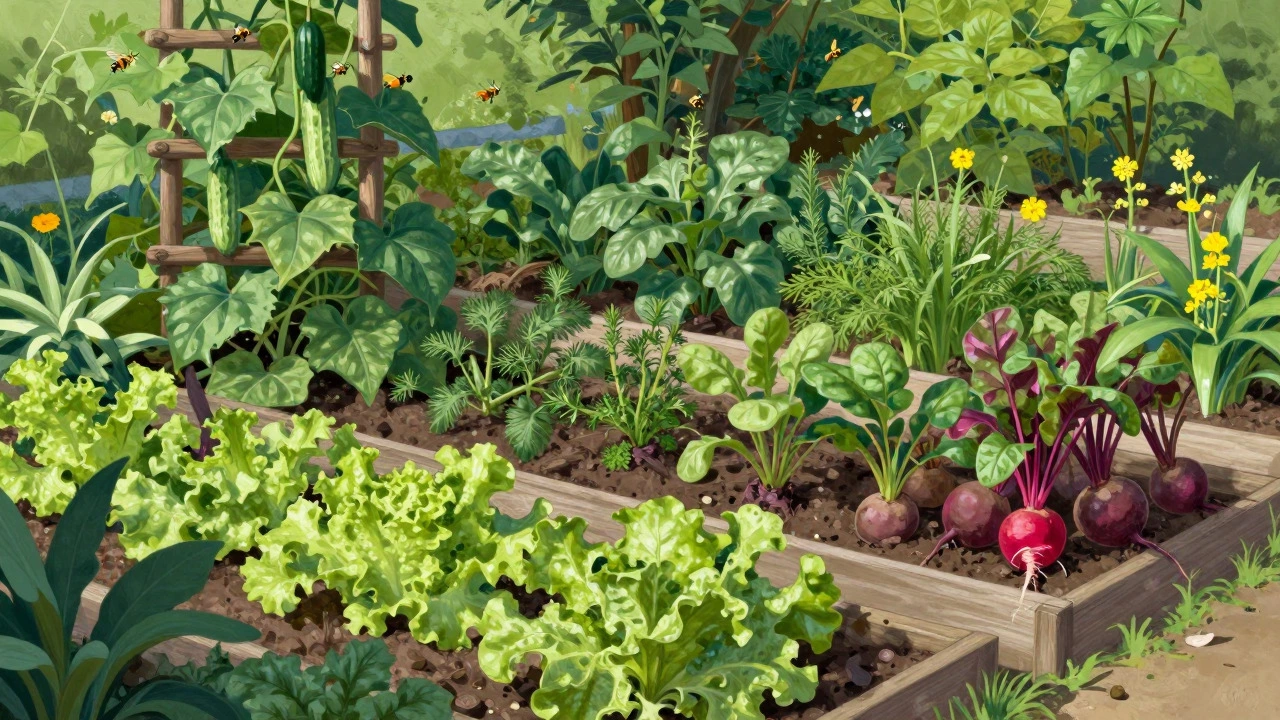
Plant lettuce or spinach at the base of corn or cucumber plants. As summer heats up, the taller plants cast shade, extending the harvest window by weeks. Without shade, lettuce bolts (goes to seed) quickly, turning bitter and tough.
Kale is tougher but still benefits from companions. Nasturtiums planted nearby act as a trap crop, luring aphids away from the kale. The aphids prefer nasturtiums, leaving your brassicas untouched. Plus, nasturtiums are edible and add a peppery kick to salads.
Root Vegetables: Carrots, Beets, and Radishes
Root vegetables need loose, stone-free soil to develop properly. Their best friends are plants that don’t compete for underground space.
Onions, garlic, and leeks are excellent companions for carrots. Their pungent odor deters the carrot rust fly, a major pest that lays eggs in carrot tops. In return, carrots’ shallow roots don’t interfere with onion bulb formation.
Radishes mature quickly, making them perfect for interplanting with slower-growing beets or parsnips. Sow radish seeds between beet rows. Harvest the radishes in 3-4 weeks, then let the beets expand into the freed-up space. This maximizes yield per square foot, crucial for small gardens.
Legumes: Beans and Peas Give Back
Beans and peas are the philanthropists of the garden. Through a process called nitrogen fixation, they convert atmospheric nitrogen into a form plants can use. This makes them ideal partners for heavy feeders.
Plant bush beans next to cucumbers or squash. The beans enrich the soil with nitrogen, boosting fruit production. However, avoid planting beans near onions or garlic, which can inhibit nitrogen-fixing bacteria in bean roots.
Peas pair well with carrots, radishes, and beets. They grow early in the season, fixing nitrogen before summer heat sets in. After harvesting peas, leave the roots in the ground to decompose and release nutrients for subsequent crops.
Herbs: More Than Just Flavor
Herbs aren’t just for cooking-they’re powerful tools in companion planting. Their essential oils mask odors, repel insects, and attract pollinators.
- Dill attracts parasitic wasps that eat aphids. Plant it near cabbage, broccoli, and cucumbers.
- Mint repels ants and aphids. Keep it in containers, though, as it spreads aggressively and can choke out neighbors.
- Chamomile enhances the flavor of cabbage and cauliflower while improving overall plant health.
- Rosemary deters cabbage moths and bean beetles. Place it near brassicas and legumes.
Remember, not all herbs play nice. Sage and rue inhibit growth in many vegetables. Stick to proven companions like basil, thyme, and oregano near tomatoes and peppers.
Plants to Keep Apart: The Bad Neighbors
Just as some plants help each other, others hinder growth. Knowing who to separate is as important as knowing who to pair.
| Plant A | Plant B | Reason to Separate |
|---|---|---|
| Fennel | Most vegetables | Releases toxins that stunt growth in nearly all garden plants. |
| Brassicas (Cabbage, Broccoli) | Strawberries | Brassicas harbor fungi that cause leaf spot in strawberries. |
| Potatoes | Tomatoes, Squash | Share common diseases like blight and scab; compete heavily for nutrients. |
| Beans | Onions, Garlic | Alliums reduce nitrogen fixation in legume roots. |
Ignoring these incompatibilities leads to stunted growth, increased disease pressure, and lower yields. Take time to plan your layout before sowing seeds.
Designing Your Garden Layout for Success
Now that you know who likes whom, how do you arrange everything? Start with a sketch. Map out your garden beds or containers. Place tall plants like corn and sunflowers on the north side to avoid shading shorter crops. Group plants with similar water and light needs together.
Consider succession planting. Fast-maturing crops like radishes and spinach can be replaced with slower ones like beans or peppers once harvested. This keeps your garden productive all season long.
Don’t forget vertical space. Trellises for cucumbers, peas, and pole beans save ground space and improve air circulation, reducing fungal diseases. Hanging baskets for herbs like basil and mint keep them accessible and contained.
Finally, observe your garden. Note which combinations thrive and which struggle. Every garden is unique-soil type, microclimate, and local pest pressures vary. Use companion planting as a guide, not a rigid rulebook. Adjust based on what works in your specific environment.
Can I practice companion planting in containers?
Absolutely. Container gardening actually makes companion planting easier since you control the soil and spacing. Pair tomatoes with basil in a large pot, or grow lettuce with radishes in a shallow tray. Just ensure containers are deep enough for root systems and have adequate drainage.
Does companion planting really increase yields?
Yes, studies show improved yields due to better pest control, enhanced pollination, and optimized nutrient use. For example, marigolds reduce nematode damage in tomatoes, leading to healthier plants and more fruit. While results vary, strategic pairing consistently outperforms random planting.
What should I plant next to cucumbers?
Cucumbers love beans, peas, radishes, and corn. Beans and peas fix nitrogen, feeding the cucumber vines. Radishes deter cucumber beetles. Corn provides structural support if using vining varieties. Avoid planting cucumbers near sage or potatoes, which can hinder growth or spread disease.
How close should companion plants be?
Spacing depends on the plants involved. Herbs like basil can be planted 6-12 inches from tomatoes. Root vegetables like carrots can be sown directly between wider-spaced crops like beets. Always follow seed packet guidelines for minimum spacing, then adjust based on observed competition.
Is companion planting scientific or folklore?
It’s both. Ancient practices like the Three Sisters have been validated by modern agronomy. Research confirms that certain plant combinations reduce pest pressure and improve soil health. While not every traditional pairing has rigorous scientific backing, many are rooted in observable biological interactions worth trying.