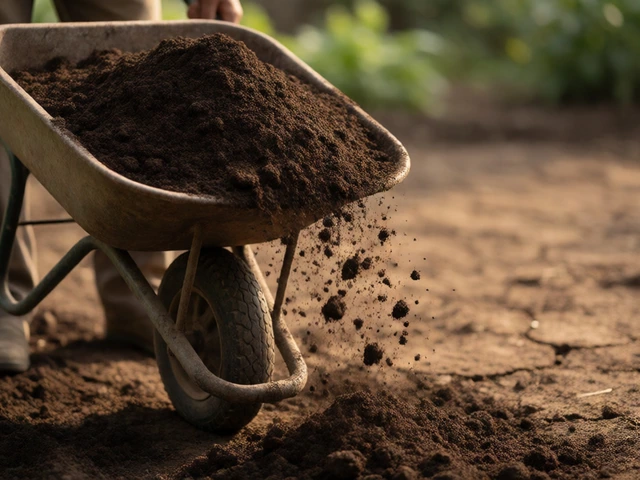
Raised Bed Soil Calculator
Enter your raised bed dimensions to calculate the total soil volume required and break it down into the recommended 60/30/10 mix (Topsoil / Compost / Aeration).
Recommended Mix Breakdown
Based on the 60% Topsoil, 30% Compost, 10% Aeration rule for optimal drainage and nutrients.
| Material | Ratio | Volume (m³) | Est. Weight (kg)* |
|---|---|---|---|
| Topsoil | 60% | 0.00 | 0 |
| Compost | 30% | 0.00 | 0 |
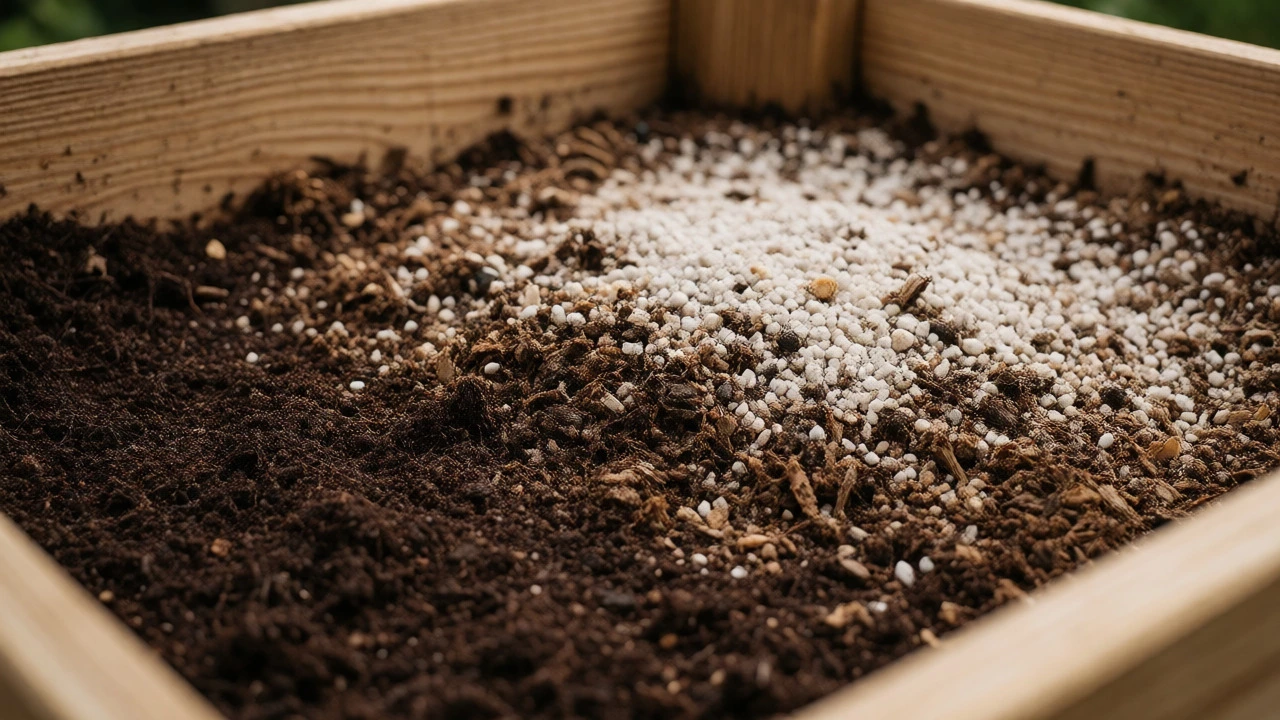
| Aeration (Perlite/Grit) | 10% | 0.00 | 0 |
*Weights are estimates based on average densities (Topsoil ~1200kg/m³, Compost ~600kg/m³, Perlite ~100kg/m³). Actual weights vary by moisture and composition.
💡 Pro Tip for Deep Beds (>30cm)
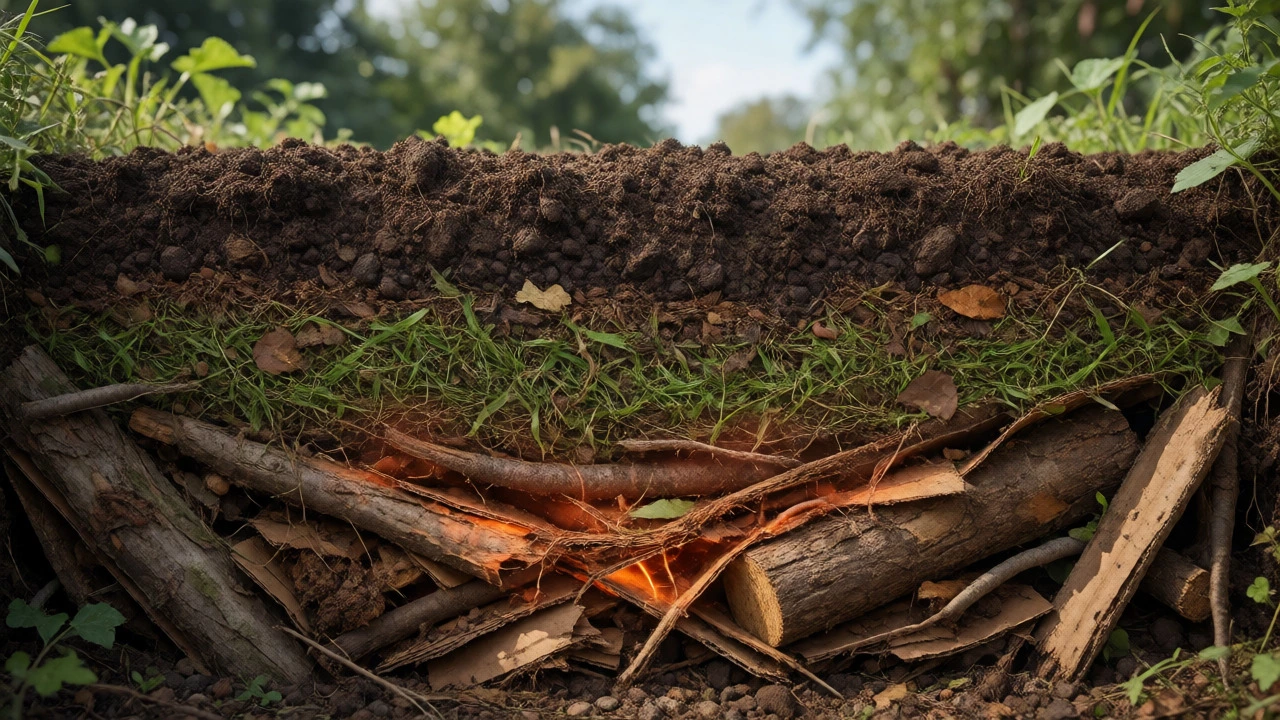
If your bed is deeper than 30cm, consider using the Hügelkultur method: Fill the bottom 30% with logs/branches/cardboard, the middle 30% with grass clippings/leaves, and only use the calculated premium mix for the top 40%. This saves money and improves long-term structure.
You’ve bought the wood, drilled the screws, and maybe even leveled the ground. But staring at that empty box of timber, you hit the real question: what do I actually put in it?
It’s tempting to just dig up some dirt from the yard and call it a day. But if you’re building a raised bed, especially in the UK where clay soils can be heavy and drainage is often a nightmare, plain topsoil will compact into a brick after two winters. Your tomatoes will sulk, your carrots will fork, and your wallet will wonder why you bothered.
Filling a garden bed isn’t just about volume; it’s about creating a living structure. You need air pockets for roots, water retention for dry spells, and nutrients for growth. This guide breaks down exactly how to fill your bed efficiently, cheaply, and effectively, tailored for our damp, temperate climate.
The Golden Ratio: Why One Ingredient Isn't Enough
If you take only one thing from this article, let it be this: never fill a raised bed with 100% topsoil. It’s too dense. Instead, think in layers or a specific mix ratio. The most reliable formula used by professional growers and successful allotment holders is the Lasagna Method or the 60/30/10 rule.
Here is the breakdown:
- 50-60% Topsoil: This provides the bulk mass and mineral content. Try to source local topsoil to keep costs down.
- 30-40% Compost: This is your nutrient engine. It holds moisture and feeds the plants.
- 10-20% Aeration Material: Perlite, vermiculite, or coarse grit. This prevents compaction and helps drainage.
Why these numbers? Topsoil alone drains poorly in wet Manchester autumns. Compost alone dries out too fast in summer heat. Together, they create a sponge that breathes.
Layering Strategy: The 'Hügelkultur' Approach
If your bed is deep (over 30cm/12 inches), filling it entirely with premium compost and topsoil gets expensive-fast. For beds deeper than standard height, use the bottom-filling strategy known as Hügelkultur. This is a German technique that uses decaying wood and organic waste to generate heat and structure at the base.
Start by placing bulky, carbon-rich materials at the very bottom. Think old logs, branches, cardboard boxes (tape removed), or thick layers of newspaper. Over time, these break down, releasing CO2 and heat, which warms the root zone slightly-a bonus for early spring planting. They also act as a reservoir, holding water like a sponge during droughts.
Above the bulky layer, add a middle layer of grass clippings, leaf mold, or spent coffee grounds. Finally, cap it with your high-quality topsoil and compost mix. This method saves hundreds of pounds on soil delivery while improving long-term soil health.
| Layer | Material | Depth | Purpose |
|---|---|---|---|
| Base | Logs, Branches, Cardboard | Bottom 30% | Drainage & Heat Generation |
| Middle | Grass Clippings, Leaves, Manure | Middle 30% | Nutrient Release & Water Retention |
| Top | Topsoil & Compost Mix | Top 40% | Root Zone & Immediate Growth |
Sourcing Your Materials: Where to Get Soil Cheaply
In the UK, buying bags of soil from the supermarket is the quickest way to go broke. A single cubic meter of quality topsoil costs significantly less when bought in bulk from a local landscaping supplier than in 25kg bags at a garden center.
Check local council tips or community recycling centers. Many offer free or low-cost green waste compost. Just ensure it’s well-rotted. If it smells like ammonia or feels hot, it’s not ready-it’ll burn your plant roots. Ask for "screened" compost if possible; it’s cleaner and easier to work with.
For manure, look for local stables or farms. Horse manure mixed with straw is excellent but must be aged for at least six months. Fresh manure is too high in nitrogen and pathogens. Chicken manure pellets are a convenient, sterile alternative available at any garden shop, though pricier per kg.
Dealing with Existing Ground: To Dig or Not to Dig?
Should you dig up the lawn before filling? If you have perennial weeds like bindweed or couch grass, yes. Remove the top 5-10cm of turf. If the ground is just general lawn, you can lay a barrier instead.
Lay a double layer of cardboard directly on the grass inside the bed frame. Wet it thoroughly. Then pile your soil mix on top. The cardboard smothers the grass underneath, turning it into organic matter over a year. This saves back-breaking labor and preserves the beneficial microbial life already present in the native soil.
One critical warning: Ensure the bed has no solid floor. If you’re building on concrete or paving, drill holes in the base or leave gaps between slats. Roots need to reach down, and excess rainwater needs to escape. Waterlogged beds kill more plants than drought does.
Amending Your Mix: pH and Nutrients
Once filled, test your soil. Most vegetables prefer a pH between 6.0 and 7.0. If your soil is acidic (common in parts of Northern England), add garden lime. If it’s alkaline (chalky areas), add sulfur or peat moss. Don’t guess-buy a cheap pH testing kit from a hardware store.
Add a slow-release organic fertilizer at planting time. Bone meal promotes root development, while blood meal boosts leafy growth. Fish, Blood and Bone is a classic UK staple that covers all bases. Mix it gently into the top 10cm of your new bed.
Maintenance: Keeping Your Bed Fertile Year-Round
Your bed isn’t a static object; it’s an ecosystem. Every season, you remove nutrients by harvesting crops. You need to replace them.
At the end of autumn, spread a 5cm layer of fresh compost or manure over the surface. Do not dig it in immediately. Let winter rains and frost work it into the soil naturally. Earthworms will pull it down. This mimics the forest floor process and maintains soil structure without disturbing fungal networks.
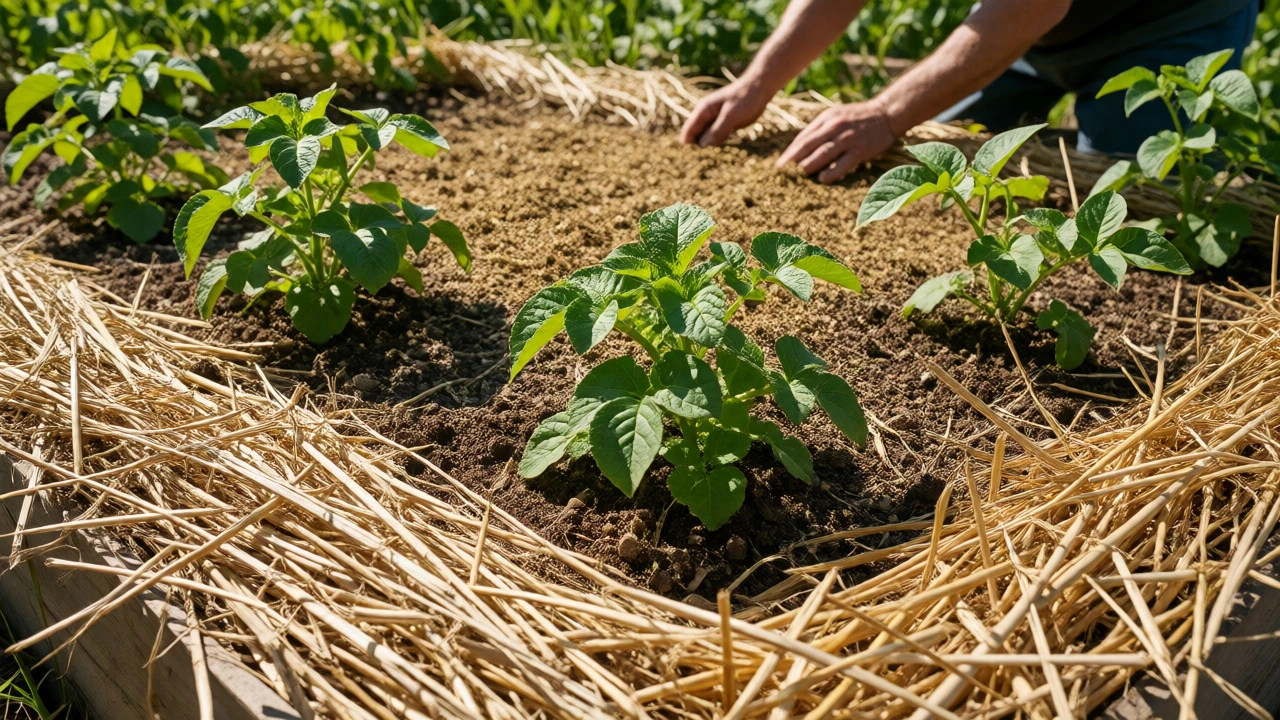
Mulch heavily during the growing season. Use straw, shredded leaves, or grass clippings around plants. Mulch suppresses weeds, retains moisture, and regulates temperature. As it decomposes, it becomes part of your soil, reducing the need for frequent watering and feeding.
Common Mistakes to Avoid
- Using Builder's Sand: Fine sand packs like cement. Always use sharp sand or grit if you need drainage.
- Planting Too Early: New beds drain better and warm faster, but they don’t hold heat well initially. Wait until soil temps hit 10°C for tender crops.
- Ignoring Drainage: If water pools on the surface after rain, your mix is too fine. Add more perlite or grit next time.
- Over-Fertilizing: More isn’t better. Excess salts from synthetic fertilizers can kill beneficial microbes. Stick to organic sources.
Next Steps: What to Plant First
With your bed filled and settled, start with forgiving crops. Potatoes are great for breaking in new soil-they thrive in loose earth and improve structure when dug up. Beans fix their own nitrogen, so they won’t deplete your fresh compost. Salad greens grow quickly and give you immediate feedback on whether your soil balance is right.
Avoid heavy feeders like brassicas (cabbages, broccoli) in the first month unless you’ve added significant manure. Give the biology time to establish itself.
Can I use pure compost to fill a raised bed?
No, not exclusively. Pure compost decomposes rapidly, causing the soil level to drop significantly within a year. It also lacks the structural stability of mineral soil. Mix compost with topsoil (approx. 30-40%) to maintain volume and provide essential minerals.
How much soil do I need for a standard raised bed?
Calculate the volume by multiplying Length x Width x Depth (in meters). For example, a 2m x 1m bed that is 0.3m deep requires 0.6 cubic meters of soil. Since 1 bag of soil is usually 0.025 cubic meters, you’d need roughly 24 bags. Bulk delivery is cheaper for anything over 0.5 cubic meters.
Is peat-free compost really necessary?
Yes, for environmental reasons. Peat bogs are crucial carbon sinks. Modern peat-free alternatives using coir, wood fiber, or green waste perform equally well in vegetable gardens and support sustainable gardening practices.
Do I need to line the bottom of my raised bed?
If building on soil, use cardboard to suppress weeds. If building on concrete or paving, line with landscape fabric to prevent soil washing out through gaps, but ensure water can still drain. Never use plastic sheeting, as it blocks drainage completely.
When is the best time to fill a new raised bed?
Autumn is ideal. Filling in October or November allows the soil to settle over winter. By spring, the structure is stable, and any added organic matter has begun to integrate, making planting easier and more successful.