Balcony Gardening Success Calculator
Not sure what to plant? Answer these three questions to get personalized recommendations for your pots.
Recommended Crops:
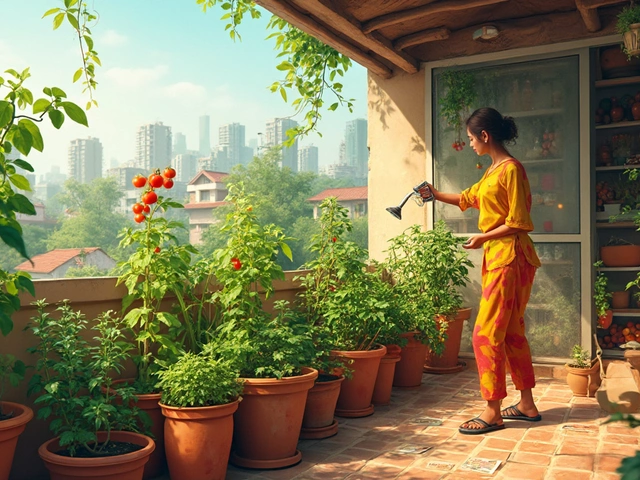
There is a specific kind of frustration that comes from watching supermarket strawberries rot before you even get them home. You paid good money for flavor, but you got textureless red water instead. What if you could pick one off the vine while it’s still warm from the sun? You don’t need an acre of land or a green thumb inherited from your grandmother. You just need a few pots, some decent soil, and the right plants.
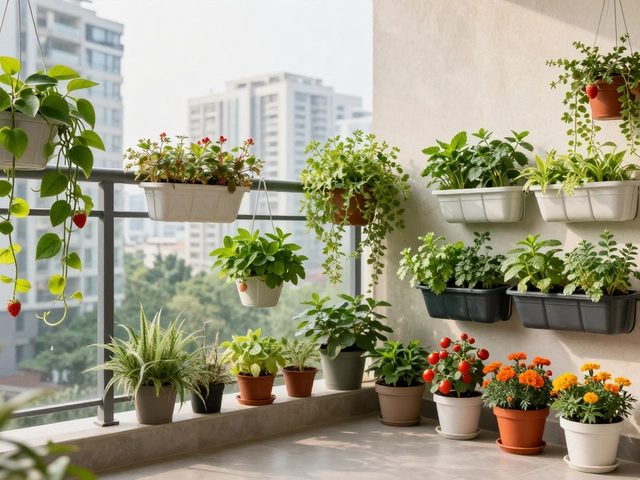
Growing fruits and vegetables in containers is surprisingly forgiving if you pick the right crops. Some plants are divas-they demand perfect pH levels, constant pruning, and humidity control. Others are tough survivors that thrive on neglect and limited root space. If you’re setting up a balcony garden or just have a sunny windowsill, you want plants that give you high yields for low effort. Here is exactly what grows best in pots, why they work, and how to keep them alive.
The Top Tier: Leafy Greens That Pay Rent Fast
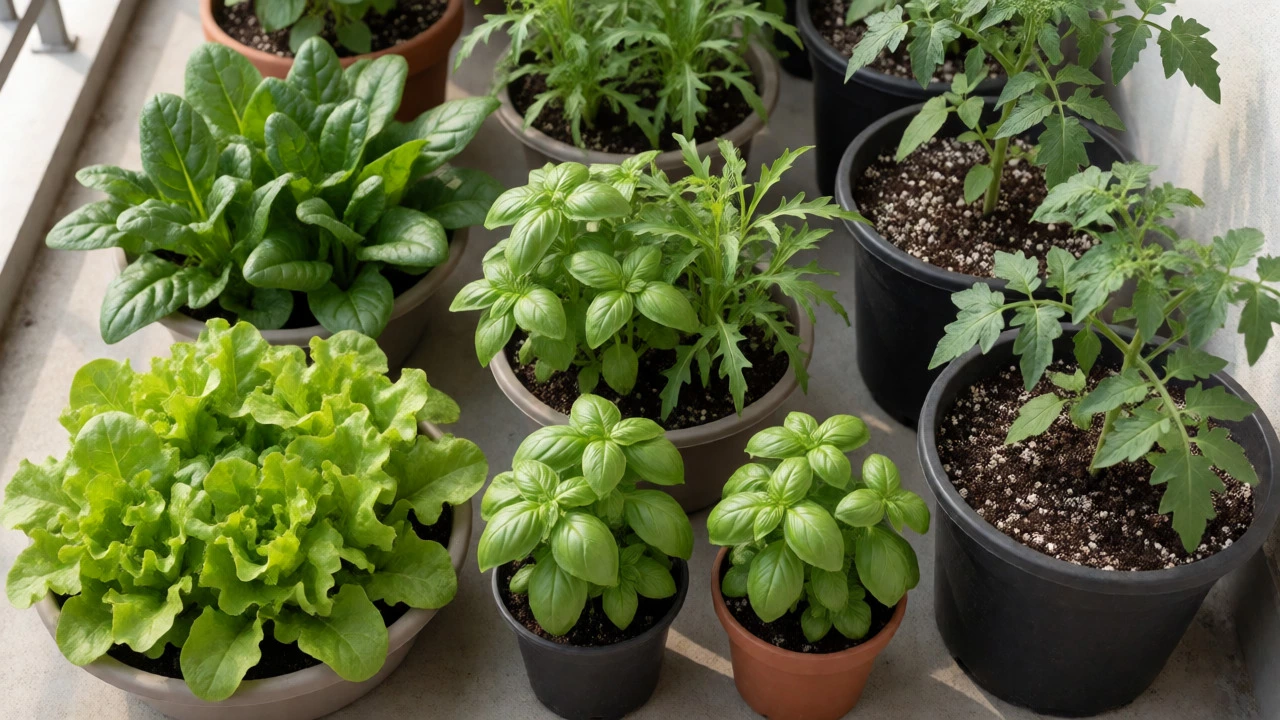
If you want instant gratification, start with leaves. They don’t need deep roots, they don’t need pollinators, and they are ready to eat in weeks, not months. Lettuce is the classic choice, but don’t stop there. Loose-leaf varieties like 'Red Sails' or 'Black Seeded Simpson' are superior to iceberg heads because you can harvest outer leaves as needed, letting the center keep growing. This "cut-and-come-again" method means one pot feeds you for six weeks.
Spinach is another powerhouse, though it hates heat. In Manchester, where we value our cool summers, spinach thrives in spring and autumn. Plant it in a wide, shallow container-about 15cm deep is plenty. The key here is consistency. Spinach bolts (goes to seed) quickly if the soil dries out, turning bitter. Keep the pot moist, and you’ll have salad greens all season long. For a peppery kick, try Arugula. It grows faster than lettuce and tastes far better than anything you’ll find in a plastic bag at Tesco.
- Depth required: 15-20 cm (6-8 inches)
- Sunlight: Partial shade to full sun
- Harvest time: 30-45 days from sowing
Herbs: The High-Value Low-Effort Crops
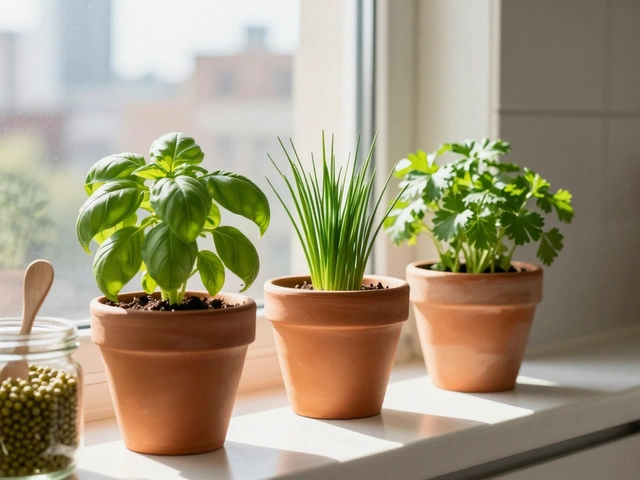
Why buy fresh basil for £2 when you can grow a massive bush for pennies? Herbs are arguably the easiest category to master in pots because most of them evolved in rocky, poor-soil environments. They actually prefer being slightly stressed. Overwatering is the number one killer of potted herbs.
Basil is the exception-it loves water and warmth. Pinch off the top sets of leaves regularly to encourage bushiness; otherwise, it will shoot up, flower, and taste like soap. Place it in the sunniest spot you have. On the other hand, Rosemary and Thyme are Mediterranean natives. They want gritty, well-draining soil and very little water. If you live in a damp climate, use terracotta pots rather than plastic, as clay breathes and helps prevent root rot.
One trick I use is planting mint in its own separate pot. Mint sends out runners aggressively. If you plant it directly in the ground or share a large container with other herbs, it will strangle them within two seasons. Give it isolation, and it becomes a generous neighbor.
Fruiting Veggies: Cherry Tomatoes and Peppers
Everyone wants to grow tomatoes, but big beefsteaks struggle in pots. Their root systems are too demanding, and they crack easily if watering isn't perfectly consistent. Enter the Cherry Tomato. Varieties like 'Tumbling Tom' or 'Tiny Tim' are bred specifically for containers. They stay compact, produce hundreds of small fruits, and tolerate the fluctuating moisture levels common in pots.
You need a larger pot for these-at least 30 liters (roughly 8 gallons). Use a mix of compost and perlite to ensure drainage. Feed them weekly with a tomato-specific fertilizer once flowers appear. Potassium boosts fruit production; nitrogen makes leaves. Don’t confuse the two, or you’ll end up with a lush green bush and no dinner.
Peppers, both sweet and hot, also excel in containers. They love heat, so position them against a south-facing wall where bricks radiate warmth back onto the plant overnight. Dwarf chili peppers are particularly ornamental, turning bright red, orange, or purple. Just be careful handling hot varieties-the oils stick to skin and gloves help. Unlike tomatoes, peppers don’t need aggressive pruning, making them lower maintenance for beginners.
| Crop Type | Minimum Pot Volume | Drainage Needs | Feeding Frequency |
|---|---|---|---|
| Leafy Greens (Lettuce, Spinach) | 5-10 Liters | Moderate | Light (Compost only) |
| Herbs (Basil, Thyme) | 5-10 Liters | High (for Rosemary/Thyme) | Minimal |
| Cherry Tomatoes | 25-30 Liters | Very High | Weekly (Potassium-rich) |
| Peppers & Aubergines | 20-25 Liters | High | Fortnightly |
| Strawberries | 10-15 Liters | Moderate | Balanced Liquid Feed |
The Sweet Stuff: Strawberries and Dwarf Berries
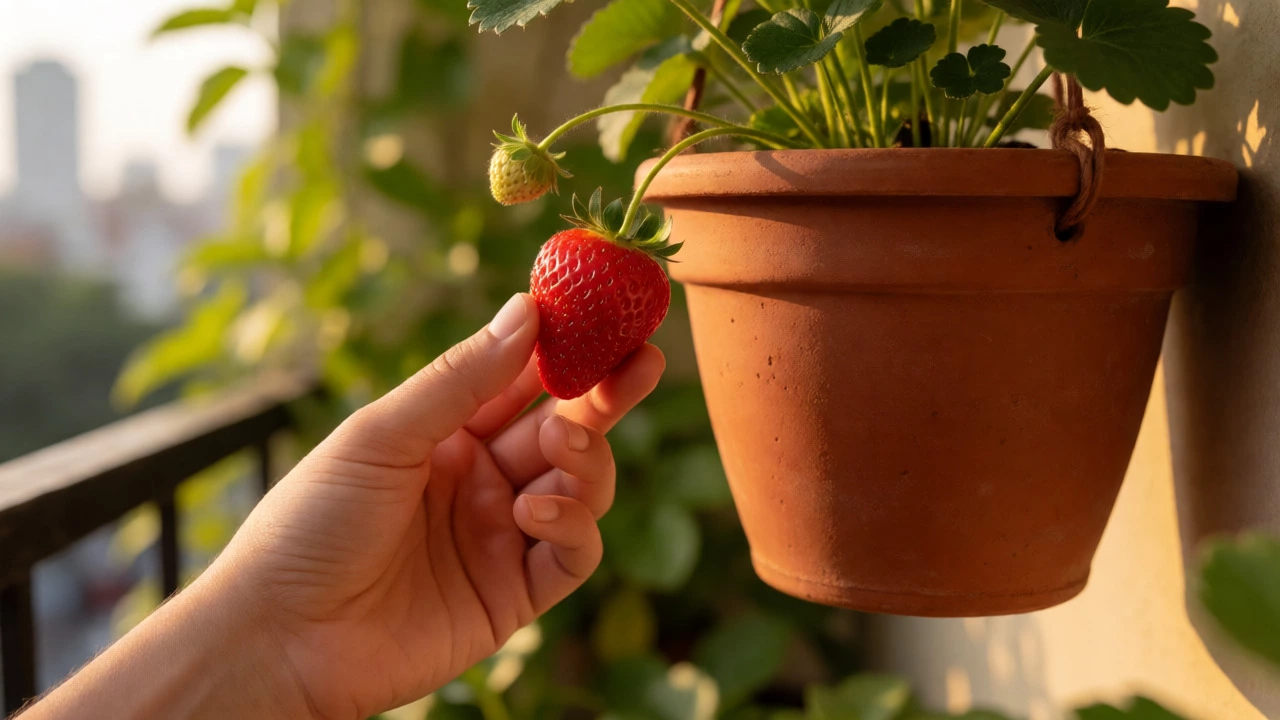
Nothing beats the smell of a ripe strawberry. Growing them in pots solves two problems: slugs and space. Slugs love strawberries, but they hate climbing rough surfaces. Hang your pots or place them on stands, and your crop stays safe. Alpine Strawberries are tiny but intensely flavored. Standard everbearing varieties like 'Mara des Bois' offer multiple harvests throughout summer.
Strawberries send out runners. If you want more plants, let a runner touch the soil in a nearby pot and peg it down. Once it roots, cut the connection. If you want fruit, pinch those runners off immediately so the plant puts energy into berries, not babies.
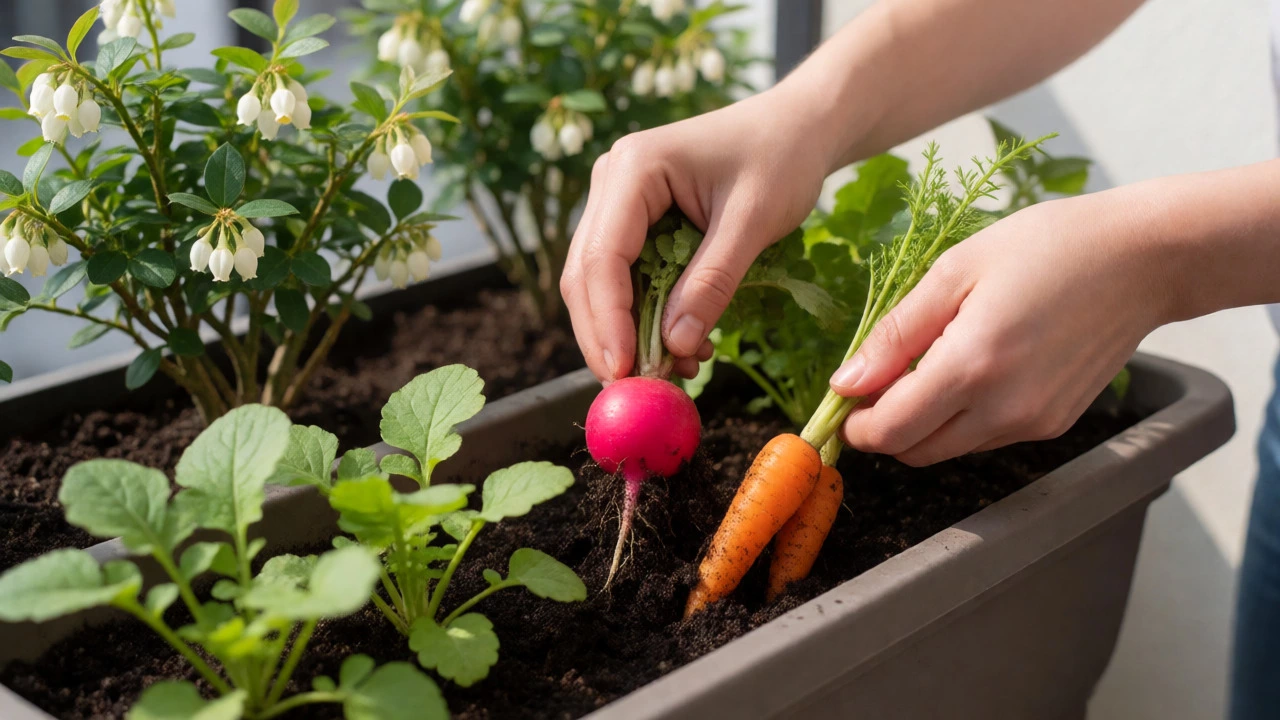
For something different, consider Dwarf Blueberries. Most blueberries need acidic soil and cross-pollination, which is tricky in pots. But new dwarf varieties like 'Pink Lemonade' or 'Sunshine Blue' are self-fertile and tolerant of standard ericaceous compost. They look great too, with white bell-shaped flowers in spring and colorful foliage in autumn.
Root Vegetables: Radishes and Baby Carrots
People assume carrots need deep beds. Not true. You just need depth equal to the carrot length. If you grow baby carrots, a 20cm deep window box works fine. Choose short, round varieties like 'Paris Market' or 'Little Finger'. They mature fast and are naturally sweeter than their field-grown cousins.
Radishes are the speed demons of the vegetable world. From seed to snack in 25 days. They are perfect for kids or impatient adults. Because they grow so fast, pests rarely bother them. Just sow a few seeds every week for a continuous supply. If you leave them in the ground too long, they turn woody and spicy. Pull them young.
Soil and Water: The Non-Negotiables
Never dig up garden soil and put it in a pot. Garden soil compacts in containers, suffocating roots. Always use a quality multi-purpose compost mixed with perlite or vermiculite. This keeps the structure light and airy. Add slow-release granules at planting time so you aren’t scrambling for fertilizer later.
Watering is where most people fail. Pots dry out faster than ground beds, especially on balconies where wind whips moisture away. Check daily. Stick your finger an inch into the soil. If it feels dry, water thoroughly until it runs out the bottom holes. Never let water sit in a saucer underneath-that invites mosquitoes and rots roots. Self-watering pots are a lifesaver if you travel often, but they cost more. A simple rule: morning is best. Evening watering can invite fungal diseases in humid UK weather.
Common Pitfalls to Avoid
First, overcrowding. It’s tempting to cram ten tomato plants into one pot. Don’t. One plant per 30-liter pot is enough. Crowded plants compete for nutrients and air, leading to mildew. Second, ignoring drainage. If your pot doesn’t have holes, drill them or buy a new pot. No amount of careful watering saves a plant sitting in mud. Third, lack of sunlight. Fruiting plants need 6+ hours of direct sun. Leafy greens manage with 4. If your balcony is shady, stick to lettuce, chard, and parsley.
Finally, don’t forget about pollination. If you’re growing fruiting plants on a high-rise balcony, bees might miss you. Gently shake flowering branches or use a small paintbrush to move pollen from flower to flower. It takes ten seconds and ensures you get fruit instead of just pretty blossoms.
Can I reuse potting soil next year?
Yes, but refresh it. Old soil loses nutrients and may harbor pathogens. Mix in 50% fresh compost and add organic fertilizer before replanting. Rotate crops-don’t grow tomatoes in the same pot two years running-to prevent disease buildup.
Do I need to fertilize herbs?
Rarely. Herbs grown in good quality compost usually have enough nutrients for a season. Over-fertilizing dilutes their essential oils, making them less flavorful. If leaves look pale yellow, a weak liquid feed can help, but hold back otherwise.
What is the best pot material for outdoor use?
Terracotta is breathable and prevents overwatering, ideal for herbs and succulents. Plastic is lighter and retains moisture better, good for thirsty plants like tomatoes. Wood looks nice but rots eventually unless treated. Stone is heavy but stable in wind. Choose based on weight limits of your balcony.
How many pots do I need for a family of four?
Start small. Two pots of cherry tomatoes, three pots of mixed salad greens, and one herb pot (basil, thyme, rosemary) provide significant garnish and snacks. Scale up once you master the watering routine. Success breeds confidence.
Can I grow potatoes in pots?
Absolutely. Potatoes love bags and large tubs. Start with seed potatoes in early spring. As shoots grow, add more soil (earthing up). Harvest by tipping the pot out. New potatoes harvested this way are unmatched in flavor compared to stored ones.