Balcony Tomato Planner
Use this tool to determine how many tomatoes you can grow and what supplies you need.
Your Balcony Potential
You stand on your balcony, looking at the empty railing or the patch of concrete floor. You want fresh, vine-ripened tomatoes, but you don’t have a backyard. The short answer is yes, you absolutely can grow tomatoes on an apartment balcony. In fact, some of the most productive tomato plants I’ve seen thrive in pots rather than the ground. But it’s not as simple as throwing seeds into any old bucket and hoping for the best.
Growing tomatoes in containers requires a specific approach to soil, water, and variety selection. If you get these three things right, you’ll be harvesting sweet fruit all summer. If you miss them, you’ll end up with leggy, unproductive plants that drop their blossoms. Let’s break down exactly how to make your balcony work for you, starting with the biggest mistake people make: picking the wrong tomato type.
Picking the Right Tomato Variety
Not all tomatoes are created equal when space is tight. The first decision you need to make is between Determinate tomato varieties that grow to a fixed height and stop producing once they set fruit and Indeterminate tomato varieties that continue growing and producing throughout the season until frost kills them.
For a balcony, indeterminate varieties are usually the better choice if you have vertical space. They climb, so you can train them up a trellis or stake, keeping the footprint small while maximizing yield. However, they require more maintenance and pruning. Determinate varieties bush out and stay compact, making them easier to manage in wide, shallow pots, but they produce all their fruit at once, which is great for canning but less ideal for snacking over months.
Within those categories, focus on Cherry Tomatoes small, bite-sized tomatoes that ripen quickly and produce high yields in containers. Varieties like ‘Sweet Million’, ‘Sungold’, or ‘Tiny Tim’ are bred specifically for smaller spaces. They ripen faster, which means you get food sooner, and they tend to be more forgiving of the stress that comes with root confinement. Large beefsteak tomatoes often struggle in pots because they demand massive amounts of water and nutrients to swell up, leading to blossom end rot or split skins if conditions fluctuate.
| Type | Growth Habit | Container Size Needed | Best For |
|---|---|---|---|
| Cherry (Indeterminate) | Vining, tall | 5-7 gallons | Continuous snacking, vertical gardens |
| Plum/Roma (Determinate) | Bushy, medium | 3-5 gallons | Sauce making, limited space |
| Beefsteak (Indeterminate) | Large, heavy branches | 10+ gallons | Experienced growers only |
The Pot and Soil Setup
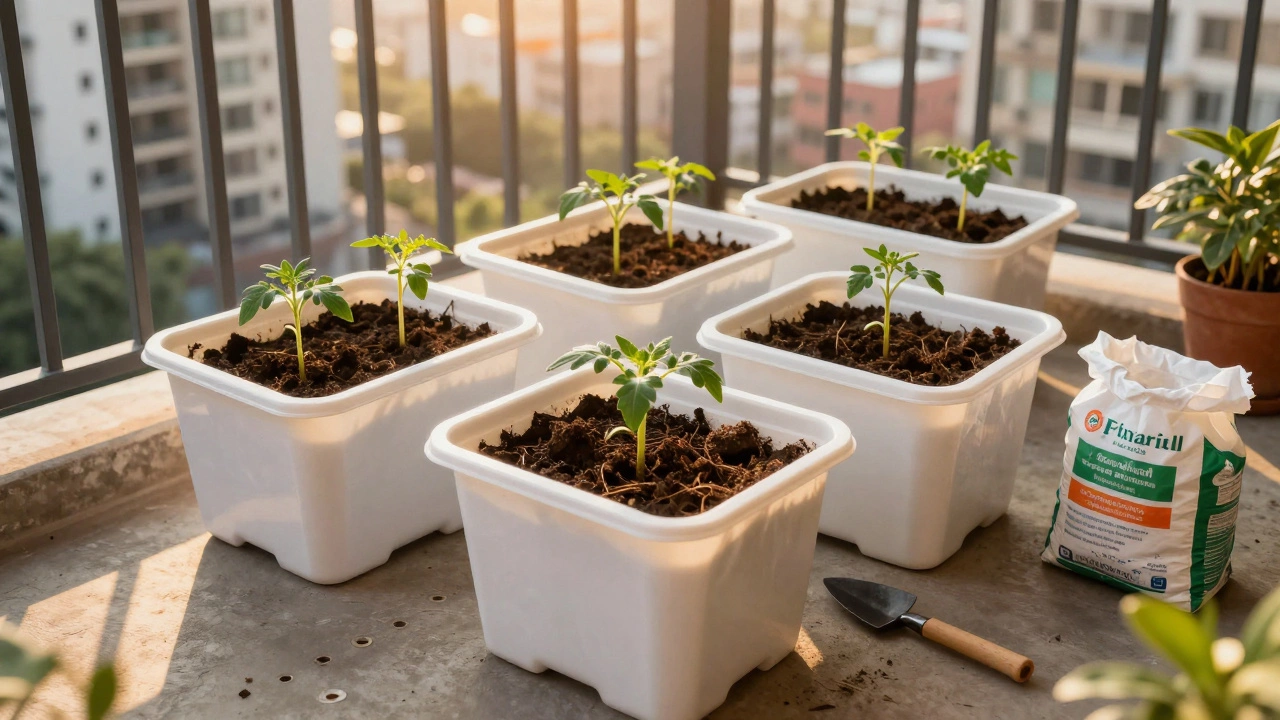
Your pot is the world for your tomato plant. It needs to be big enough to hold moisture and nutrients, but not so big that the soil stays wet for too long and rots the roots. A good rule of thumb is a minimum of five gallons per plant for cherry tomatoes. If you’re growing larger slicing tomatoes, aim for seven to ten gallons. Always choose a pot with drainage holes. Without them, you’re inviting root rot, a silent killer that turns healthy green leaves yellow overnight.
Do not use garden soil from the ground. Garden soil is too dense and will compact in a pot, suffocating the roots. Instead, use a high-quality Potting Mix a lightweight blend designed for containers, typically containing peat moss, perlite, and compost. Look for bags labeled “container mix” or “vegetable mix.” These mixes contain perlite or vermiculite to keep air flowing around the roots. You can boost this mix by adding a handful of slow-release organic fertilizer or worm castings before planting. This gives the plant a steady supply of nitrogen early on, helping it build strong stems.
If you’re worried about weight, especially on older balconies, consider using lightweight materials like fiberglass or high-density plastic rather than terracotta. Terracotta looks beautiful, but it’s heavy when full and dries out incredibly fast, meaning you’d need to water twice a day in peak summer heat.
Light and Placement Strategy
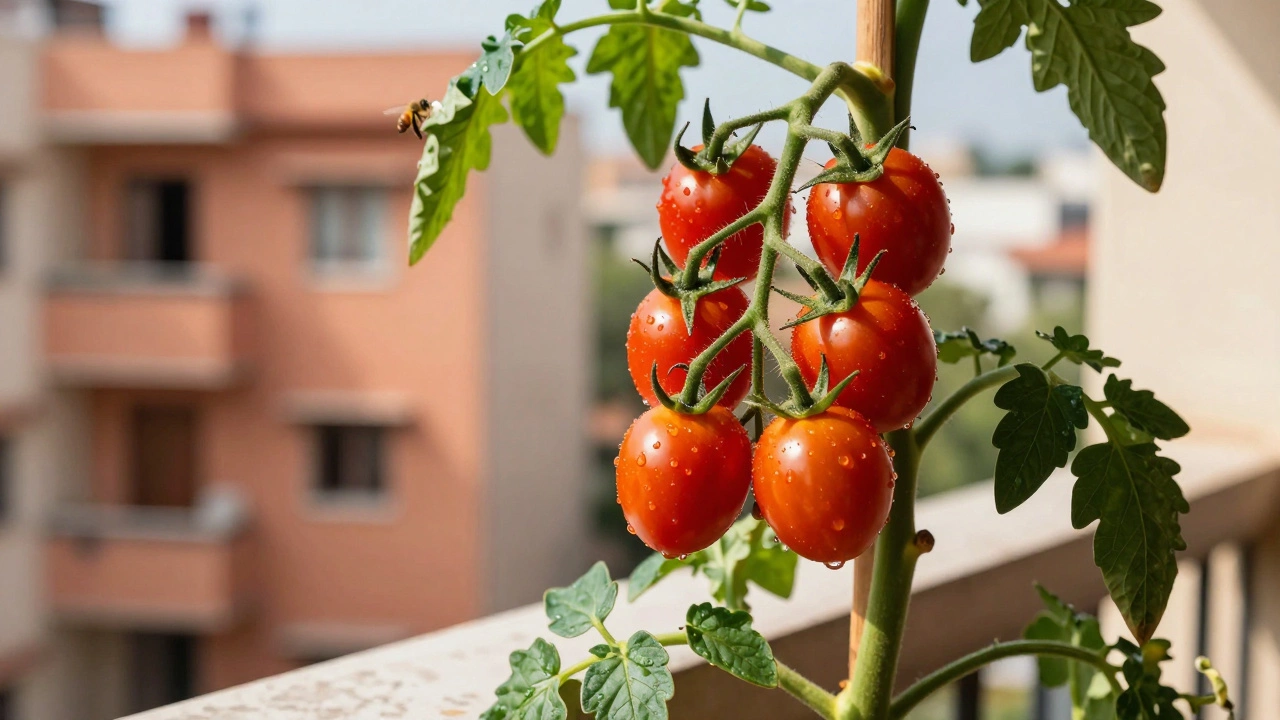
Tomatoes are sun worshippers. They need at least six to eight hours of direct sunlight daily to produce fruit. If your balcony faces north, you’re going to have a hard time. South-facing balconies are ideal, as they capture the most intense light. East-facing balconies get morning sun, which is gentler but still sufficient for many cherry varieties. West-facing balconies get hot afternoon sun, which can scorch leaves in July and August, so you may need to provide some shade during the hottest part of the day.
Rotate your pots every few days. Plants naturally lean toward the light source, and without rotation, your tomato plant might grow crooked and become top-heavy, risking tipping over in a windstorm. Also, check for shadows cast by nearby buildings or railings. Just because your balcony gets sun at noon doesn’t mean it gets enough total hours. Track the sun path for a week before planting to find the sweet spot.
Watering and Feeding Routine
This is where most balcony gardeners fail. Container plants dry out much faster than ground plants. In summer, you might need to water every day, sometimes twice a day. The key is consistency. Tomatoes hate drought stress. If the soil dries out completely and then gets soaked, the plant shocks itself, dropping flowers and causing fruits to crack.
Check the soil moisture by sticking your finger about an inch deep. If it feels dry, water thoroughly until water runs out of the drainage holes. Don’t just sprinkle the top; you want to encourage deep root growth. Mulching the surface of the soil with straw or shredded bark helps retain moisture and keeps the roots cooler.
Feeding is equally critical. Because watering leaches nutrients out of the pot, you need to replenish them. Switch from a balanced fertilizer to one higher in phosphorus and potassium once the plant starts flowering. Look for a formula like 5-10-10 or use a liquid seaweed extract every two weeks. Avoid high-nitrogen fertilizers after flowering begins, as they promote leafy growth at the expense of fruit production.
Support and Pruning
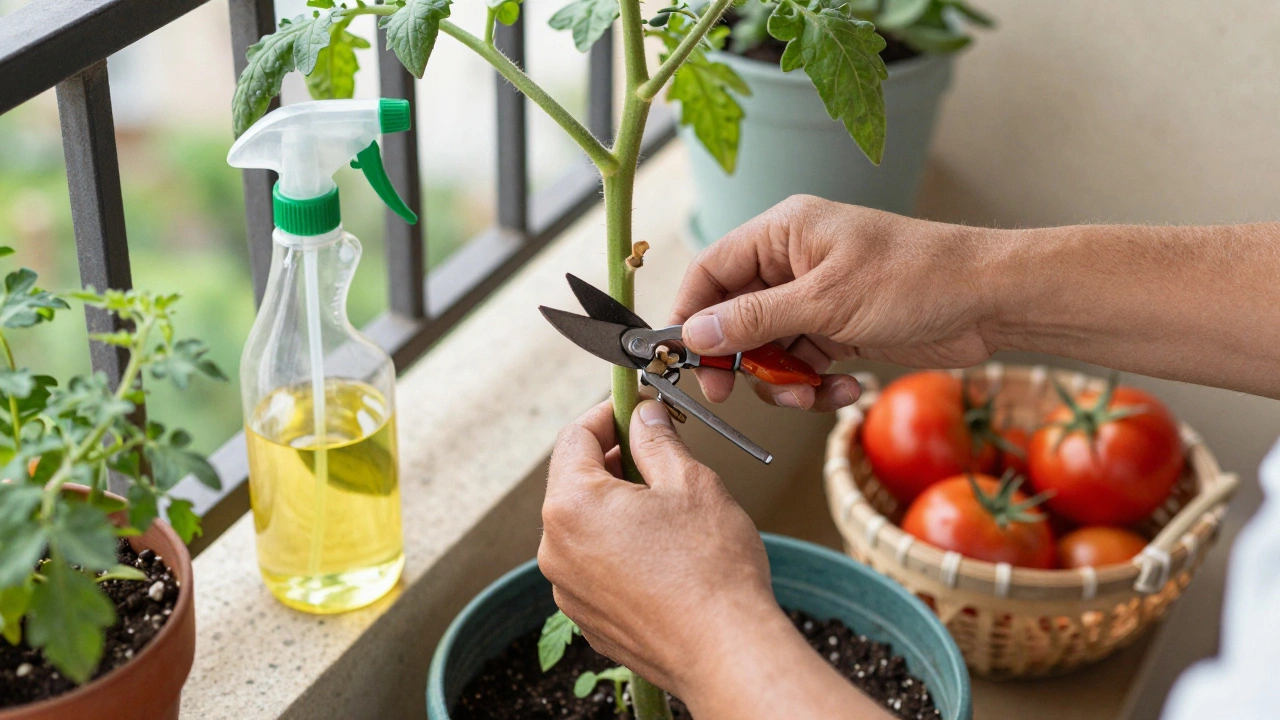
Even compact varieties need support. Set up a stake or a small cage when you plant the seedling. Waiting until the plant is large makes it difficult to install supports without damaging the roots. For indeterminate vines, tie the main stem loosely to the stake every few inches as it grows. Use soft ties or strips of old t-shirt fabric to avoid cutting into the stem.
Pruning is essential for airflow and disease prevention. Remove the “suckers”-the small shoots that grow in the angle between the main stem and the branch. Leaving them creates a dense bush that traps humidity, inviting fungal diseases like blight. By removing suckers, you channel the plant’s energy into fruit production rather than excessive foliage. Keep the bottom six inches of the stem clear of leaves to prevent soil-borne pathogens from splashing up onto the plant during watering.
Pest and Disease Management
Being off the ground offers some protection from rabbits and deer, but airborne pests still visit balconies. Watch for aphids, whiteflies, and hornworms. Aphids cluster under leaves and suck sap, weakening the plant. A strong jet of water from your hose can dislodge them. For persistent infestations, use insecticidal soap or neem oil, applying it in the evening to avoid burning leaves in the sun.
Fungal diseases are the bigger threat in humid urban environments. Ensure good air circulation by spacing plants apart and pruning lower leaves. If you see black spots on leaves, it could be early blight. Remove affected leaves immediately and apply a copper-based fungicide if the problem spreads. Prevention is easier than cure, so keep the foliage dry when watering-aim the water at the base of the plant, not the leaves.
How many tomato plants can I fit on a small balcony?
It depends on your balcony size and the variety. For a standard 4x6 foot balcony, you can comfortably fit two to three indeterminate cherry tomato plants in 5-gallon pots, provided you use vertical stakes. If you choose determinate bush varieties, you might squeeze in four or five, but ensure they have at least 18 inches of space between them for airflow.
Do I need to pollinate tomatoes on a balcony?
Tomatoes are self-pollinating, meaning they have both male and female parts in the same flower. Wind and vibration usually do the job. On a balcony, if there’s little wind, gently shake the main stem or tap the flower clusters once a day during peak blooming hours (late morning) to help release pollen. You don’t need bees for this process.
What should I do if my tomato plant drops its flowers?
Flower drop is usually caused by temperature extremes or inconsistent watering. If temperatures exceed 90°F (32°C) or drop below 55°F (13°C), pollen becomes sterile. Ensure consistent moisture and avoid over-fertilizing with nitrogen. Once temperatures stabilize, the plant should resume setting fruit.
Can I grow tomatoes in hanging baskets?
Yes, but only with specific dwarf or patio varieties like ‘Patio Princess’ or ‘Tiny Tim’. Standard tomatoes are too heavy and thirsty for hanging baskets. If you try it, water daily and fertilize weekly, as the small soil volume depletes nutrients rapidly.
When is the best time to start tomato seeds for a balcony garden?
Start seeds indoors 6-8 weeks before the last expected frost date. In most temperate zones, this means late February to early March. Transplant them outside only after nighttime temperatures consistently stay above 50°F (10°C). Alternatively, buy started transplants from a local nursery in spring to save time and reduce risk.