Drip Irrigation Runtime Calculator
Enter Your System Details
Recommended Schedule
Total Daily Runtime
Run for -- minutes, -- times a day.
Total Water Output: -- Liters/day
Why this works: --
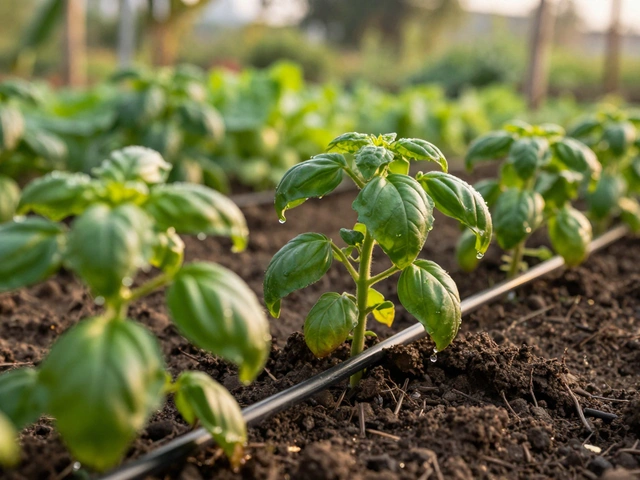
You’ve installed the tubing, connected the timer, and watched the first drops fall. It looks like a science experiment gone right. But then comes the nagging question: how long do I actually leave it on? Run it for an hour and you might drown your tomatoes. Run it for ten minutes and your peppers will wilt before sunset. There is no single magic number that applies to every garden, but there is a reliable way to find yours.
Getting the timing wrong is the most common reason people abandon drip irrigation a low-volume watering method that delivers water directly to plant roots through a network of tubes, pipes, and emitters. You don’t need a degree in hydrology to fix this. You just need to understand three variables: your flow rate, your soil type, and your plants’ thirst levels. Let’s break down exactly how to calculate the perfect run time so you can stop guessing and start growing.
The Golden Rule: Measure Your Flow Rate First
Before you set a timer, you need to know how much water your system is actually putting out. Most people assume their emitters are delivering what they say on the package-usually 1 liter per hour (LPH) or 0.5 gallons per hour (GPH). In reality, clogged filters, low water pressure, or cheap manufacturing often mean you’re getting half that amount. If you base your schedule on the label rather than reality, your plants will suffer.
Here is the simplest test you can do right now:
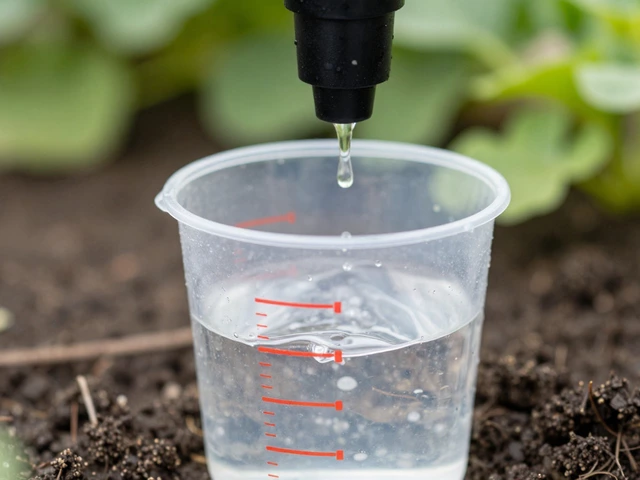
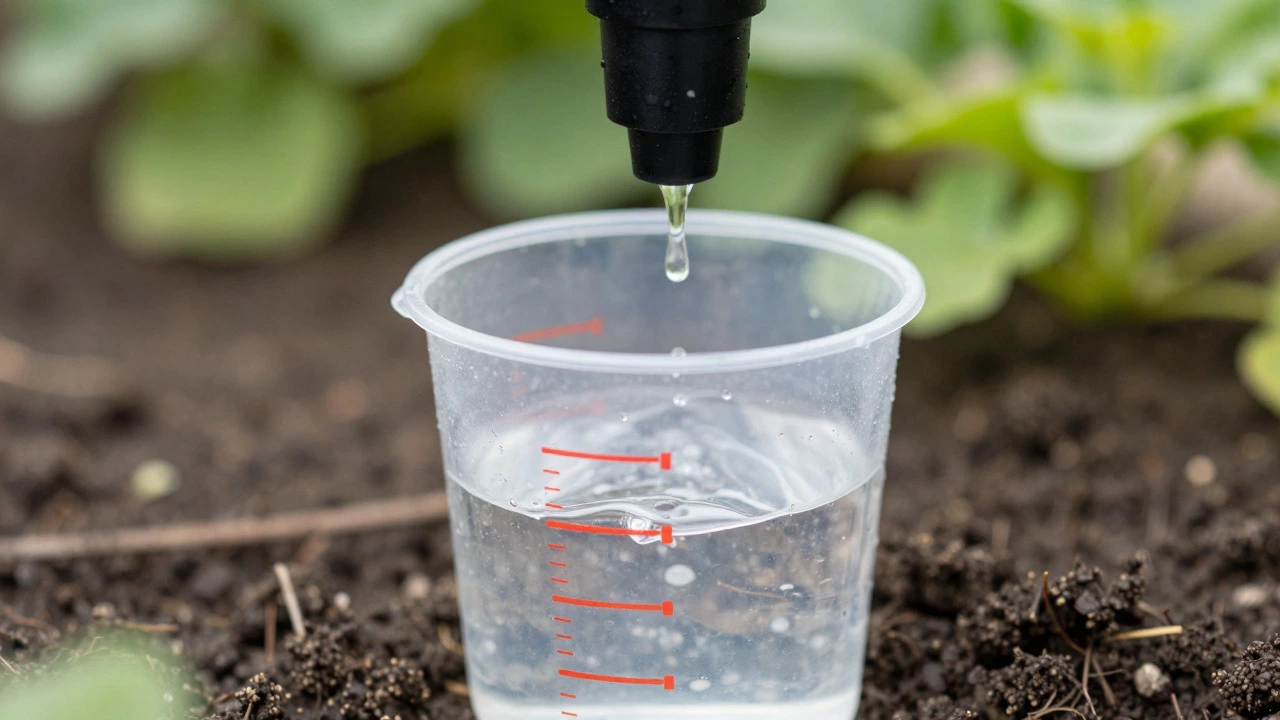
- Grab a clear cup or measuring jug with known volume markings.
- Place one cup under a standard emitter (the little black spikes or inline drippers).
- Turn on your system and let it run for exactly 15 minutes.
- Measure the water collected.
If you collected 30 milliliters in 15 minutes, multiply that by four. Your actual flow rate is 120 mL per hour. Do this for a few different spots in your garden. Pressure drops as water travels further down the line, so the emitter at the end of the zone might deliver less than the one near the pump. Use the lowest flow rate you measure as your baseline. This ensures even the farthest plants get enough water.
Soil Type Dictates Soak Time
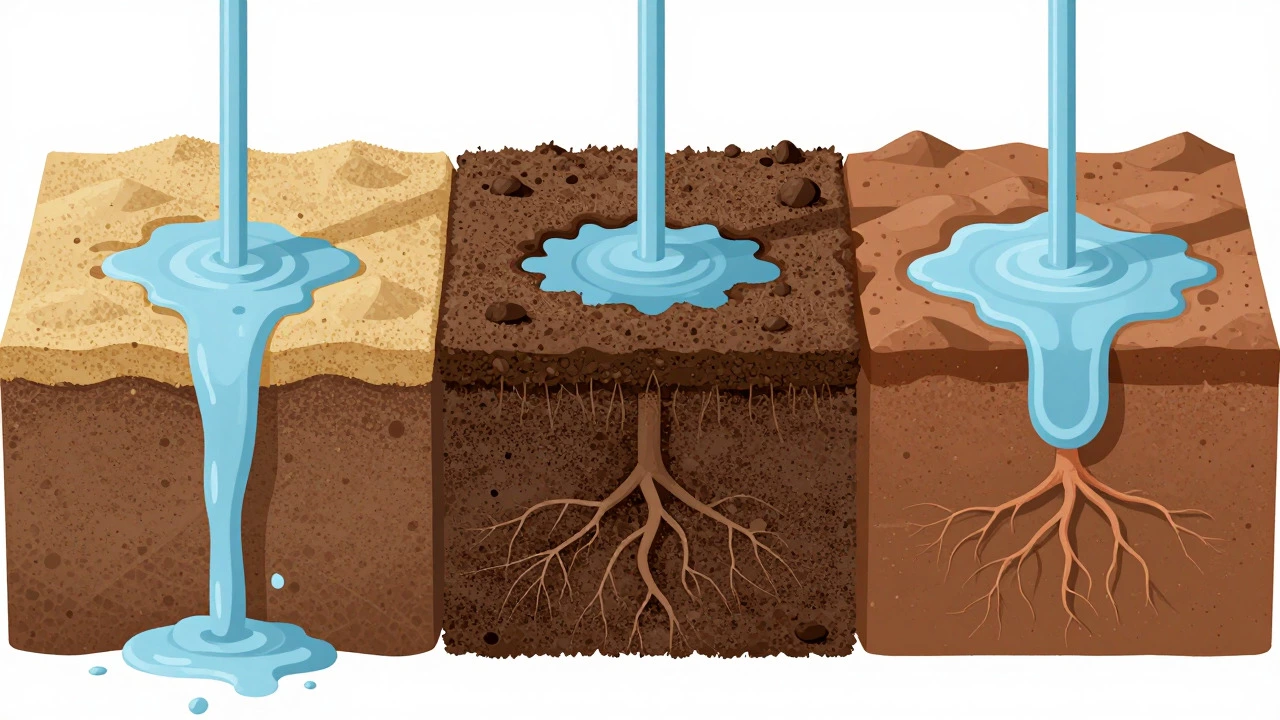
Water doesn’t behave the same way in every garden bed. The texture of your soil determines how fast water infiltrates and how long it stays available to roots. This is why two neighbors with identical systems might have wildly different schedules.
| Soil Type | Infiltration Speed | Recommended Strategy |
|---|---|---|
| Sandy Soil | Fast | Shorter runs, more frequent cycles (e.g., 30 mins twice a day) |
| Clay Soil | Slow | Longer pauses between cycles to prevent runoff; avoid flooding |
| Loam Soil | Moderate | Balanced approach; standard daily or every-other-day schedules work well |
Sandy soil drains quickly. Water moves straight past the root zone if you flood it. For sandy beds, you want shorter bursts repeated throughout the day. Clay soil holds onto water tightly but absorbs it slowly. If you run your drip lines too long on clay, the water pools on the surface and creates anaerobic conditions that rot roots. Loam is the sweet spot-it retains moisture without becoming waterlogged. If you aren’t sure what soil you have, grab a handful of damp dirt. If it forms a tight ball that stays together, it’s clay. If it crumbles immediately, it’s sand. If it holds shape but breaks apart easily, it’s loam.
Plant Needs: Not All Thirsts Are Equal
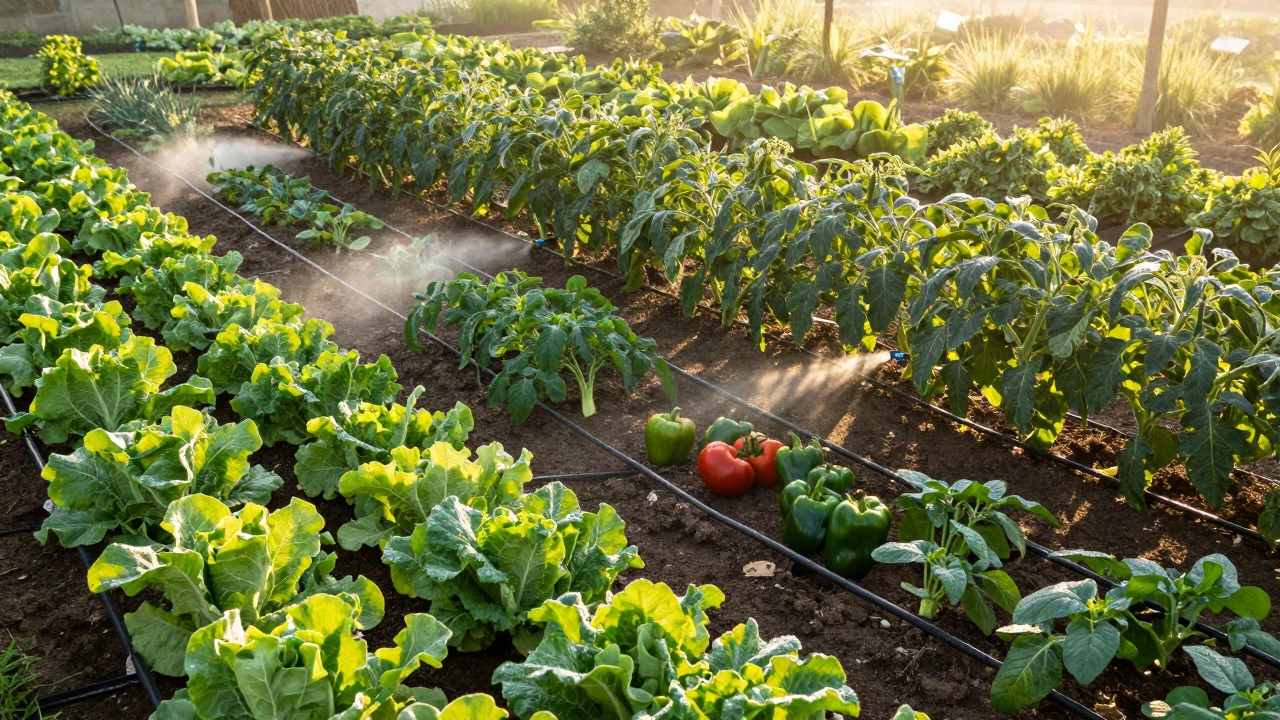
Your vegetable patch has diverse personalities. Leafy greens like lettuce and spinach have shallow roots and dry out fast. They need consistent, light watering. Root vegetables like carrots and beets prefer deeper, less frequent soaking to encourage downward growth. Tomatoes and peppers are heavy drinkers during fruiting season but hate wet leaves, which is why drip irrigation is ideal for them.
Group plants with similar water needs into the same zone. If you put drought-tolerant lavender next to thirsty cucumbers on the same timer, one will die while the other drowns. Separate zones allow you to customize run times. A general rule of thumb for summer vegetable gardens is to aim for about 1 inch (2.5 cm) of water per week. With drip systems, this translates roughly to 45-60 minutes of runtime per day for most mixed beds, assuming standard 1 LPH emitters spaced 12 inches apart.
Seasonal Adjustments and Weather Factors
A static schedule is a recipe for disaster. What worked in May will scorch your garden in July. As temperatures rise, evaporation rates increase. In Manchester, where we see mild summers compared to southern Europe, you might only need to adjust slightly. In hotter climates, midday heat can double water demand overnight.
Monitor rainfall. If you had a solid inch of rain, skip the cycle. Many modern timers offer "rain delay" features, but smart controllers that connect to local weather data are even better. They automatically pause watering when precipitation is forecasted. If you’re using a basic mechanical timer, check the soil manually. Stick your finger two inches into the ground. If it feels cool and moist, hold off. If it’s dry and dusty, turn it on.
Troubleshooting Common Timing Issues
Even with perfect calculations, things go wrong. Here are the red flags that tell you your runtime is off:
- Wilting during the day but recovering at night: This suggests the soil isn’t holding enough moisture. Increase runtime by 10-15 minutes or add mulch to reduce evaporation.
- Puddling around emitters: You’re applying water faster than the soil can absorb it. Reduce runtime and split the session into two shorter cycles.
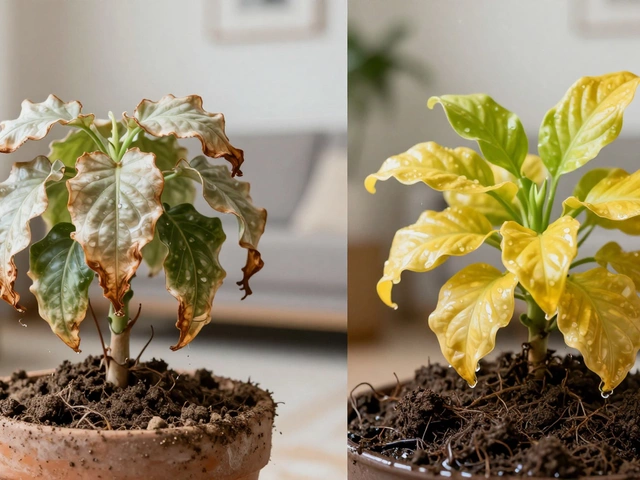
- Yellowing lower leaves: Often a sign of overwatering, which leaches nutrients from the soil. Cut back on frequency.
- Clogged emitters: If some spots are dry despite correct timing, clean or replace the emitters. Debris buildup reduces flow significantly over time.
Setting Up Your Schedule
Once you’ve measured flow, assessed soil, and grouped plants, create a trial schedule. Start conservative. Set your timer for 30 minutes once a day in the early morning. Morning watering minimizes evaporation and allows foliage to dry out, reducing fungal disease risk. After three days, check soil moisture at root depth. Adjust up or down by 10-minute increments until you hit the sweet spot where plants look turgid and vibrant without soggy soil.
Remember, consistency beats intensity. Short, regular sessions keep roots active and healthy. Long, infrequent floods shock the system. By treating your drip irrigation as a dynamic tool rather than a set-and-forget appliance, you’ll save water, boost yields, and spend less time worrying about whether your garden is drinking enough.
How many hours should drip irrigation run per day?
There is no fixed number of hours, but typically 30 to 60 minutes per day is sufficient for most vegetable gardens in moderate climates. However, this depends entirely on your emitter flow rate, soil type, and current weather conditions. Always measure your actual output and adjust based on soil moisture checks.
Is it better to water deeply once or lightly every day?
For established plants, deep and less frequent watering encourages stronger root growth. However, drip irrigation excels at providing consistent, light moisture. A balanced approach is best: water frequently enough to keep the top 6-8 inches of soil moist, but not so much that it becomes saturated. Avoid daily shallow watering for mature plants as it keeps roots near the surface.
What time of day is best for running drip irrigation?
Early morning, between 4 AM and 8 AM, is ideal. This timing minimizes water loss to evaporation and wind, and allows any splashed foliage to dry out before evening, reducing the risk of fungal diseases like powdery mildew. Late afternoon is a second-best option if mornings aren't feasible.
How do I know if my drip system is running long enough?
Check the soil moisture by digging down 6-8 inches near the plant roots after watering. The soil should feel damp but not dripping wet. If it's dry, increase runtime. If it's muddy or puddles form on the surface, decrease runtime or split the watering into shorter cycles.
Should I adjust my drip irrigation schedule in winter?
Yes, significantly. Plants go dormant or grow slower in cooler temperatures, requiring much less water. In winter, you may only need to water once a week or even less, depending on rainfall. Overwatering in winter is a leading cause of root rot in temperate climates.