Subsurface Irrigation: How It Works and Why It’s Changing Gardening in India
When you think of watering your garden, you probably picture a hose or sprinklers spraying water over the surface. But subsurface irrigation, a method that delivers water directly below the soil surface to plant roots. Also known as underground drip irrigation, it’s one of the most efficient ways to grow plants in dry or hot climates like India’s. Unlike surface watering, which loses up to 50% of water to evaporation and runoff, subsurface irrigation puts water exactly where plants need it—deep in the root zone. This isn’t just about saving water. It’s about growing healthier plants with less effort.
This system works by burying tubes or emitters just below the soil, often 4 to 8 inches deep. Water drips slowly out, keeping the root zone consistently moist without ever wetting the surface. That means fewer weeds, less fungal disease, and no puddles. It’s especially useful in places like Delhi or Bangalore, where summer heat dries out soil fast and water bills keep rising. You don’t need to run it every day—just enough to keep the soil damp below. And because it’s hidden, it doesn’t mess up your garden’s look. This method drip irrigation, a precise watering technique that uses tubes and emitters to deliver water slowly is the backbone of subsurface systems. But not all drip systems are the same. The difference between a dripper, a simple outlet that releases water at a fixed rate and a emitter, a more controlled outlet that adjusts flow based on pressure can make or break your setup. Getting this right means fewer clogs, better coverage, and longer system life.
Subsurface irrigation isn’t magic—it’s smart engineering. It works best when paired with good soil. If your soil is compacted, water won’t move sideways well, no matter how many emitters you install. That’s why fixing compacted soil, dense, hard soil that blocks root growth and water movement comes first. Add compost, loosen the ground, and then lay your pipes. This combo lets roots spread deeper and pull moisture up naturally. You’ll also notice fewer pests. Wet surfaces attract fungus gnats and slugs. Dry surfaces? Not so much. And because you’re not spraying water everywhere, you’re not feeding algae or moss between pavers or on your terrace slab.
People in India are starting to use this for terrace gardens, balcony veggie patches, and even small farms. If you’ve ever struggled with overwatering your bonsai or watching your vegetables wilt after a hot afternoon, subsurface irrigation solves that. It’s not about watering more—it’s about watering smarter. You’ll spend less time fussing with hoses, less money on water bills, and more time enjoying your garden. Below, you’ll find real guides on how to design these systems, how many emitters you really need per zone, and how to avoid the mistakes most beginners make. No fluff. Just what works.
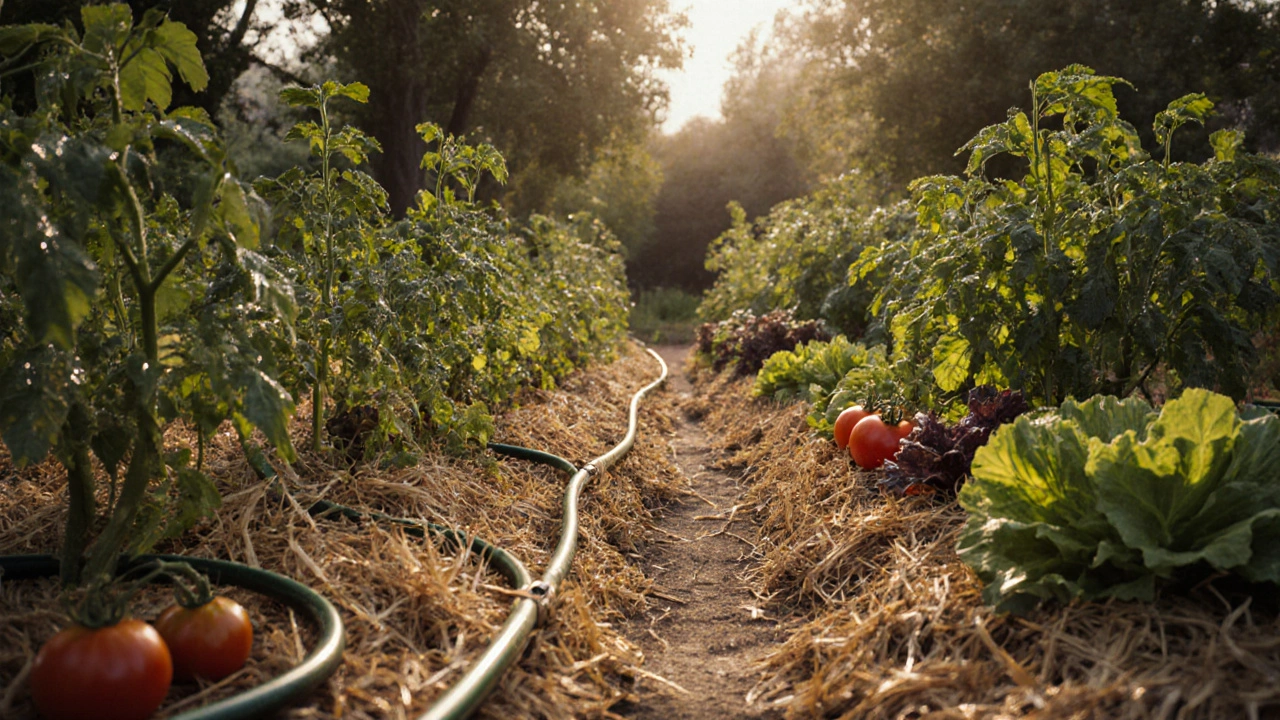
Drip irrigation saves water, but better options exist. Soaker hoses, mulching, rainwater harvesting, and subsurface irrigation cut usage even more - with less cost and maintenance.