Sprinkle System Efficiency & Run-Time Calculator
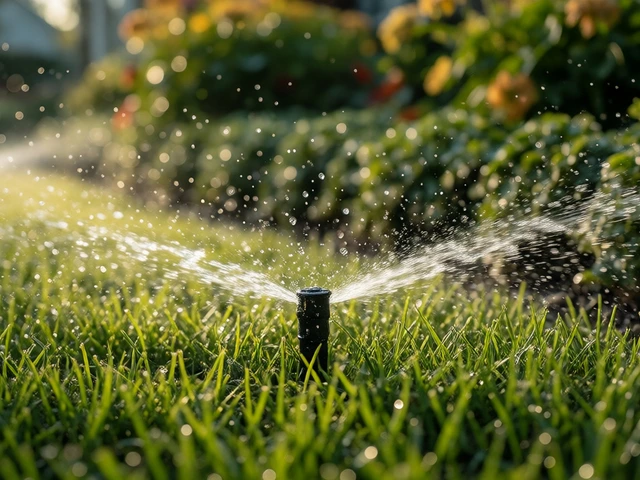
You’ve probably seen them spinning in the middle of a golf course or popping up from the lawn at your neighbor’s house. But sprinkle irrigation systems are far more than just fancy toys for large estates. They are engineered networks designed to mimic natural rainfall, delivering water evenly across a specific area. If you’re tired of dragging hoses around or wondering why half your garden looks like a desert while the other half is drowning, understanding how these systems work could save you serious time and money.
Unlike drip irrigation, which targets the root zone with surgical precision, sprinkle systems cover surface area. This makes them ideal for lawns, dense flower beds, and ground covers where individual plant targeting isn’t feasible. But here’s the catch: they are often misunderstood. People assume "sprinkler" means one thing, but there are distinct types, each with its own job. Let’s break down what actually happens when you flip that switch, and whether this technology fits your garden needs.
The Core Mechanics: How Water Gets Where It Needs to Go
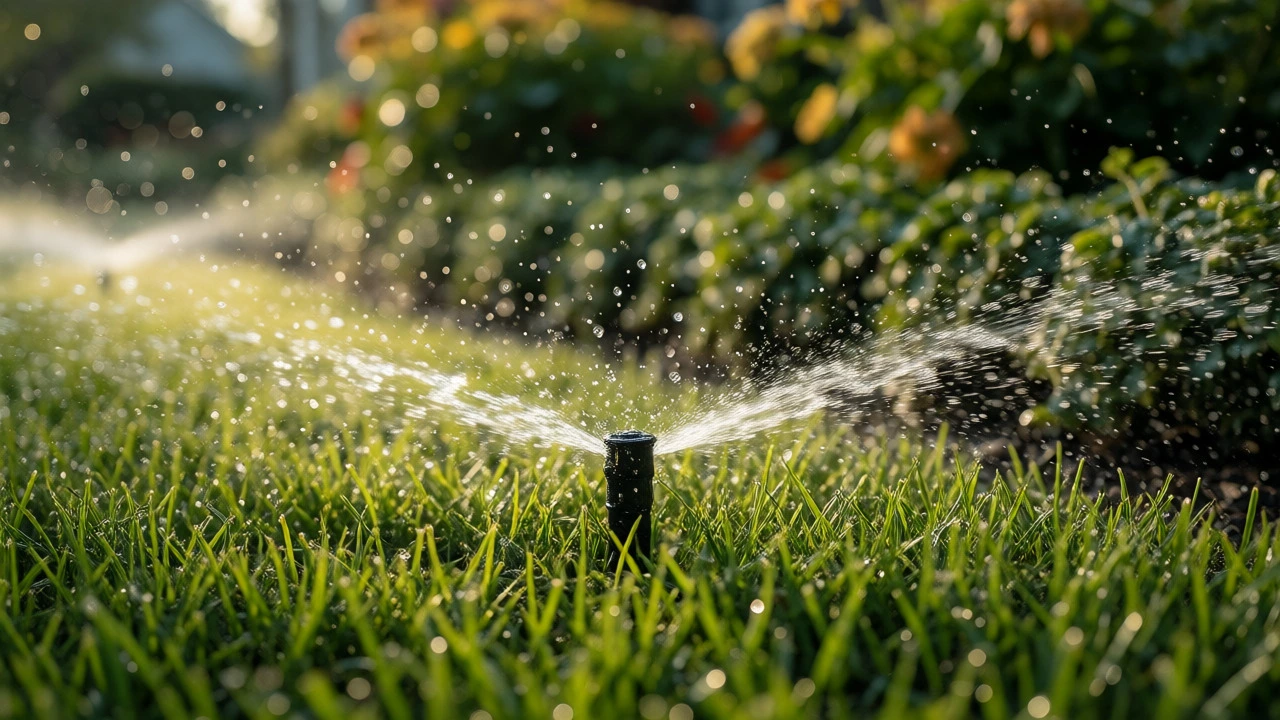
At its heart, a sprinkle irrigation system relies on pressure. That’s it. Whether connected to your home mains or a dedicated pump, water under pressure travels through pipes and exits via specialized heads. The magic lies in the nozzle design, which breaks the solid stream into droplets. Why droplets? Because a solid jet erodes soil and compacts the earth, killing your plants’ roots. Droplets fall gently, allowing the soil to absorb moisture without runoff.
Most residential systems operate between 30 and 50 PSI (pounds per square inch). If your pressure is too low, the water dribbles out instead of spraying, creating dry patches. Too high, and you get misting-water evaporates before it hits the ground. This balance is critical. In Manchester, where we deal with frequent drizzle but occasional heavy downpours, managing this pressure ensures you aren’t fighting the weather; you’re supplementing it efficiently.
Static vs. Rotating: Choosing Your Head Type
Not all sprinklers spin. In fact, most small gardens use static heads. These fixed-nozzle devices spray a predetermined pattern-circle, half-circle, or quarter-circle-and stay put. They are cheap, reliable, and perfect for tight corners or irregular shapes. You buy a box of them, pop them into the ground, and connect them to a manifold. No moving parts mean less maintenance.
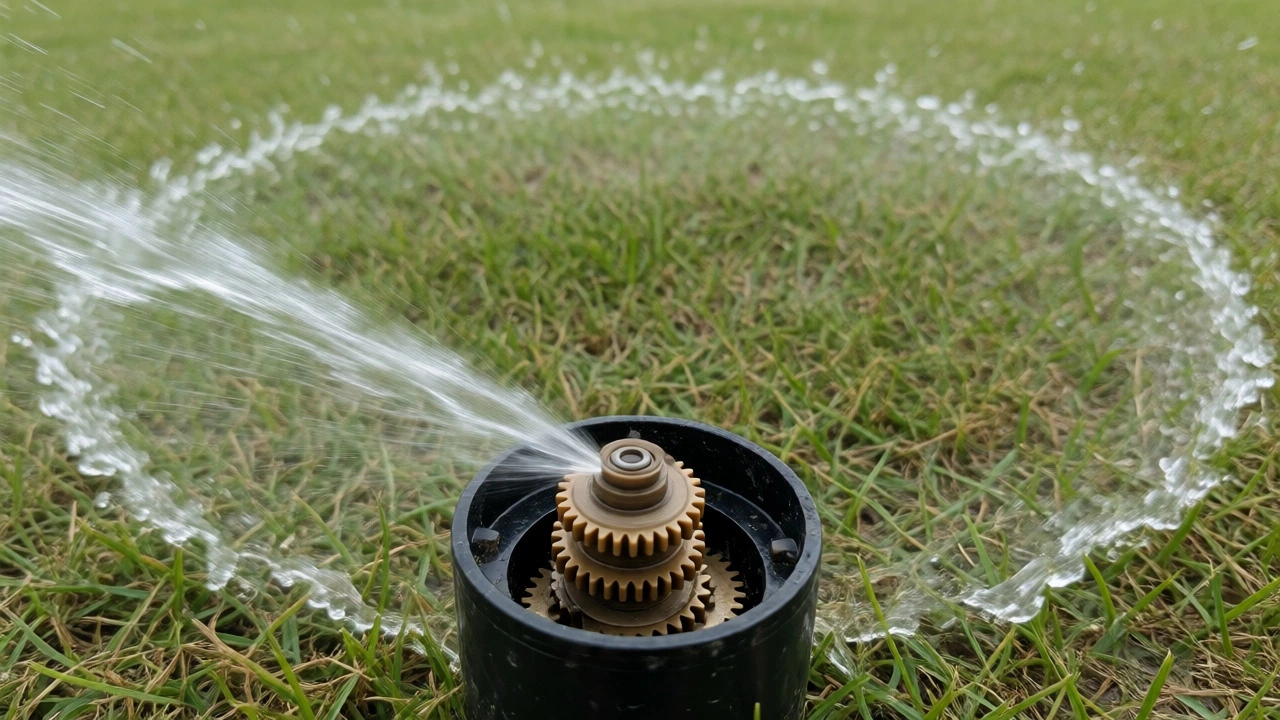
Rotary heads, however, are the workhorses for larger areas. Inside the head, a gear mechanism turns the nozzle slowly as it sprays. This allows the water to travel further and cover more ground with less volume. Think of it this way: a static head dumps all its water in one spot quickly, potentially causing puddles. A rotary head spreads that same amount over time, letting the soil soak it up gradually. For a typical suburban lawn in the UK, rotors are usually the better choice for coverage, while statics handle the edges and borders.
| Feature | Static Spray Head | Rotary Gear Drive |
|---|---|---|
| Best For | Small patches, flower beds, tight spaces | Large lawns, open squares, parks |
| Water Output | High flow rate, short duration | Lower flow rate, longer duration |
| Maintenance | Low (no moving parts) | Medium (gears can wear out) |
| Cost | £2 - £5 per head | £10 - £25 per head |
The Hidden Infrastructure: Piping and Zoning
You don’t just lay pipe and hope for the best. A proper system uses zoning. Imagine trying to water a delicate fern bed and a thirsty turf lawn simultaneously with the same pressure. It’s impossible. One gets flooded, the other stays dry. Zoning solves this by grouping plants with similar water needs onto separate circuits controlled by different valves.
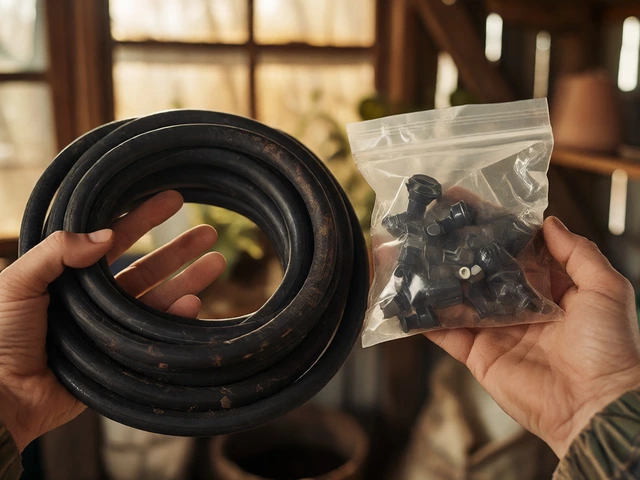
Polyethylene pipe is the standard here. It’s flexible, resistant to freezing (it expands slightly rather than cracking), and easy to cut. You bury it six inches deep to protect it from mower blades and frost heave. The key component people forget is the backflow preventer. Since sprinkler lines can suck dirty water back into your clean supply if pressure drops suddenly, this device is non-negotiable for health codes. Skipping it might save you £30 today but cost you a plumbing disaster tomorrow.
Smart Controllers: Beyond the Timer Knob
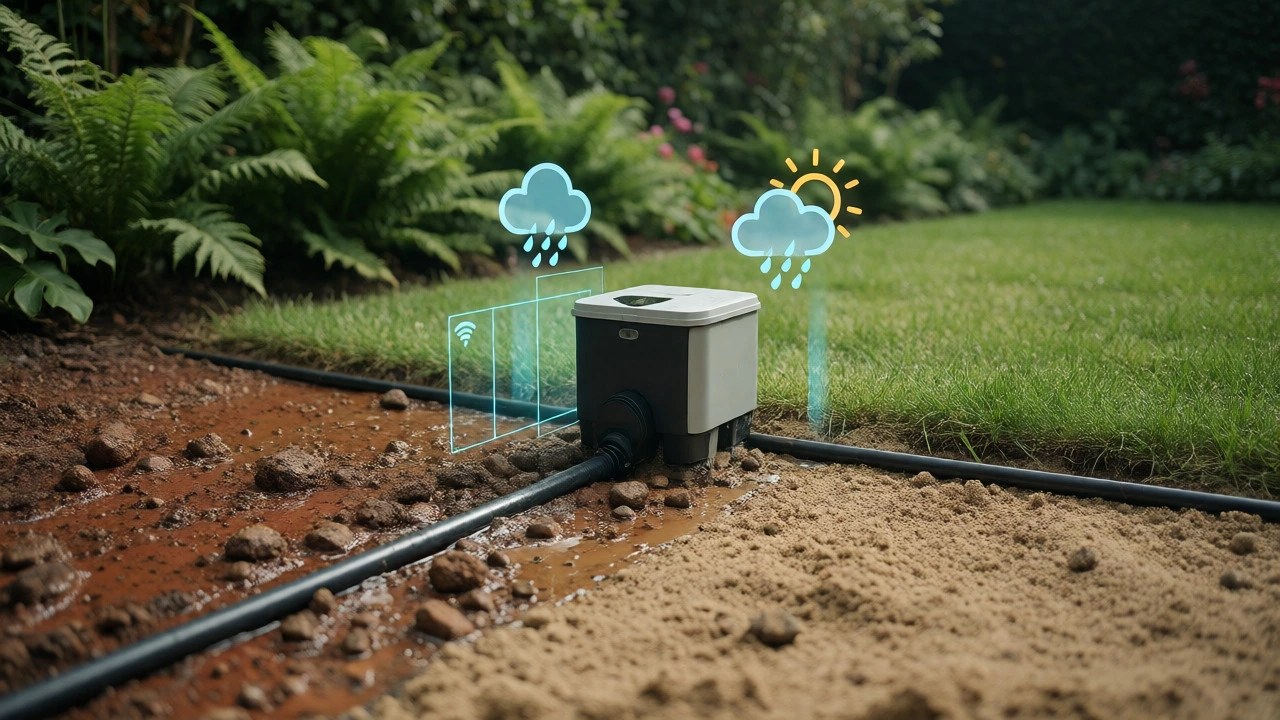
Gone are the days of manually turning a dial every morning. Modern controllers are brains. Basic timers run on schedules, but smart controllers read data. They check local weather forecasts or even measure soil moisture directly. If rain is predicted in Manchester tomorrow, your system skips today’s cycle automatically. This isn’t just convenient; it’s essential for sustainability.
Overwatering kills more plants than underwatering. Roots need oxygen. Constantly saturated soil suffocates them, leading to fungal diseases and root rot. A smart controller adjusts run times based on real-time conditions, not guesswork. Some models integrate with Wi-Fi, letting you tweak settings from your phone while you’re on holiday. This level of control transforms gardening from a chore into a manageable background task.
Common Pitfalls and How to Avoid Them
The biggest mistake homeowners make is assuming "more is better." They set the timer for 30 minutes because their neighbor does. But soil type matters immensely. Clay soil absorbs water slowly; sandy soil drains fast. Running a sprinkler for 30 minutes on clay causes runoff-the water flows away before soaking in. On sand, 30 minutes might still leave the roots dry.
Here’s a simple test: place empty tuna cans around your lawn. Run the system until the cans have collected an inch of water. Note the time. That’s your baseline. Adjust future cycles based on weather and plant stress signs. Also, watch for "dry spots." If a corner remains brown despite running the system, you likely have poor head-to-head coverage. Overlapping spray patterns are crucial. If heads don’t overlap, gaps form. If they overlap too much, you waste water. Aim for 100% uniformity, meaning every part of the zone receives the same amount of water.
Sustainability and Water Efficiency
In the UK, hosepipe bans are becoming more common during dry spells. While many exemptions exist for installed irrigation systems compared to handheld hoses, efficiency is still scrutinized. Drip irrigation is generally more efficient, using up to 90% less water than sprinklers because it eliminates evaporation and wind drift. However, sprinklers win on speed and coverage for large, flat areas.
To make your sprinkle system sustainable, consider micro-sprayers for shrubbery. These emit tiny streams close to the ground, reducing wind loss. Install rain sensors. Check for leaks monthly-a single leaking head can waste thousands of liters a year. And remember, timing matters. Water early in the morning, between 4 AM and 8 AM. Evaporation rates are lowest then, and leaves dry off before evening, reducing disease risk. Night watering keeps foliage wet all night, inviting mold.
Is a sprinkle system better than drip irrigation?
It depends on the application. Sprinkle systems are superior for lawns and densely planted ground covers where individual emitters are impractical. Drip irrigation is better for vegetable rows, hedges, and potted plants, offering higher water efficiency and reduced weed growth. Many gardens benefit from a hybrid approach.
How deep should I bury the sprinkler pipes?
Typically, 6 to 8 inches deep is sufficient for most climates. This depth protects the polyethylene pipes from lawn mowers, foot traffic, and moderate frost heave. In areas with severe winters, deeper burial may be required to prevent freezing damage, though modern PE pipes are quite resilient.
Can I install a sprinkle system myself?
Yes, many homeowners successfully DIY their installations. The main challenges are trenching (which can be done with a rented machine) and ensuring proper hydraulic calculations so you don't overload your water supply. If you have complex slopes or multiple zones, hiring a professional might save headaches later.
What causes brown patches in my sprinkled lawn?
Brown patches usually indicate poor coverage. This can result from clogged nozzles, broken heads, or incorrect spacing where spray patterns don't overlap. Another cause is insufficient run time due to soil compaction preventing absorption. Perform a catch-can test to diagnose if the issue is distribution or volume.
Do I need a backflow preventer?
In almost all municipal water connections, yes. It prevents contaminated water from your garden (which may contain fertilizers, pesticides, or dirt) from siphoning back into your drinking water supply. It is a legal requirement in many jurisdictions and essential for public health safety.