Dripper vs Emitter: Key Differences in Drip Irrigation
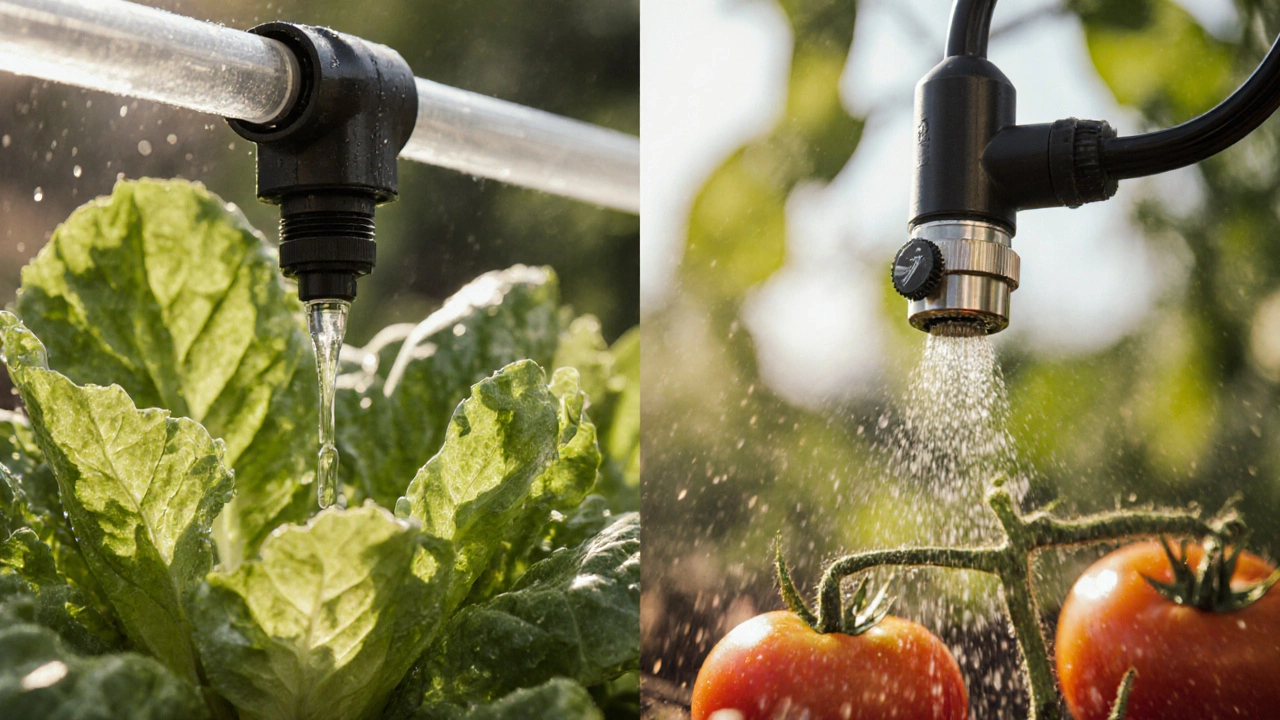
Learn the key differences between drippers and emitters, how they work, when to use each, and tips for installation and maintenance in drip irrigation.
Continue reading...When you hear dripper, a small device that releases water slowly at the base of a plant. Also known as a drip emitter, it's one of the most efficient ways to water your garden—if you set it up right. Most people think a dripper means less work. But a poorly planned system can waste water, drown roots, or leave half your plants thirsty. It’s not about running it every day. It’s about matching the flow to your soil, your plants, and the weather.
A drip emitter, the tiny nozzle that controls water flow in a drip system isn’t just a hole in a tube. It’s a precision tool. A 1 GPH emitter on a tomato plant in hot sun needs different timing than the same emitter on a succulent in shade. And if you’ve got ten emitters on one line without checking pressure, some will drip hard while others barely trickle. That’s why watering schedule, the planned timing and duration of irrigation based on plant needs and environmental conditions matters more than the hardware. Soil moisture isn’t something you guess—it’s something you test. Stick your finger in. If it’s damp 2 inches down, skip watering. If it’s dry, let the dripper run just long enough to soak the root zone.
What you’ll find in these posts isn’t theory. It’s what actually works for Indian gardens. You’ll learn how many emitters you really need per zone, why running your dripper daily is often a mistake, and how to spot when your plant is being overwatered—even if the soil looks wet. There’s no magic number for watering time. It changes with the season, the soil, and even the wind. But once you understand how the dripper connects to your plant’s roots and your local climate, you stop guessing and start growing.
Some of these posts talk about alternatives—soaker hoses, mulching, rain barrels. That’s not because drip irrigation is bad. It’s because the best systems combine tools. A dripper saves water. Mulch keeps it from evaporating. Rainwater harvesting cuts your bill. Together, they turn your garden into a self-sustaining system. You’ll also see how people fix compacted soil, revive old pots, and grow veggies on balconies—all with the same principle: water where it’s needed, when it’s needed, and not a drop more.
Learn the key differences between drippers and emitters, how they work, when to use each, and tips for installation and maintenance in drip irrigation.
Continue reading...