Dripper vs Emitter: Key Differences in Drip Irrigation
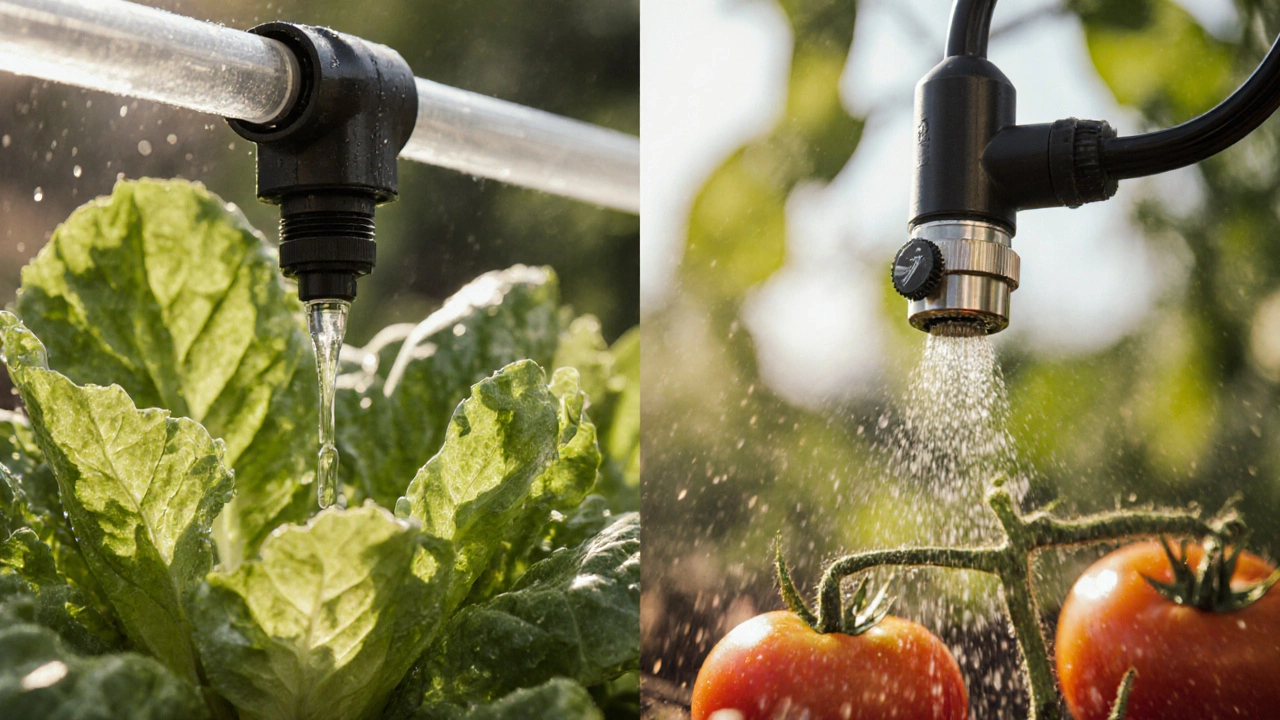
Learn the key differences between drippers and emitters, how they work, when to use each, and tips for installation and maintenance in drip irrigation.
Continue reading...When you think of emitter, a small device that releases water slowly and precisely in drip irrigation systems. Also known as drippers, it is the heart of any efficient watering setup—especially in places like India where water is precious and every drop counts. An emitter isn’t just a tiny hole in a tube. It’s a controlled valve that delivers water exactly where the roots need it, not where it’ll run off or evaporate. Without the right emitter, even the best drip system fails.
Emitters work best when matched to your plant’s needs and your soil type. A drip emitters per zone, the number of individual water outlets connected to one irrigation line must be calculated based on flow rate and pressure. Too many emitters on one line, and the water pressure drops—some plants get drips, others get nothing. Too few, and you’re wasting water and time. Most home systems use 0.5 GPH or 1 GPH emitters, but larger trees or thirsty veggies like tomatoes might need 2 GPH. The key? Keep emitters with the same flow rate on the same zone. Mixing 0.5 GPH and 2 GPH emitters on one line is like giving one person a sip and another a gulp from the same straw.
Then there’s irrigation zone spacing, how far apart emitters are placed to cover the root zone evenly. For a tomato plant, you might need two emitters 12 inches from the stem, each watering a 1-foot radius. For a row of herbs, spacing emitters every 18 inches works. If you’re using a emitter flow rate, the amount of water released per hour, measured in gallons per hour (GPH) that’s too low for your soil, water won’t soak deep enough. Clay soils need slower emitters to avoid puddling; sandy soils need higher flow to reach roots before draining away.
You’ll find in the posts below that people are asking how many emitters to use per plant, why their drip system isn’t watering evenly, and whether they should upgrade to pressure-compensating emitters. Some are trying to fix dry spots in their terrace gardens. Others are wondering if they can use emitters for bonsai or orchids. The answers aren’t one-size-fits-all. But they all start with understanding the emitter—not just as a part of a system, but as the final link between your water source and your plant’s roots.
Whether you’re growing vegetables on a balcony, herbs on a windowsill, or fruit trees on a rooftop, getting the emitter right means less guesswork, less waste, and healthier plants. Below, you’ll find real-world fixes, calculations, and setups from gardeners who’ve been there—and figured it out without spending a fortune.
Learn the key differences between drippers and emitters, how they work, when to use each, and tips for installation and maintenance in drip irrigation.
Continue reading...