Pebble Tray: How It Helps Plants Thrive in Dry Air
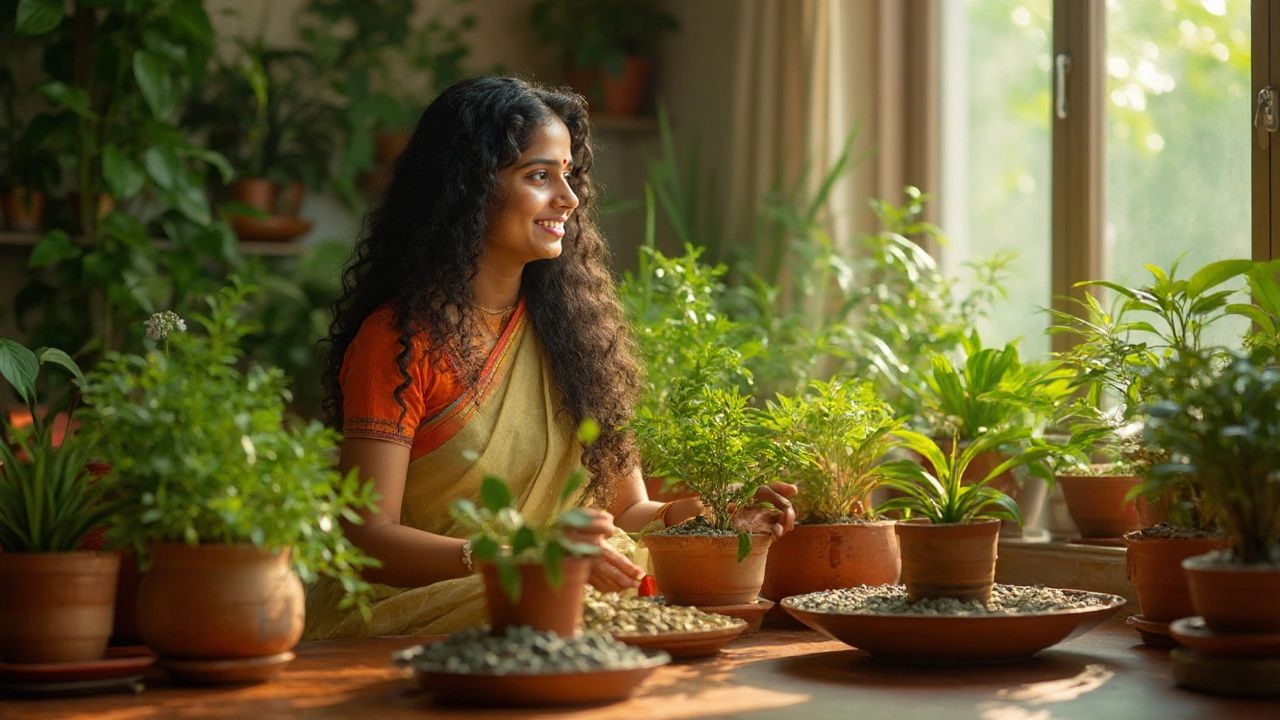
When you place a pebble tray, a shallow dish filled with water and pebbles used to increase humidity around houseplants. Also known as a humidity tray, it’s one of the simplest, cheapest ways to fight dry indoor air that kills tropical plants. Most homes in India—especially in cities like Delhi, Bangalore, or Pune—have air conditioning, heaters, or low-humidity seasons that dry out the air. Plants like ferns, orchids, and calatheas don’t just want water in the soil—they need moisture in the air. That’s where a pebble tray steps in.
A pebble tray doesn’t water your plant directly. Instead, it creates a microclimate. You fill a tray with clean pebbles, add water just below the top of the stones, then set your plant pot on top. As the water evaporates, it raises the humidity right where your plant’s leaves breathe. It’s not magic, but it’s science. A 2022 study from the Indian Council of Agricultural Research found that humidity trays increased local moisture levels by up to 15% within a 30cm radius—enough to reduce leaf browning in sensitive species. You don’t need fancy gear. Just a plastic dish, some river stones from your garden, and tap water.
Related tools like misting, spraying water on plant leaves to temporarily raise humidity. Also known as leaf spray, it gives quick relief but evaporates fast. humidifiers, electronic devices that pump moisture into the air. Also known as room humidifiers, they work well but cost money and need cleaning. A pebble tray? It runs for days without power, noise, or maintenance. It’s passive, quiet, and never breaks.
Some people say pebble trays are outdated. But if you’ve ever watched your peace lily droop after a week in a heated room, you know it’s not about trends—it’s about survival. Plants that need high humidity don’t care if you bought a $200 smart humidifier. They care if the air around them feels like a jungle, not a desert. And a pebble tray delivers that, every day, without asking for anything.
What you’ll find below are real stories from gardeners who saved their plants using this old-school trick. You’ll see which plants respond best, how to avoid mold or pests, and why skipping this step might be why your fern keeps dying. No fluff. No hype. Just what works.
Curious about pebble trays for indoor plant care? Discover how they boost humidity, keep roots healthy, and upgrade your home jungle easily and naturally.
Continue reading...