Strobilanthes kunthiana: The Neelakurinji Flower and Its Role in Indian Gardening
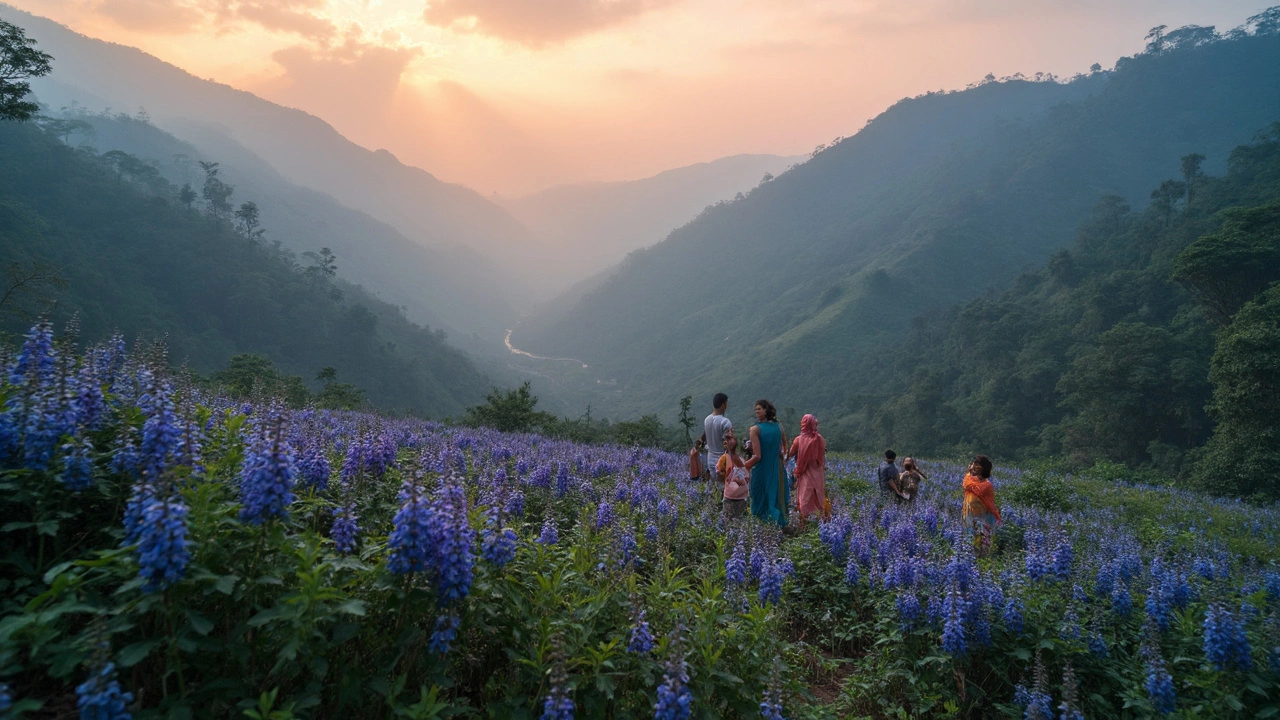
When you hear Strobilanthes kunthiana, a rare flowering plant native to the Western Ghats of India that blooms en masse once every 12 years. Also known as Neelakurinji, it turns entire hillsides blue and draws visitors from across the country. This isn’t just a pretty sight—it’s a biological marvel that teaches us about patience, climate adaptation, and the value of native plants in Indian gardens.
Strobilanthes kunthiana doesn’t just bloom once in a decade—it does so in perfect sync across thousands of plants, triggered by environmental cues like temperature shifts and day length. This phenomenon, called mass flowering, is rare in the plant world and rarely seen outside of tropical mountain zones. Unlike most garden plants that bloom annually, Neelakurinji has no room for error. One wrong watering, one too-hot summer, and the entire cycle can be disrupted. That’s why it’s not something you casually grow in a pot on your balcony. But understanding it? That’s useful. It shows how deeply plants are tied to their ecosystems, and why trying to force exotic plants into Indian climates often fails. The same lessons apply to Vanda orchids, sandalwood, and other sensitive species featured in our posts.
What does this mean for you as a gardener in India? It’s a reminder that not every beautiful plant belongs in your yard. Some thrive only in specific altitudes, soils, and rainfall patterns. The Western Ghats have their own rules. Your terrace garden in Delhi or Mumbai has different ones. That’s why our collection includes posts on tough plants like the Vanda orchid, endangered species like sandalwood, and how to work with—not against—India’s seasonal rhythms. You’ll find tips on soil health, water efficiency, and choosing plants that actually survive here. You won’t find advice on growing Neelakurinji in a container. But you will find why that’s okay, and what to grow instead that’s just as rewarding.
Strobilanthes kunthiana isn’t a plant you’ll find in a nursery. But the wisdom behind it? That’s something every Indian gardener should carry. Whether you’re fixing compacted soil, choosing the right fertilizer, or learning why drip irrigation isn’t always the answer, you’re learning the same thing: work with nature, not against it. The posts below cover exactly that—real problems, real solutions, and plants that actually thrive in India’s conditions.
Ever wondered what’s the rarest plant you can find in India? Meet the Neelakurinji—a plant that bursts into blue bloom just once every 12 years and turns hills into a sea of color. This article goes beyond the basics, digging into what makes the Neelakurinji so unique, why it’s so hard to spot, and the real reasons behind its endangered status. Expect actionable tips if you want to see this plant in person and find out how locals celebrate its incredible bloom. Discover the real challenges in protecting rare plants in India right now.