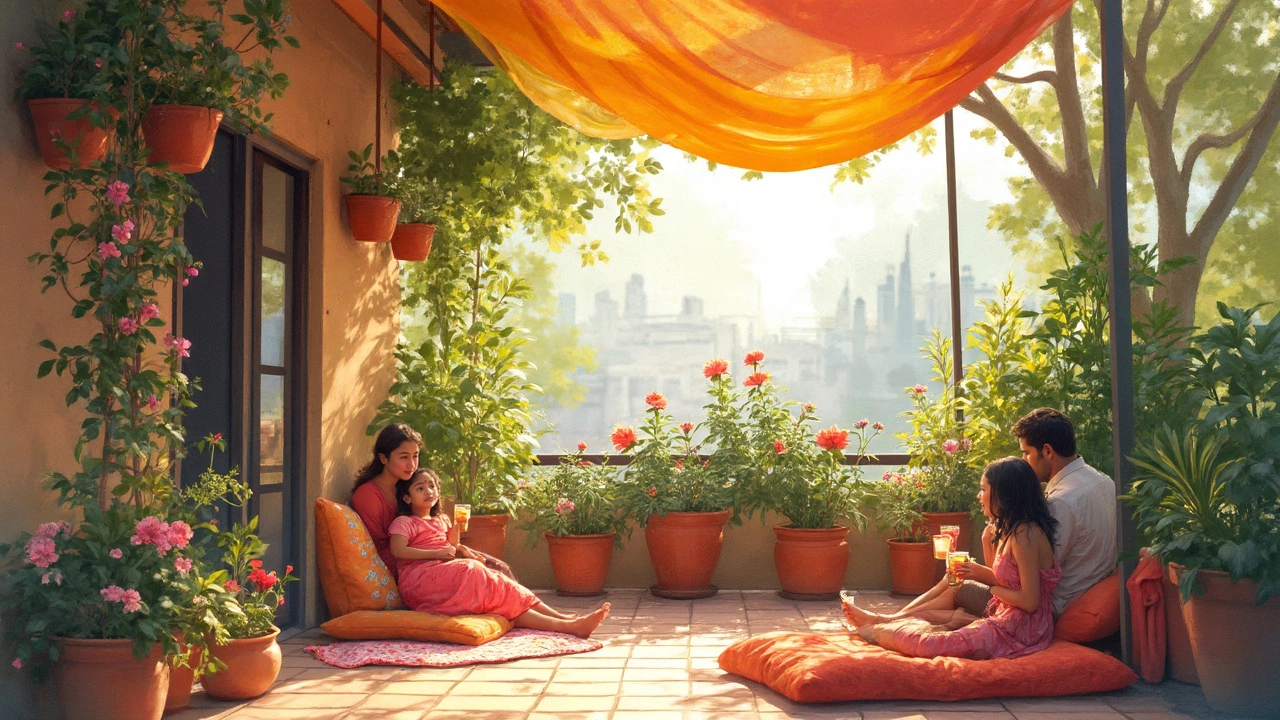
Balcony Shade: Best Ways to Cool Your Small Space Garden
When you live in a city and grow plants on your balcony, balcony shade, a protective barrier that blocks harsh sunlight and reduces heat buildup on small outdoor spaces. Also known as outdoor shade solutions, it’s not just about comfort—it’s the difference between thriving plants and a dead garden. In India, where summer temperatures regularly hit 40°C, your balcony can turn into a heat trap. Without shade, your pots bake, soil dries out in hours, and even tough plants like tomatoes and peppers wilt by noon.
Good balcony shade, a protective barrier that blocks harsh sunlight and reduces heat buildup on small outdoor spaces. Also known as outdoor shade solutions, it’s not just about comfort—it’s the difference between thriving plants and a dead garden isn’t just a curtain or a tarp. It’s a system. It includes shade sails, tensioned fabric structures designed to block direct sun while allowing airflow. Often used in urban gardens for their durability and easy installation, reflective paint, special coatings applied to railings or walls to bounce heat away instead of absorbing it. Commonly used on concrete balconies in Mumbai and Delhi, and misting systems, low-pressure spray setups that cool air through evaporation, ideal for dry climates like Hyderabad or Ahmedabad. These aren’t luxury add-ons—they’re essentials for anyone growing veggies or flowers in a hot city apartment.
Most people think shade means less light, but that’s wrong. It’s about filtering light, not blocking it. Plants like coriander, spinach, and chillies don’t need full sun all day—they need protection from the midday blast. A well-placed shade cloth can cut temperatures by 10–15°C, reduce watering needs by nearly half, and stop leaf burn before it starts. And it’s not just for plants. If you sit on your balcony to drink tea or check your plants, shade turns a sweaty, uncomfortable spot into a place you actually want to be.
You don’t need to spend thousands. A simple bamboo trellis with jute netting, a retractable awning, or even hanging old bedsheets can make a huge difference. The key is positioning: north-facing balconies need less shade than south-facing ones. East-facing get gentle morning sun—perfect for herbs. West-facing? That’s the killer. That’s where you need the heaviest shade, especially between 11 a.m. and 4 p.m.
What you’ll find below are real solutions from people who’ve been there. From DIY shade hacks using recycled materials to how to pick the right fabric for your climate, these posts cut through the noise. You’ll learn what actually works in Indian summers, what’s a waste of money, and how to keep your balcony garden alive without turning it into a greenhouse. No fluff. Just what you need to make your space cooler, greener, and easier to care for.
Learn how to create effective shade on your balcony to protect your plants, furniture, and yourself from the harsh sun. Find out which solutions work for tight spaces, rented apartments, and different budgets. Get tips on picking the right materials and set-ups that look good and hold up well. Discover a few clever tricks you probably haven’t tried yet. Say goodbye to scorching afternoons and enjoy your outdoor spot any time of day.
Tired of sweating on your balcony every summer afternoon? This article breaks down creative and reliable ways to add shade to your balcony garden setup. Learn about options that fit balconies of all shapes and budgets. Find out how to beat the heat without sacrificing style or valuable growing space. Discover the pros and cons of each solution so you can actually enjoy your outdoor nook all year.