Best Topography for Growing Rice: Field Requirements and Pro Tips
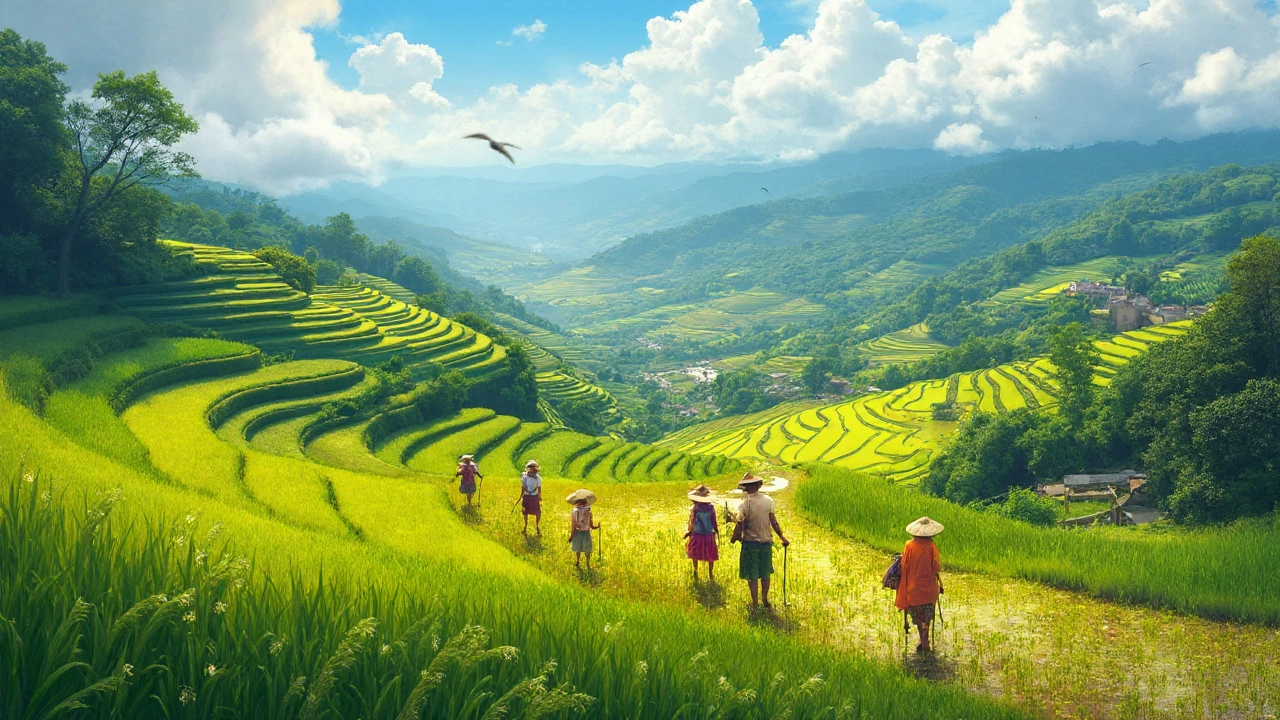
Explore which land shapes and conditions are best for rice crops. Learn about slopes, water control, soil tips, and rice field history.
Continue reading...When it comes to growing rice, a staple cereal crop that thrives in flooded or water-retentive conditions. Also known as paddy, it requires specific land shapes and water management to produce healthy yields. Rice isn’t just planted anywhere—it needs the right kind of ground. In India, where most rice is grown, the best topography isn’t flat desert or steep hillside. It’s gentle slopes with good water retention, often shaped into terraces that hold water long enough for roots to soak it in without drowning.
Soil, the foundation for any crop. Also known as paddy soil, it needs to be clay-rich or loamy to trap water but still allow roots to breathe. Sandy soil? It drains too fast. Pure clay? It gets too sticky and suffocates roots. The sweet spot is soil that holds water like a sponge but doesn’t turn into mud. This is why farmers in Kerala, West Bengal, and Assam prefer lowland areas where water naturally collects. Even in small home gardens, you can mimic this by using raised beds lined with plastic or clay layers to slow drainage.
Drainage, often misunderstood as something to eliminate. Also known as water control, it is actually the key to keeping rice alive without drowning it. Rice needs standing water during early growth, but too much water later on invites rot and pests. The best topography includes slight slopes—1% to 3%—that let water flow slowly from top to bottom, filling fields evenly. This is why terraced rice fields work so well in hilly regions like Uttarakhand and Nagaland. The terraces act like steps, holding water where it’s needed and letting excess drain away safely.
You won’t find rice thriving on a steep hill with no water control, or in a flat concrete yard with no way to retain moisture. But you will find it doing great in gently sloping plots with rich, water-holding soil and smart irrigation. Even in urban balconies or small terrace gardens, you can grow rice in deep containers if you manage water like a farmer—fill, wait, drain, repeat.
The posts below show how real gardeners in India are adapting these principles. Some use drip systems to control water precisely. Others fix compacted soil to help rice roots spread. A few even grow rice in pots after learning how to balance moisture without flooding. You’ll find tips on soil prep, water timing, and how to avoid the most common mistakes—like overwatering or choosing the wrong slope. Whether you’re planting a few rows in your backyard or planning a larger plot, the right topography makes all the difference.
Explore which land shapes and conditions are best for rice crops. Learn about slopes, water control, soil tips, and rice field history.
Continue reading...