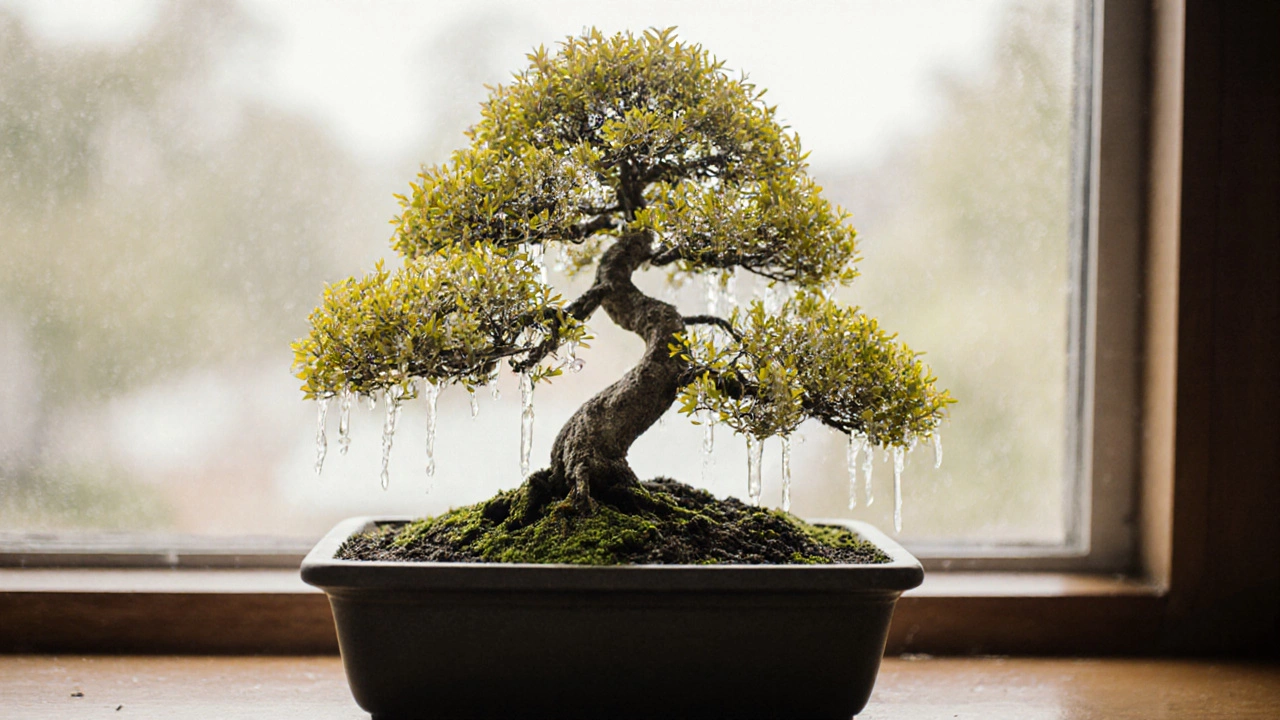
When your bonsai root rot, a deadly fungal condition caused by waterlogged soil and poor drainage that eats away at a bonsai’s roots. It’s not just a problem—it’s often the quiet end of a tree you’ve spent years shaping. Most people think their bonsai is just wilting from lack of water. But if the leaves are yellowing, dropping, or the soil stays wet for days, you’re likely dealing with root rot. And if you keep watering like normal, you’re just speeding up the death.
Overwatering bonsai, the most common cause of root rot, happens when the soil doesn’t dry out between waterings. This isn’t about how much you water—it’s about how often. A bonsai in a small pot with poor-draining soil will drown faster than one in the ground. Even if you’re using a fancy pot with drainage holes, if the soil is too dense or you’re watering daily, your roots are suffocating. The fix isn’t more drainage—it’s better soil. Bonsai need gritty, fast-draining mixtures, not regular potting soil. Think perlite, akadama, and coarse sand—not peat moss and compost. And check the soil before watering. Stick your finger in. If it’s damp an inch down, wait. If it’s dry, water deeply and let it drain.
Bonsai soil, a specialized blend designed for rapid drainage and root aeration, is non-negotiable. You wouldn’t plant a cactus in clay, so don’t treat your bonsai like a houseplant. Root rot thrives in wet, compacted soil. It’s why so many people lose their bonsai after a few months—they’re treating it like a fern, not a miniature tree that evolved on rocky slopes. If your tree is already showing signs of rot, you need to act fast. Remove it from the pot, rinse the roots, cut away any brown or mushy parts with clean scissors, and repot in fresh, sterile soil. Don’t rush it back into sunlight. Let it rest in shade for a few weeks. Recovery is slow, but possible.
Root rot doesn’t come out of nowhere. It’s tied to your watering habits, your pot choice, your climate, and your soil. If you live in a humid place like Mumbai or Kolkata, you’re fighting higher moisture levels. If you’re using a glazed pot without drainage, you’re asking for trouble. And if you’re following a "water every Monday" rule, you’re ignoring your tree’s actual needs.
Below, you’ll find real fixes from gardeners who’ve been there. Some saved their trees after losing half the roots. Others learned how to tell the difference between underwatering and rot. And a few figured out how to make their own soil mix for under ₹200. No fluff. No theory. Just what works.
Overwatering is the most common cause of bonsai death. Learn the subtle signs-yellowing leaves, soggy soil, mushy roots-and how to save your tree before it's too late.