Bonsai Watering Schedule: How Often to Water Your Bonsai Tree
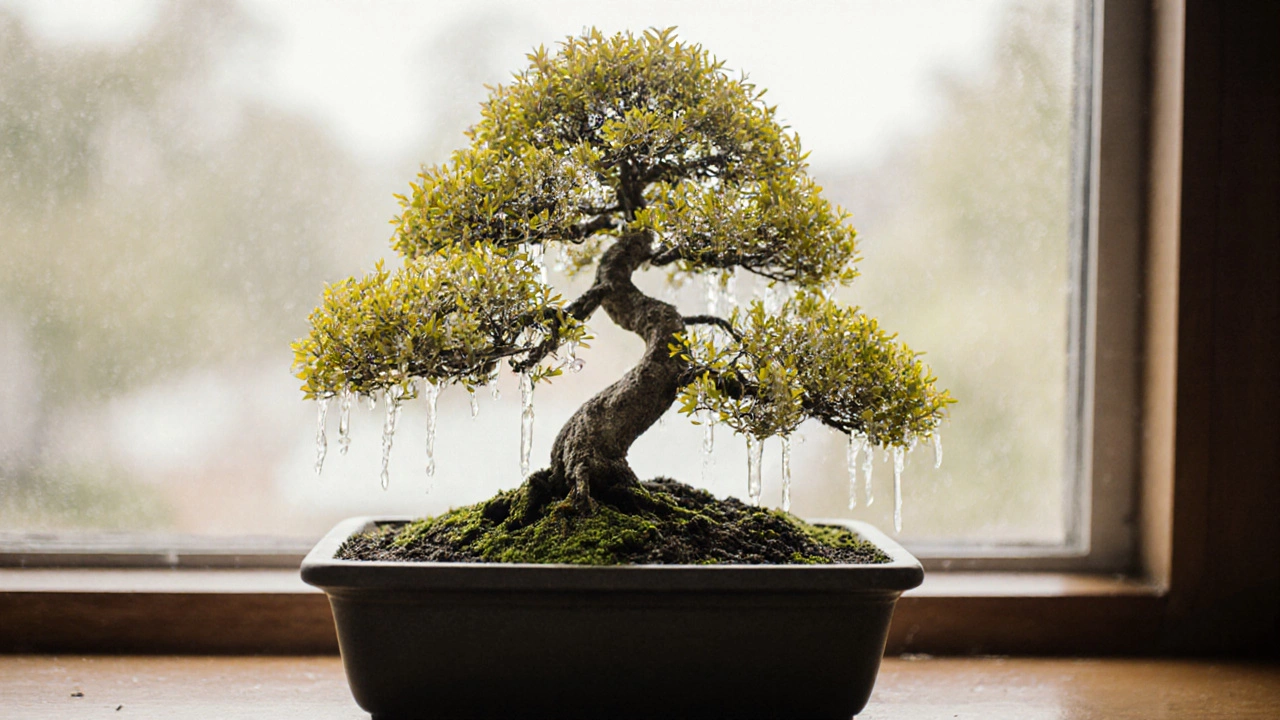
When you own a bonsai, a miniature tree grown in a container using special pruning and training techniques. Also known as penjing, it’s not just a plant—it’s a living sculpture that needs precise care. The biggest mistake most beginners make? Watering on a fixed schedule. Your bonsai doesn’t care if it’s Monday or Thursday. It cares about the soil.
Soil moisture is the real timer. A bonsai in a small clay pot under full sun might need water every other day in summer. The same tree in a glazed ceramic pot indoors might go a week without a drop. The key is checking the top inch of soil with your finger. If it’s dry, water deeply until it drains out the bottom. If it’s still damp, wait. Overwatering kills more bonsai than underwatering. Root rot sets in quietly, and by the time you see yellowing leaves, it’s often too late.
Seasons change everything. In spring and summer, when the tree is actively growing, it drinks more. In winter, when growth slows, it barely needs water—especially if kept indoors near a heater. Wind and temperature matter too. A bonsai on a balcony in Delhi will dry out faster than one on a shaded windowsill in Bangalore. Even the type of soil mix changes the game. A gritty, fast-draining mix (like akadama or pumice) needs more frequent checks than heavy potting soil.
You’ll also need to consider pot size and tree species. A juniper bonsai holds water longer than a maple. A tiny 4-inch pot dries out twice as fast as a 10-inch one. And don’t trust automatic timers or those "bonsai watering globes"—they’re unreliable and often cause more harm than good.
What you’ll find below are real, tested approaches from gardeners who’ve learned the hard way. From how to tell if your bonsai is thirsty before it’s too late, to why misting isn’t a substitute for watering, to how monsoon humidity affects your routine in India. These aren’t theory pages. They’re fixes for actual problems: drooping leaves, brittle branches, blackened roots. Each post gives you a clear, no-fluff method to get your bonsai back on track.
Overwatering is the most common cause of bonsai death. Learn the subtle signs-yellowing leaves, soggy soil, mushy roots-and how to save your tree before it's too late.