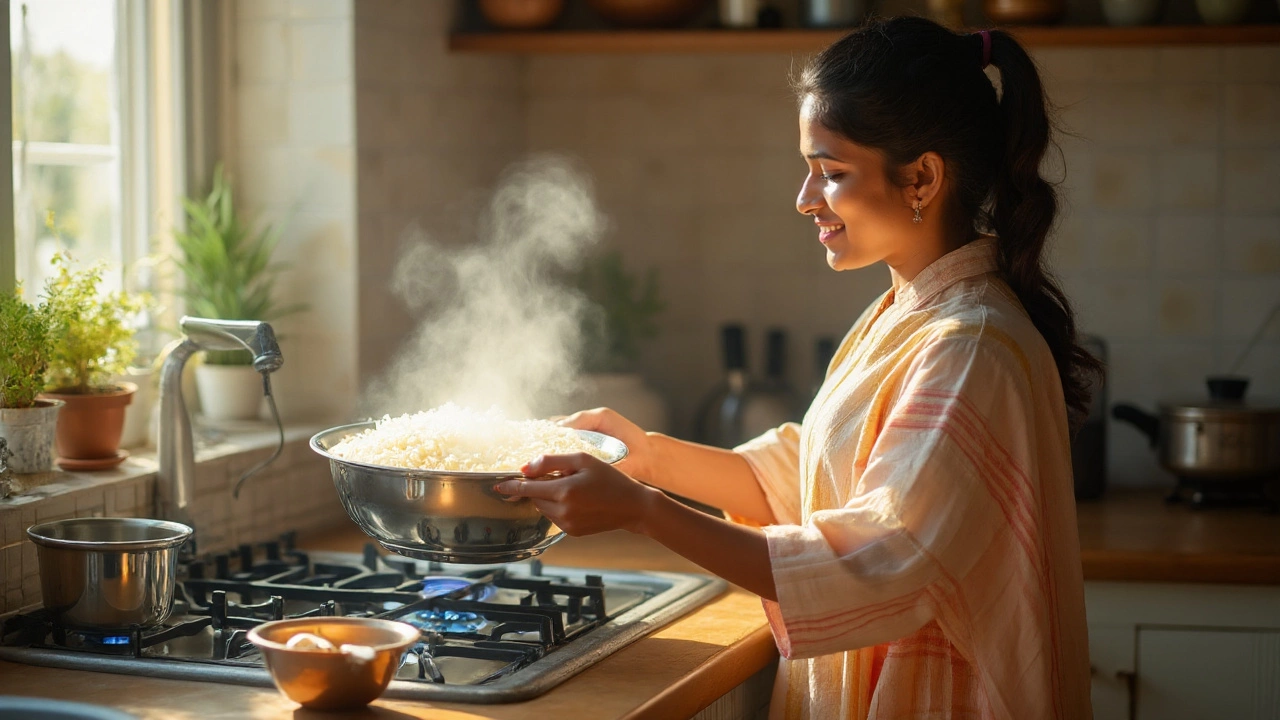
Cooking Rice Tips: How to Get Perfect Rice Every Time
When you cook rice, a staple grain used in millions of homes across India and beyond. Also known as paddy grain, it’s not just food—it’s the base of meals, the comfort in chaos, and the quiet hero of every kitchen. But most people mess it up. Too wet. Too dry. Gummy. Hard in the middle. It doesn’t have to be this way. Cooking rice isn’t magic. It’s science—and a few simple rules.
The biggest mistake? Using the same water ratio for every kind of rice. Basmati needs less water than short-grain. Brown rice takes longer and needs more. Even the type of pot matters. A heavy-bottomed pot holds heat steady. A thin pan? It burns the bottom before the center cooks. And don’t rinse your rice unless you want to lose nutrients and flavor. Most Indian cooks skip rinsing for aromatic varieties like basmati—because the starch helps the grains stick together just right.
Heat control is everything. Boil the water first. Add the rice. Cover. Turn it down to low. Let it steam, not boil. Lift the lid too early? You let steam escape. That’s how you get crunchy centers. Wait 15 minutes. Then turn off the heat and let it sit, covered, for another 10. No peeking. That’s the secret most guides leave out. The rice keeps cooking in its own steam. That’s how restaurants get it perfect every time.
You don’t need fancy tools. A pot, a lid, and patience are all you need. But if you want to go further, try soaking basmati for 30 minutes before cooking. It stretches the grains, makes them fluffier, and cuts cooking time. Or toast your rice in a little oil before adding water—adds nutty flavor, especially good for biryanis. And always salt the water. Just like pasta. It’s the only chance you get to season the grain from the inside.
What about rice cookers? They’re great, but only if you follow the cup markings. Most people overfill the water line. The machine doesn’t know your rice type. It just heats. So if your rice is always soggy, check the ratio. For most white rice, 1:1.25 rice to water works. For brown, go 1:1.5. Write it on your fridge. Stick to it.
And here’s something no one tells you: let rice rest after cooking. Seriously. Even if you’re starving. Pull it off the heat. Leave it covered. Five minutes. Ten. That’s when the moisture evens out. The grains separate. The texture turns silky. Skip this step, and you’re just eating warm starch.
There’s no one-size-fits-all method, but the rules above cover 90% of cases. Whether you’re making plain rice for dal, or the base for a spicy curry, getting this right changes everything. The rest? That’s just toppings.
Below, you’ll find real-world tips from people who’ve been there—overcooked rice, ruined meals, and the fixes that actually worked. No fluff. No theory. Just what to do, when to do it, and why it matters.
Five fast, science-backed facts about rice-nutrition, types, safe cooking, and sustainability-plus clear steps, checklists, and a handy table to cook it right.