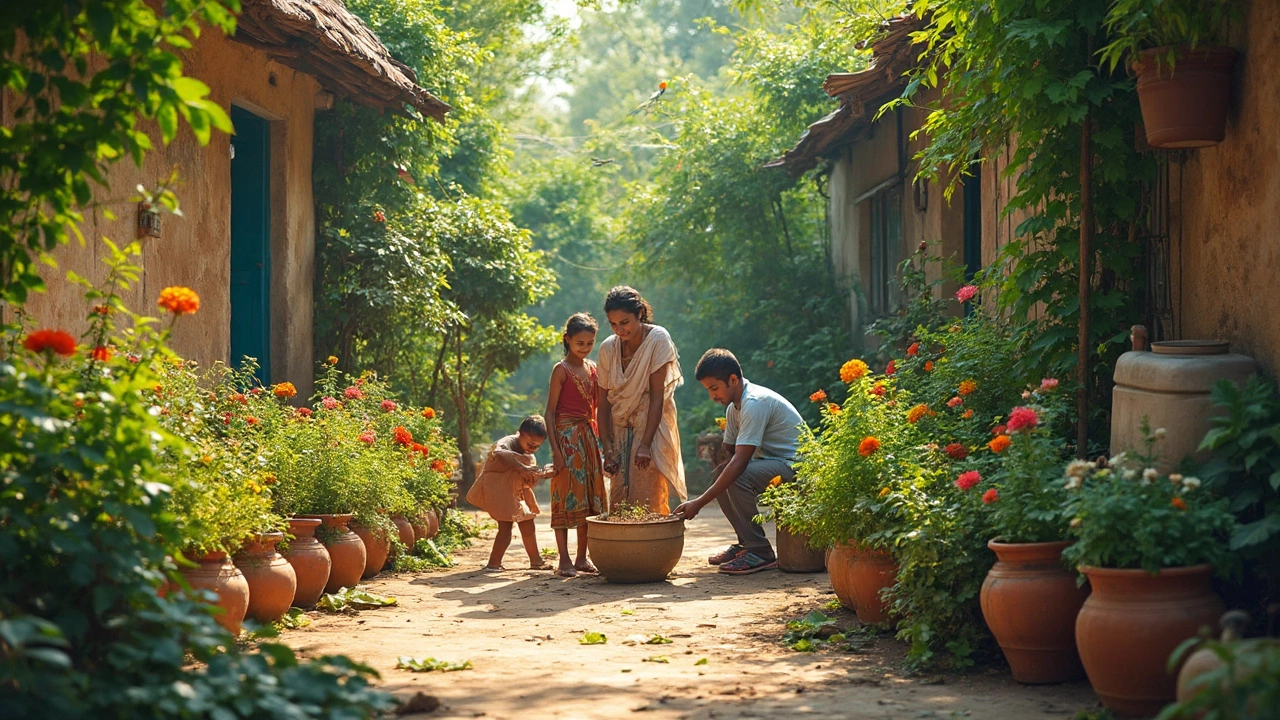
Environmentally Friendly Yard: Simple Ways to Grow Greener in India
When you build an environmentally friendly yard, a space designed to work with nature instead of against it. Also known as a sustainable garden, it uses less water, avoids harmful chemicals, and feeds the soil instead of stripping it. This isn’t about perfection—it’s about making small, smart choices that add up. In India’s hot, dry seasons and unpredictable monsoons, an eco-friendly yard isn’t just nice to have; it’s practical.
What makes a yard truly green? It starts with how you water. Running drip irrigation every day wastes water and harms roots. Instead, smart systems like soaker hoses, slow-release water lines that soak soil evenly or rainwater harvesting, collecting monsoon runoff in barrels for dry months cut usage by half. Then there’s soil. Compacted, lifeless dirt won’t grow healthy plants. Fixing it with compost, mulch, and aeration brings back worms, microbes, and root space. You don’t need fancy tools—just time and organic matter.
Chemical pesticides? They kill more than bugs. They poison bees, birds, and the good bacteria in your soil. Neem oil, a natural insecticide made from tree seeds stops pests without the side effects. It’s used by thousands of Indian gardeners because it works, is safe for pets, and doesn’t wash away in rain. Pair that with native plants like Mogra jasmine—bloomers that thrive in monsoon heat—and you’ve got a yard that needs less help from you.
Even small spaces count. A 10x10 patio or balcony can become a thriving, low-waste garden with the right containers, soil mix, and plant choices. Growing veggies like tomatoes or spinach in pots reduces food miles and gives you fresh produce without plastic packaging. And when your plants die? Don’t toss them. Turn them into compost. Homemade fertilizer from kitchen scraps feeds your soil and cuts trash.
You don’t need to redo your whole yard at once. Start with one thing: switch from daily watering to checking soil moisture. Swap one chemical spray for neem oil. Add a bucket to catch rain. These steps aren’t just good for the planet—they make your garden stronger, cheaper, and more alive. Below, you’ll find real fixes from Indian gardeners who’ve done exactly this: saved water, revived dead soil, killed pests naturally, and turned tiny balconies into lush escapes. No fluff. No theory. Just what works.
This guide lays out real-world steps to turn any yard into a more environmentally friendly space. It covers picking the right plants, conserving water, ditching pesticides, boosting biodiversity, and handling waste. Readers get clear, actionable tips for changes that matter. Everything’s aimed at helping you help the planet, one yard at a time. All tips come from daily life, not just theory.