Foreign Vegetables in India: What Grows Well and Why Gardeners Are Choosing Them
When you think of Indian gardens, you might picture tomatoes, brinjal, or okra—but more people are now growing foreign vegetables in India, crops originally from other continents that are now being cultivated locally for taste, nutrition, and market value. Also known as exotic vegetables, these plants are no longer just for restaurants or fancy supermarkets. They’re showing up in balcony pots, terrace gardens, and even small farm plots across Tamil Nadu, Maharashtra, and Karnataka. Why? Because they’re often more resilient, packed with nutrients, and can fetch higher prices than traditional crops.
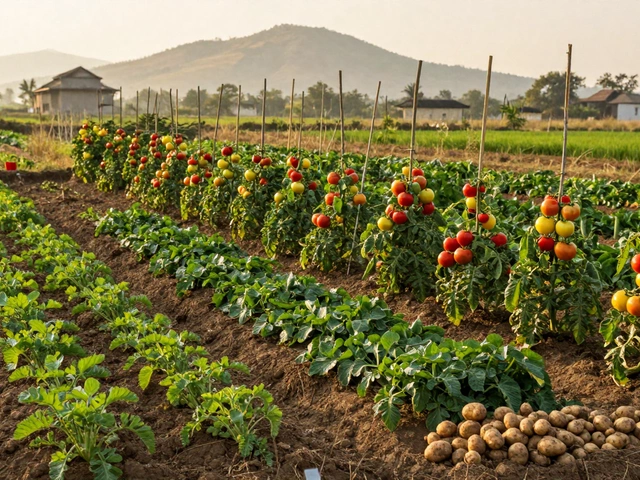
Take kale, a leafy green from Europe that’s now being grown in cooler parts of India. It doesn’t need much space, tolerates dry spells better than spinach, and sells for nearly double the price of local greens. Then there’s broccoli, a cool-season crop from the Mediterranean that’s adapting well to high-altitude regions like Himachal Pradesh. Gardeners are learning to use drip irrigation, a water-efficient system that delivers moisture directly to roots to keep these plants healthy without wasting water. Even cherry tomatoes, originally from South America but now a staple in urban Indian gardens, are thriving in containers thanks to smart soil mixes and organic fertilizers.
It’s not just about what’s trendy. Many of these foreign vegetables grow faster, resist local pests better, or need less chemical input than traditional crops. With neem oil, a natural insecticide widely used in Indian biotech gardening, growers are keeping pests away without harming bees or soil life. And because these plants often have shorter growing cycles, they fit perfectly into small-space gardens—like the ones you see on balconies in Mumbai or Delhi. You don’t need a big plot. Just good soil, the right timing, and a little patience.
Some gardeners are even using compost and rainwater harvesting—methods covered in our posts—to create self-sustaining systems that cut costs and reduce waste. The shift isn’t just about variety. It’s about efficiency, sustainability, and profit. Whether you’re growing on a 10x10 patio or a half-acre plot, foreign vegetables are proving they belong in Indian soil. Below, you’ll find real guides from gardeners who’ve made this switch: how they started, what failed, what worked, and how you can do it too.
Explore the story behind vegetables that are not native to India, from potatoes to tomatoes, and how these imports changed Indian farming and flavor forever.
Continue reading...