Healthy Soil: What It Is and How to Build It for Stronger Plants
When we talk about healthy soil, a living ecosystem teeming with microbes, fungi, and tiny organisms that break down organic matter and feed plant roots. It's not just dirt—it's the foundation every plant depends on. Most gardeners think healthy soil means dark, crumbly earth, but real health is invisible: it’s the billions of microbes working under the surface, the air pockets between particles, and the steady flow of nutrients that never run out. Without it, even the best seeds, fertilizers, and watering schedules fail.
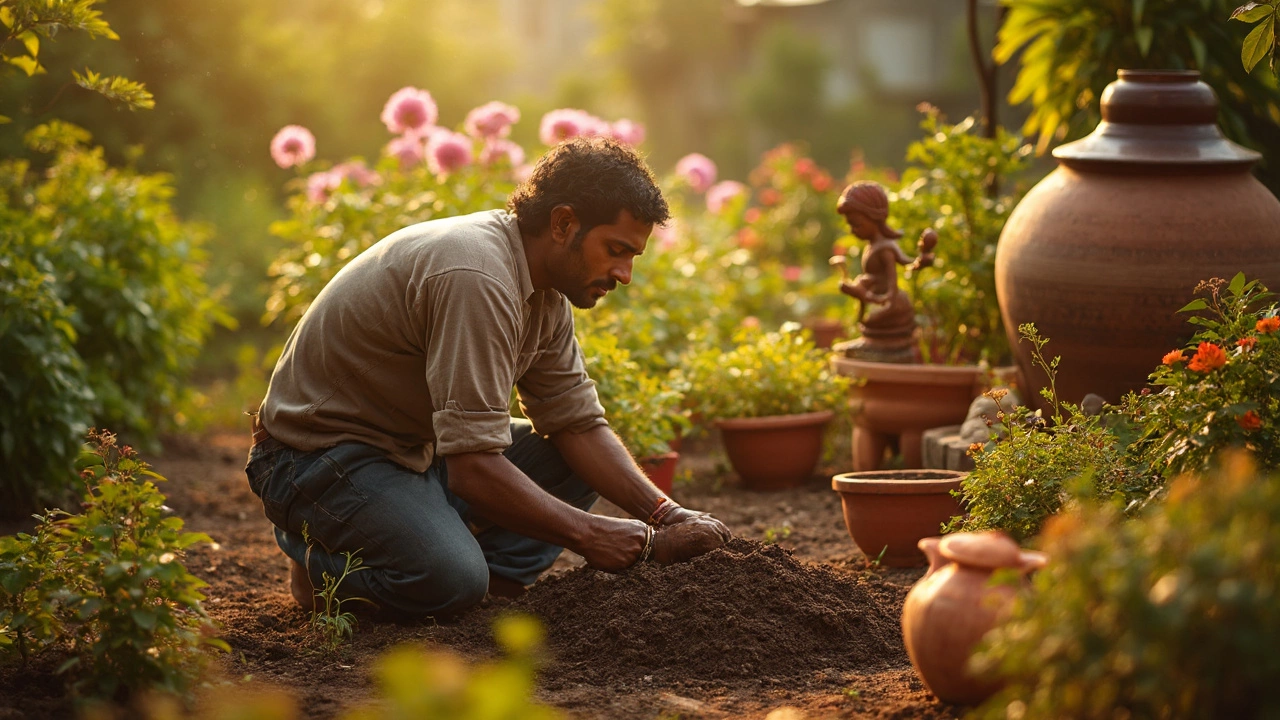
Compost, a natural mix of decomposed plant and food waste that adds life back into tired dirt is the simplest way to start. You don’t need fancy equipment—just layer kitchen scraps, dry leaves, and grass clippings, and let nature do the rest. Soil aeration, the process of breaking up compacted earth so roots, water, and air can move freely is just as important. Hard, packed soil is like concrete to roots. If your shovel struggles to sink in, or water pools on the surface instead of soaking through, your soil needs breathing room. A simple garden fork worked gently into the ground once or twice a year can make a huge difference.
Many people fixate on fertilizers, but soil amendment, any material added to improve soil structure, pH, or nutrient content comes first. Sand won’t fix clay. Lime won’t fix acid soil if the structure is crushed. The real fix? Organic matter. Mulch. Worm castings. Leaf mold. These aren’t quick fixes—they’re long-term investments. And they work. A 2022 study from the Indian Council of Agricultural Research found gardens using regular compost and mulch had 40% more active soil microbes than those relying on chemical fertilizers alone.
Look at the posts below. You’ll see how fixing compacted soil leads to better roots. How overwatering kills the very organisms that keep soil alive. How neem oil protects soil life while stopping pests. How homemade fertilizers feed the dirt, not just the leaves. This isn’t about buying products—it’s about understanding what’s happening beneath your plants. Healthy soil doesn’t need to be perfect. It just needs to be alive. And once it is, your plants will do the rest.
Improving garden soil is crucial for healthy plant growth. The article explores various treatments to boost soil quality, from simple techniques like composting to using natural soil amendments. It offers practical tips suitable for both beginners and experienced gardeners. Discover how to assess your soil type and apply the best methods for a thriving garden. Emphasizing sustainability, these approaches enhance long-term soil health.