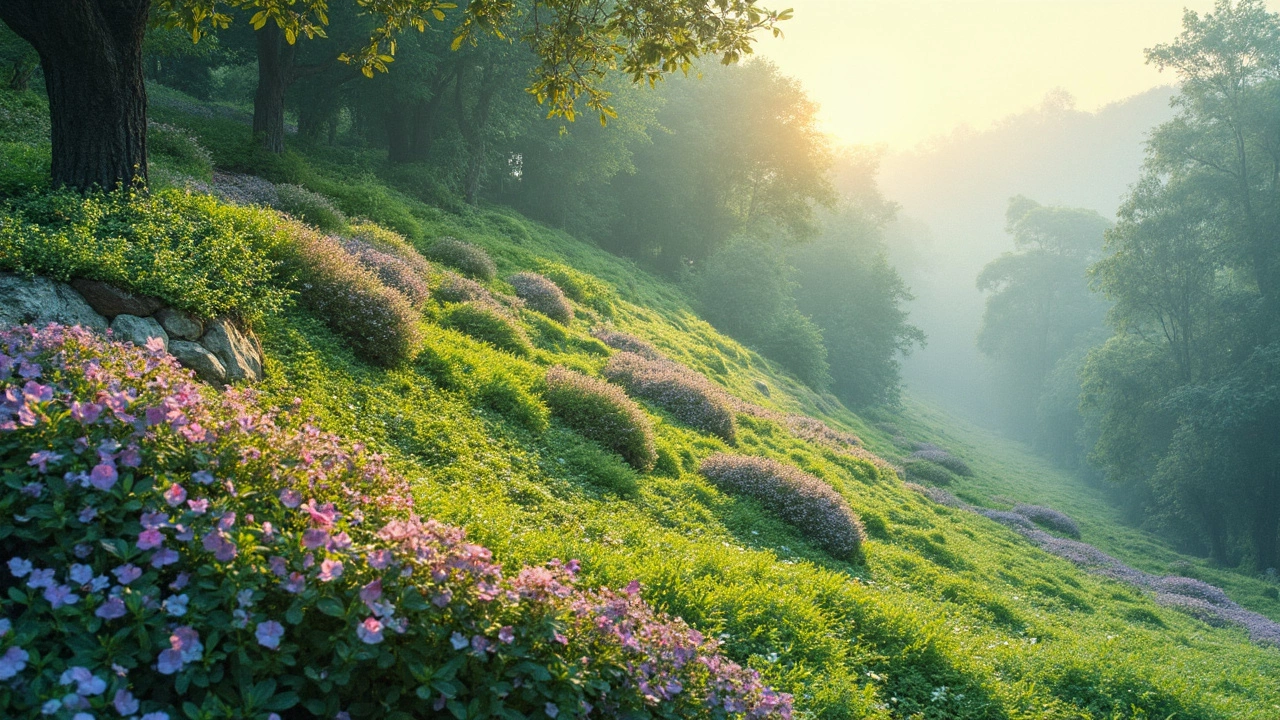
Hillside Planting: How to Grow Plants on Slopes Without Erosion
When you have a hillside planting, the practice of growing vegetation on sloped land to prevent soil loss and create usable garden space. Also known as slope gardening, it’s not just about making steep areas look nice—it’s about keeping your soil where it belongs. In India, where monsoons wash away topsoil and dry spells crack the earth, hillside planting isn’t optional. It’s survival. Without the right approach, your garden doesn’t just look messy—it disappears.
Most people try to grow regular plants on slopes and wonder why everything dies. The problem isn’t the plants—it’s the slope. Water runs off instead of soaking in. Soil slides. Roots can’t grip. That’s where terracing, building level steps into a hillside to slow water flow and create flat planting areas comes in. You don’t need fancy tools or concrete walls. Even simple rows of logs, stones, or woven bamboo can hold soil in place. And when you pair terracing with drought-tolerant plants, species that survive long dry periods with little water, often native to dry or rocky regions, you cut down on watering, reduce maintenance, and stop erosion at the source.
Think about what works in real Indian gardens. Plants like lantana, aloe vera, and native grasses like vetiver don’t just survive on slopes—they anchor the soil with deep roots. They don’t need daily watering. They don’t need fertilizers. And they won’t wash away in the first heavy rain. Meanwhile, heavy feeders like tomatoes or cabbage? They’ll fail unless you build a raised bed or container right into the slope. That’s the key difference: match the plant to the slope, not the other way around.
You’ll also find that mulching isn’t just a nice touch on a hillside—it’s your first line of defense. A thick layer of dry leaves, straw, or coconut husk keeps the soil cool, holds moisture, and stops rain from hitting the earth like a hammer. Combine that with a few strategically placed shrubs, and you’ve got a living barrier that outperforms any concrete retaining wall.
What you’ll find in the posts below aren’t just ideas—they’re real fixes from people who’ve tried and failed on slopes, then figured out what actually sticks. You’ll see how to pick the right plants for your region, how to build low-cost terraces with materials you already have, and how to stop water from turning your garden into a mudslide. No fluff. No theory. Just what works on the ground, in India’s heat, rain, and wind.
Hillside erosion can turn your backyard paradise into a slippery mess, but choosing the right ground cover can be a game changer. Discover the best plants for preventing soil erosion while beautifying your sloped garden. From fast-growing options to those offering lush greenery, find out which picks will fortify your hillside. We'll dive into practical tips and interesting facts to keep your garden slope in top shape.
Continue reading...