History of Tomatoes in India: How a Foreign Fruit Became a Kitchen Staple
When you think of Indian food, you probably picture spices, chilies, and tomatoes. But tomatoes aren’t native to India. They came from the Americas, brought over by Portuguese traders in the 1500s. At first, most Indians avoided them, thinking they were poisonous because they looked like deadly nightshade. It took over 200 years for tomatoes to win trust—and even longer for them to become the backbone of curries, chutneys, and sabzis we know today. This journey from suspicion to staple is one of the most surprising food stories in Indian gardening history.
Tomatoes, a fruit botanically but treated as a vegetable in cooking, is now the most widely grown crop in Indian home gardens and small farms. It also known as love apple thrives in India’s warm, seasonal climates, especially in states like Karnataka, Andhra Pradesh, and Maharashtra. Unlike native plants like brinjal or okra, tomatoes needed new farming methods—better soil prep, controlled watering, and pest protection. Their success changed how Indians thought about garden crops: not just for survival, but for flavor and color. Today, nearly every household garden grows at least one tomato plant, whether in pots on balconies or rows in backyard plots.
Indian cuisine, a diverse collection of regional cooking styles shaped by climate, trade, and culture. also called Bharatiya khana, didn’t have tomatoes until the late 1700s. Early recipes used tamarind, kokum, or amchoor for sourness. Once tomatoes were accepted, they quickly replaced those ingredients in many dishes because they were easier to grow and more forgiving. By the 1800s, British colonial kitchens in India were using tomatoes in stews, and by the 1900s, home cooks had fully adopted them into dal, sambar, and even masala chai bases. The tomato didn’t just add taste—it changed texture, depth, and even color in everyday meals.
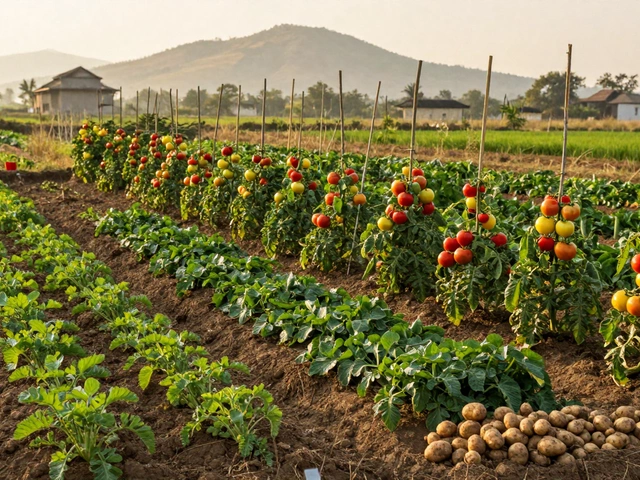
Tomato cultivation, the practice of growing tomatoes in Indian soil under local weather patterns. also called tomato farming, is now a major part of small-scale agriculture. Farmers in Tamil Nadu grow them in polyhouses, while rural families plant them between maize or chilli rows. Unlike in Europe, where tomatoes need greenhouses, Indian varieties adapted to monsoon rains and scorching summers. You’ll find dwarf types for balconies, sprawling vines for fields, and hybrid seeds bred for disease resistance—all thanks to decades of trial and error. Today, Central BioTech Gardening offers biotech-enhanced tomato seeds that improve yield and reduce rot, building on centuries of local knowledge.
What you’ll find in the posts below are real, practical stories from Indian gardeners who’ve learned how to grow tomatoes in tricky conditions—whether it’s fixing compacted soil, choosing the right drip system, or dealing with pests without chemicals. You’ll see how tomato care connects to broader gardening truths: soil health, water efficiency, and smart planting. This isn’t just about history. It’s about how a foreign plant became Indian—and how you can grow it better today.
Are tomatoes truly Indian? Discover where tomatoes come from, their fascinating journey to India, surprising facts, and pro gardening tips. Get the full scoop here.