Home Rice Farming: How to Grow Rice Successfully in Small Spaces
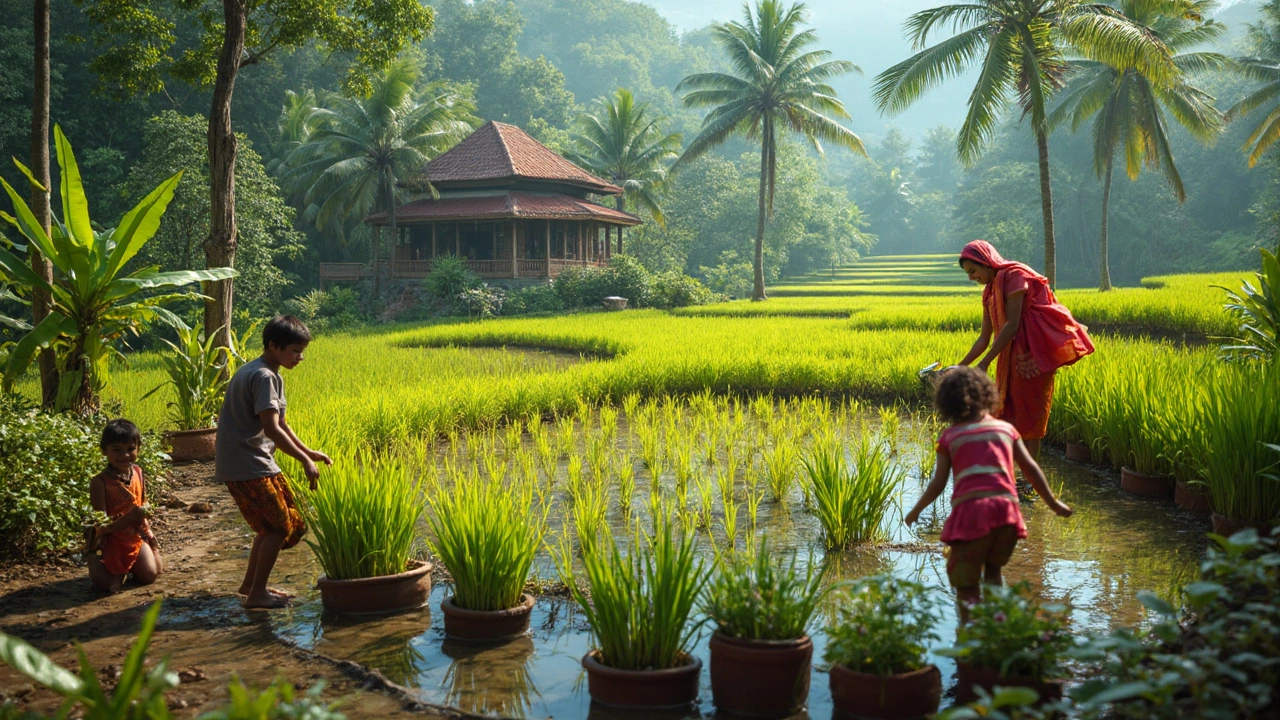
When you think of home rice farming, growing rice in your backyard, terrace, or even large containers instead of vast fields. Also known as small-scale paddy farming, it’s becoming a practical choice for urban gardeners and small landowners in India who want fresh, chemical-free rice without relying on big farms. Most people assume rice needs flooded fields and acres of land—but that’s not true anymore. With smart water management, improved soil blends, and biotech-enhanced seed varieties, you can grow rice in as little as a 10x10 space. This isn’t just a hobby—it’s a real way to cut grocery bills and reduce food miles.
Rice cultivation, the process of growing rice from seed to harvest. Also known as paddy farming, it’s deeply tied to India’s climate, especially during the monsoon season. But you don’t need monsoon rains to make it work. You can control water with drip systems, soaker hoses, or even rain barrels—just like the methods used in terrace gardens and balcony farms. The key is consistency: rice needs steady moisture, but not constant flooding. Too much water leads to root rot, just like with bonsai trees or orchids. And like any crop, it needs healthy soil. Compacted, lifeless dirt won’t cut it. You’ll need to aerate, add compost, and test pH levels—same as you would for vegetables or flowers. Biotech solutions are making this easier. Seed treatments that boost germination, natural insecticides like neem oil to protect young plants from pests, and soil conditioners that improve drainage are now accessible to home growers. These aren’t fancy lab experiments—they’re tools used by farmers across southern India to increase yields without chemicals.
What you’ll find in the posts below are real, tested approaches from people who’ve tried this themselves. Some grew rice in buckets on balconies. Others used recycled containers and rainwater harvesting to cut costs. You’ll see how to pick the right variety for your region, how often to water without drowning the plants, and why some gardeners skip traditional paddies entirely. You’ll also learn what doesn’t work—like daily irrigation, which many assume is necessary but actually harms rice roots. There’s no one-size-fits-all method, but there are clear patterns: the best results come from matching your setup to local weather, using smart soil practices, and avoiding overwatering. Whether you’re on a rooftop in Chennai or a small plot in Punjab, the principles are the same. This isn’t about farming like your grandparents did. It’s about farming smarter—with science, not guesswork.
Growing rice at home can be a rewarding experience but comes with challenges and benefits. This article explores whether home-grown rice is a viable option by delving into factors like space, resources, and time needed. Learn the step-by-step process and what to expect regarding yield and taste. Discover interesting tips for beginners and potential pitfalls to avoid. Find out if it's worth it for you.