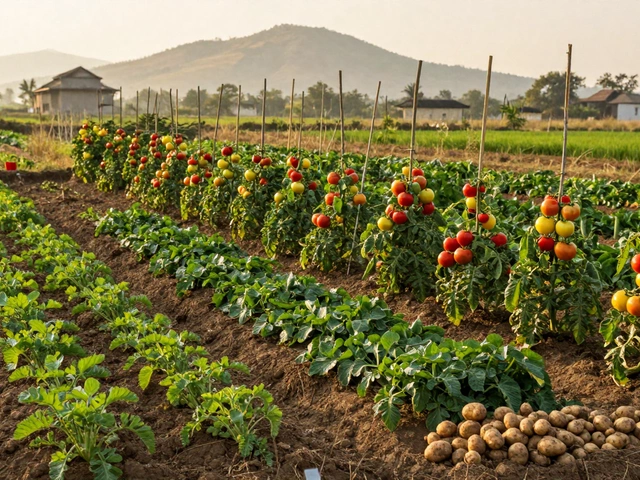
When you think of Indian cuisine, tomatoes are probably already in your mind—whether in chutneys, curries, or sabzis. But how tomatoes arrived in India, a non-native plant that became a dietary staple through colonial trade routes. Also known as love apples, they weren’t always part of Indian soil. Before the 1500s, no tomato existed in India. It came from the Americas, brought by Portuguese traders who landed on the west coast. They didn’t bring it for food at first—they saw it as an ornamental plant, strange and possibly poisonous. But Indian farmers, always quick to adapt, noticed how well it grew in warm climates and began experimenting.
The real shift happened when local cooks started using tomatoes not just as a side, but as a base. They discovered tomatoes added depth to lentils, balanced spice, and preserved well in heat. Over time, tomato cultivation, the practice of growing tomatoes for food production. Also known as tomato farming, it became widespread across Maharashtra, Andhra Pradesh, and Karnataka. Unlike in Europe, where tomatoes were feared for centuries, India embraced them fast—no superstitions, no delays. By the 1800s, tomatoes were already in village markets. Today, they’re the second most grown vegetable after onions, and their success is tied to how well they fit India’s seasonal rhythms and soil types.
Now, with biotech gardening, using science-based tools to improve plant growth, disease resistance, and water efficiency. Also known as agri-biotech, it becoming common in Indian home gardens, tomato growers have new options. Hybrid seeds, soil sensors, and organic nutrient boosters help tomatoes thrive even in compact urban spaces or dry seasons. You don’t need a huge plot to grow them. You just need to understand their roots—literally and historically.
That’s why the story of how tomatoes arrived in India isn’t just about history. It’s about resilience, adaptation, and how a foreign plant became essential. The same spirit drives today’s gardeners—using smart tools, learning from the past, and growing food that works with the land, not against it. Below, you’ll find real guides from Indian gardeners who’ve taken this legacy further—whether fixing soil for better tomato yields, choosing the right irrigation, or using natural insecticides like neem oil to protect their crops. These aren’t theory pieces. They’re what works on balconies, terraces, and small farms across the country.
Are tomatoes truly Indian? Discover where tomatoes come from, their fascinating journey to India, surprising facts, and pro gardening tips. Get the full scoop here.