Best Topography for Growing Rice: Field Requirements and Pro Tips
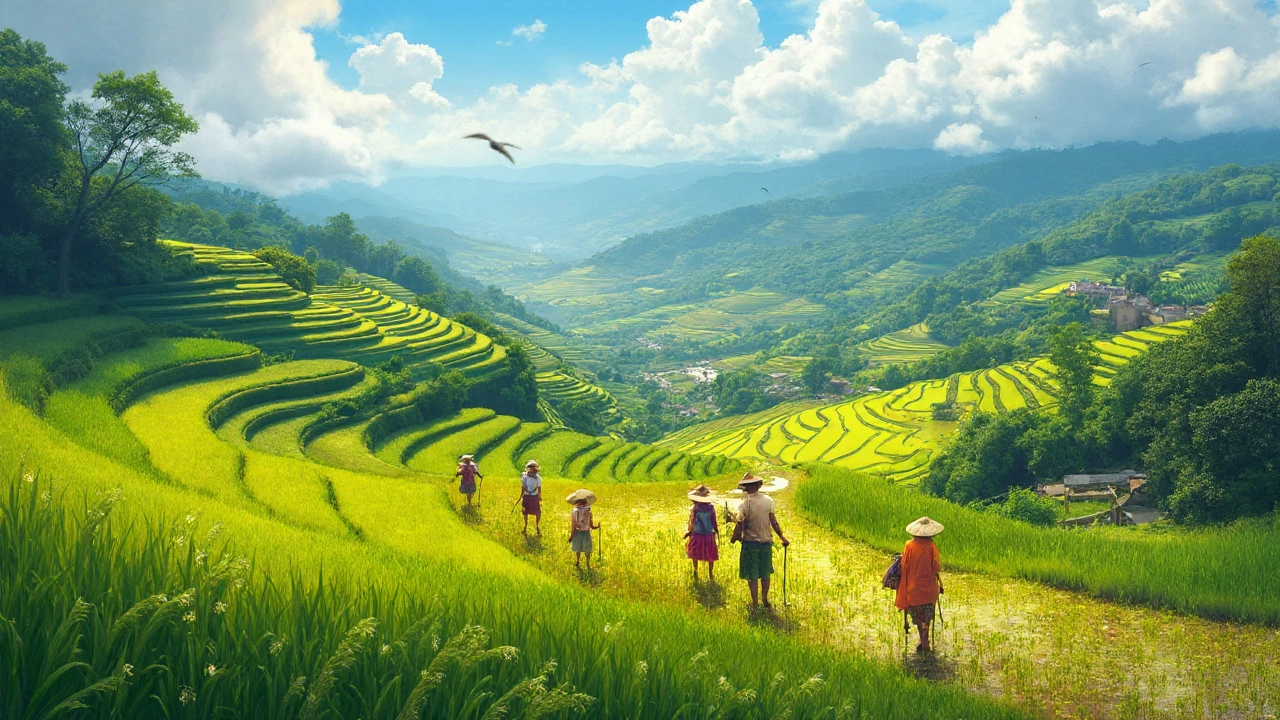
Explore which land shapes and conditions are best for rice crops. Learn about slopes, water control, soil tips, and rice field history.
Continue reading...When we talk about ideal rice fields, flat, well-leveled plots with controlled water flow designed for wetland rice cultivation. Also known as paddy fields, they’re not just muddy patches—they’re engineered systems that balance water, soil, and timing to grow the most rice possible. In India, where over 40% of farmland grows rice, getting this right means the difference between feeding a family and losing a season’s work.
An ideal rice field, a managed wetland system optimized for Oryza sativa growth under monsoon and irrigated conditions needs three things: flat land, good water retention, and soil that holds nutrients without turning to mud. Most farmers fail not because of bad seeds, but because their fields aren’t shaped right. Slopes as small as 1% can wash away seedlings. Leveling with laser guidance or simple hand tools makes a huge difference. Then there’s water—too much drowns roots, too little cracks the soil. The best fields use a mix of flood-and-drain cycles, not constant flooding. This isn’t guesswork; it’s based on studies from the Indian Council of Agricultural Research showing 20-30% higher yields when water is managed in stages.
Soil matters just as much. Ideal rice soil is clay-loam—fine enough to hold water but not so sticky it won’t let roots breathe. If your soil is sandy or too rocky, you’re fighting an uphill battle. Adding compost or green manure before planting helps, but it’s not a fix-all. You also need to think about drainage channels. Even in flooded fields, you need escape routes for excess water. That’s where water management, the practice of controlling irrigation and drainage to match rice growth stages comes in. It’s not about running water all day—it’s about knowing when to flood, when to drain, and when to let the soil dry slightly before the next cycle.
You’ll also see that soil prep for rice, the process of plowing, leveling, and amending land before transplanting seedlings often gets rushed. In many places, farmers plow once and plant right away. That’s a mistake. Proper prep means at least two plowings, followed by leveling with a wooden plank or laser level, then letting the soil settle for a week. This lets weeds die, lets the soil compact just enough to hold water, and gives seedlings a stable base.
And don’t forget the edges. Many ideal rice fields have raised borders—called bunds—that keep water in and prevent runoff. These aren’t just dirt walls; they’re part of the system. Some farmers even plant legumes on bunds to fix nitrogen naturally. It’s small, smart tweaks like these that turn an average field into a high-yield one.
What you’ll find in the posts below isn’t theory. It’s what works on the ground. From how to fix compacted soil before planting rice, to why drip irrigation sometimes beats flood systems, to what natural methods keep pests away without killing the soil—you’ll see real examples from Indian farms. No fluff. No jargon. Just clear, tested advice for building and managing rice fields that actually produce.
Explore which land shapes and conditions are best for rice crops. Learn about slopes, water control, soil tips, and rice field history.
Continue reading...