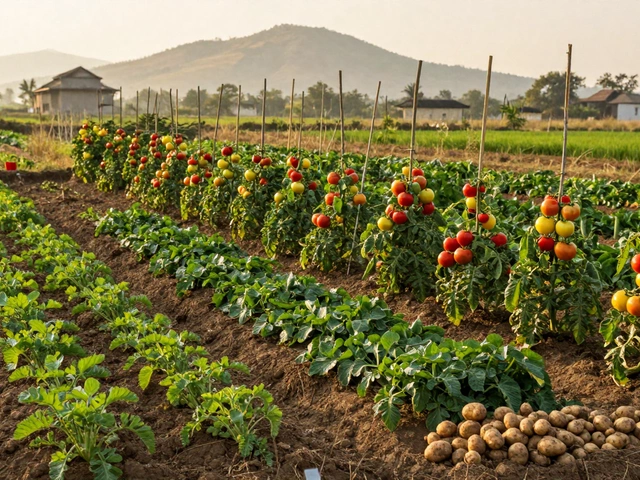
India vegetarian gardening: Grow food your way with biotech solutions
When you think of India vegetarian, a lifestyle rooted in plant-based eating and ethical food choices. Also known as plant-based living in India, it's not just about what’s on your plate—it’s about how your food is grown. In a country where over 30% of the population follows vegetarian diets, growing your own food isn’t a trend—it’s a practical, cultural norm. But growing vegetables, herbs, and fruits without relying on synthetic chemicals? That’s where modern biotech gardening, the use of science-backed, eco-friendly tools to enhance plant growth steps in. It’s not about GMOs or labs in white coats. It’s about using things like neem oil sprays, compost teas, and smart irrigation systems that work with India’s climate, not against it.
Many assume vegetarian gardening means just planting seeds and hoping for rain. But in India’s hot, uneven seasons, that’s a recipe for disappointment. The real secret? soil health, the foundation of any thriving garden, especially in urban spaces with compacted or nutrient-depleted earth. Posts in this collection show how to fix hard, lifeless soil with simple compost and aeration—no expensive tools needed. You’ll also find out why drip irrigation, a water-saving method that delivers moisture straight to plant roots isn’t always the best choice. Sometimes, soaker hoses or mulching do more with less. And if you’re growing on a balcony or terrace, you’ll learn which veggies actually thrive in small spaces—like tomatoes, spinach, and chilies—without needing acres of land.
What ties all this together? A clear understanding that vegetarian gardening in India isn’t about avoiding meat—it’s about working smarter with nature. From the monsoon-blooming Mogra jasmine that attracts pollinators to the endangered sandalwood that reminds us to protect native plants, every post here connects back to one truth: your garden can be both productive and kind. You’ll find guides on homemade fertilizers made from kitchen scraps, how to save water with rain barrels, and even how to grow the costliest fruit in India—durian—without breaking the bank. No fluff. No jargon. Just real methods used by Indian gardeners who’ve figured out how to grow more with less.
Below, you’ll find hands-on fixes for common problems—overwatered bonsai, compacted soil, failing orchids—and smart alternatives to expensive store-bought solutions. Whether you’re growing on a rooftop in Mumbai or a balcony in Delhi, these posts give you the tools to eat fresher, waste less, and garden with purpose. No guesswork. Just results.
India has the largest number of vegetarians in the world, and it’s not just about food—it’s deeply woven into the country’s culture, history, and daily routine. This article digs into why vegetarianism is so common in India, backed by facts and real-life experiences. You’ll learn how ancient beliefs, religion, and even home gardening shape what people eat. Plus, there are tips for starting your own veggie patch Indian-style. If you’ve ever wondered about the roots of India’s veggie obsession, here’s where you’ll find real answers.