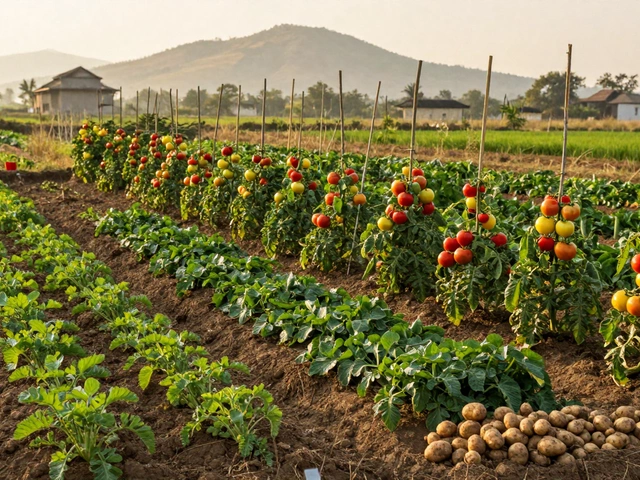
Indian farming: Practical tips for sustainable growth and biotech solutions
When it comes to Indian farming, the backbone of rural livelihoods and food security across India’s diverse climates. Also known as agriculture in the Indian subcontinent, it’s not just about planting seeds—it’s about working with monsoons, saving water, and keeping soil alive without expensive chemicals. Farmers here don’t have the luxury of endless rain or flat fields. They deal with hard-packed soil in Rajasthan, flooded fields in Assam, and scorching heat in Tamil Nadu. That’s why the most successful ones aren’t just working harder—they’re working smarter.
Soil health, the foundation of every good harvest. Also known as garden soil quality, it’s often ignored until crops start dying. Compacted soil, low organic matter, and wrong pH levels are the silent killers of Indian farms. But fixing it doesn’t need fancy machines. Compost, mulch, and aeration—things you can do with a hoe and some time—can bring life back to dead dirt. And it’s not just for home gardens. Even small landholders in Maharashtra and Odisha are seeing 30-40% better yields just by restoring their soil. Then there’s drip irrigation, a game-changer for water-scarce regions. Also known as precision watering, it’s not about running water every day. It’s about giving plants exactly what they need, when they need it. Many farmers still overwater because they think more means better. But in places like Karnataka and Andhra Pradesh, those who switched to smart drip schedules cut water use by half and doubled their tomato yields. And when pests show up? neem oil, a natural insecticide proven for decades in Indian villages. Also known as botanical pest control, it doesn’t kill bees, doesn’t poison groundwater, and costs less than chemical sprays. Farmers in Kerala and Madhya Pradesh use it on everything from mango trees to cotton—no synthetic toxins, no residue, just results.
Indian farming today isn’t stuck in tradition. It’s blending old wisdom with new tools. Rainwater harvesting, self-sustaining gardens, and organic fertilizers made from kitchen waste are no longer just for hobbyists. They’re becoming standard practice for families feeding their villages. You won’t find one-size-fits-all answers here. What works in Punjab won’t work in Meghalaya. But the principles—healthy soil, smart water, natural pest control—do. Below, you’ll find real guides from real growers: how to fix hard soil without buying expensive tools, why drip systems fail if you water daily, and which natural insecticide actually outperforms chemicals. No fluff. No theory. Just what works on Indian soil, in Indian weather, for Indian farmers.
Explore the story behind vegetables that are not native to India, from potatoes to tomatoes, and how these imports changed Indian farming and flavor forever.
Continue reading...