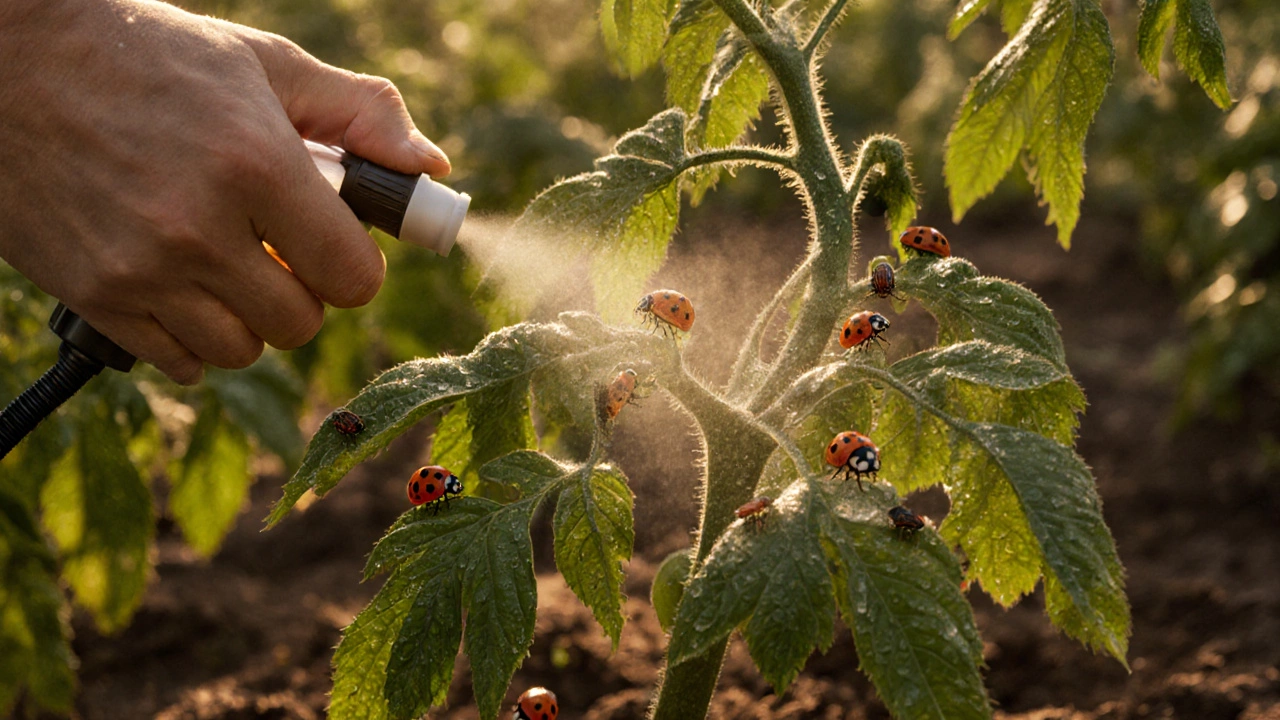
When you’re dealing with aphids, whiteflies, or mites on your plants, neem oil, a natural extract from the seeds of the neem tree, widely used in Indian agriculture and home gardens for its insect-repelling and fungicidal properties. Also known as azadirachtin-rich oil, it’s one of the few pest solutions that actually works without poisoning bees, ladybugs, or your soil. Unlike chemical sprays that wipe out everything, neem oil quietly disrupts pests’ life cycles—stopping them from feeding, mating, or laying eggs. It doesn’t kill on contact; it confuses them. That’s why it’s trusted by organic farmers in Kerala, home gardeners in Pune, and even large-scale vegetable farms in Maharashtra.
It’s not just about bugs. neem oil, also acts as a mild fungicide. It helps control powdery mildew, black spot, and leaf spot—common problems in India’s humid monsoon months. And because it breaks down quickly in sunlight and rain, it won’t stick around to poison your veggies or contaminate groundwater. You can spray it on tomatoes, roses, basil, and even bonsai trees without worrying about residues. Just don’t apply it under harsh midday sun—it can burn leaves. Early morning or late evening is best.
What makes neem oil special is how it fits into a bigger picture of organic gardening, a system that builds healthy soil and resilient plants instead of relying on synthetic fixes. It pairs perfectly with compost, mulch, and companion planting. If you’re using neem oil, you’re already moving away from chemical dependence. You’re choosing a method that’s been used in Ayurvedic traditions for centuries and now backed by modern science. In fact, studies from the Indian Council of Agricultural Research show neem oil reduces pest damage by up to 80% in vegetable crops when applied correctly.
But here’s the catch: not all neem oil is the same. Cold-pressed, 100% pure neem oil works. Cheap, diluted, or solvent-based versions? They’re useless. Look for labels that say "cold-pressed" and "100% pure." Mix it with a bit of mild soap and water to help it stick to leaves. Spray every 7 to 10 days during infestations, then cut back to once every two weeks as prevention.
People often ask if neem oil harms beneficial insects. The answer is no—if you use it right. Bees and butterflies don’t eat leaves, so they won’t ingest it. Predatory insects like lacewings and spiders aren’t affected. But if you spray it directly on a ladybug, it might hurt her. So avoid spraying open blooms. Focus on the undersides of leaves where pests hide.
Below, you’ll find real-world guides on how to use neem oil for specific plants, how to mix it at home, and how to spot when it’s working—or when you need to try something else. Whether you’re growing chillies on your balcony or managing a small farm in Tamil Nadu, these posts give you the exact steps that work in India’s climate—no fluff, no theory, just what gets results.
Neem oil is the most powerful natural insecticide, proven to stop pests without harming bees, pets, or soil. Learn how it works, how to use it, and why other natural options fall short.