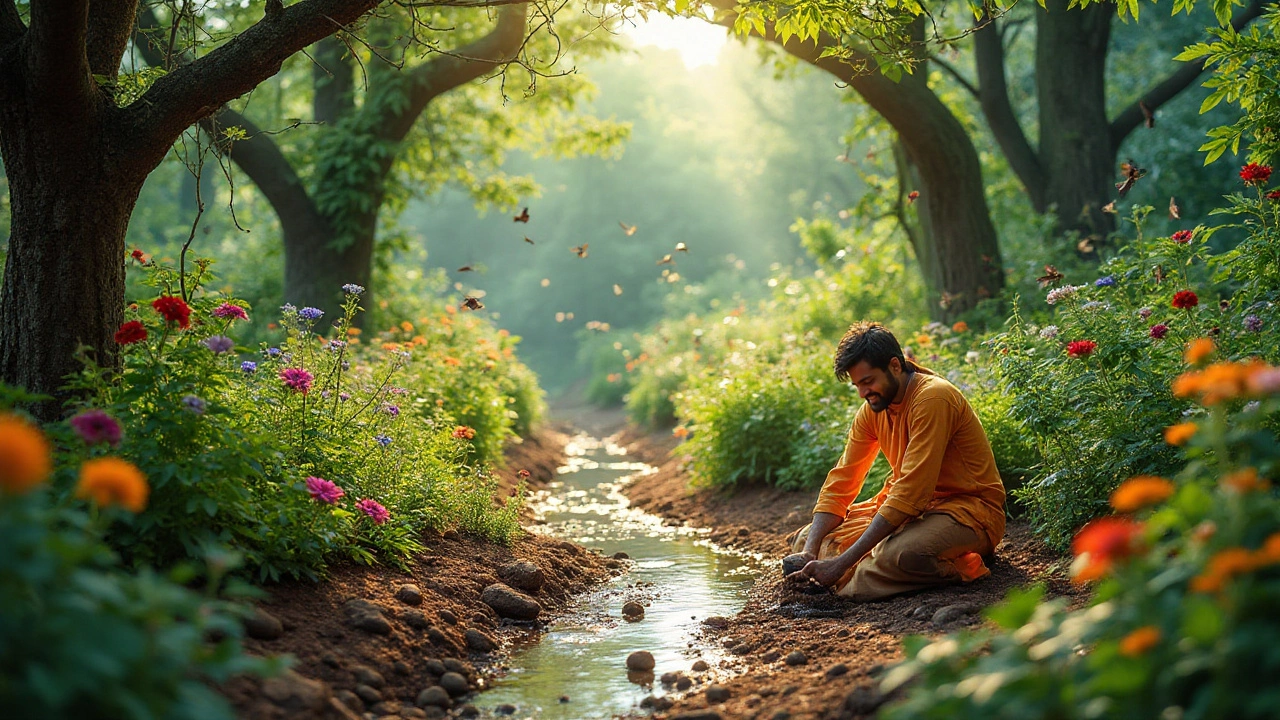
Permaculture Gardening: Sustainable Systems for Indian Homes
When you hear permaculture gardening, a design system that mimics natural ecosystems to create self-sustaining gardens. Also known as permanent agriculture, it’s not just about planting trees—it’s about building a living system where water, soil, plants, and even pests work together instead of against each other. In India, where water is scarce and soil is tired, permaculture isn’t a trend—it’s a survival tool. You don’t need a big plot. Even a 10x10 balcony can become a thriving, low-maintenance food forest if you understand how to stack functions—like using plant waste to feed the soil, or channeling rainwater to where it’s needed most.
Permaculture gardening requires three things: soil health, the living layer of organic matter, microbes, and structure that supports plant roots, rainwater harvesting, collecting and storing rain where it falls to reduce dependence on taps or pumps, and self-sustaining garden, a closed-loop system where inputs like compost and mulch replace bought fertilizers and irrigation. These aren’t separate ideas—they’re linked. Healthy soil holds water better. Rainwater feeding the soil feeds the plants. Plants drop leaves, those leaves break down, and the cycle repeats. No external inputs needed. That’s why gardeners in southern India are ditching drip systems and switching to swales and mulch piles—they’re saving money and time while growing more food.
You’ll find posts here that show you exactly how this works in real Indian conditions. Learn how to fix compacted soil with just compost and a hoe. See why neem oil is a natural pest control that fits perfectly into permaculture. Discover how to turn old pots and balcony space into a food-producing system using the same principles as a forest. Some posts talk about the toughest plants to grow—like Vanda orchids—and why they fail when you treat them like houseplants. Others show how to use homemade fertilizer recipes that come from kitchen scraps, not store shelves. You’ll see how rainwater harvesting cuts water bills, how mulching beats daily watering, and why a self-sustaining garden doesn’t mean more work—it means less.
This isn’t theory. It’s what people are doing on rooftops in Bangalore, in backyard plots in Kerala, and on balconies in Pune. You don’t need to be an expert. You just need to start with one thing: stop treating your garden like a machine. Start treating it like a living thing—and it’ll take care of you.
Permaculture gardening is a method that harnesses the natural ecosystems and cycles to create a sustainable and self-sufficient garden. It emphasizes working with nature rather than against it, using ethics of care for the earth, people, and fair share. Adopting permaculture principles can dramatically improve biodiversity and soil health while reducing waste and energy consumption. This comprehensive guide explores essential components of permaculture gardening, offering practical tips and techniques for sustainable living. Whether you're starting your first garden or looking to transform an existing space, permaculture provides valuable insights for a regenerative lifestyle.