Best Topography for Growing Rice: Field Requirements and Pro Tips
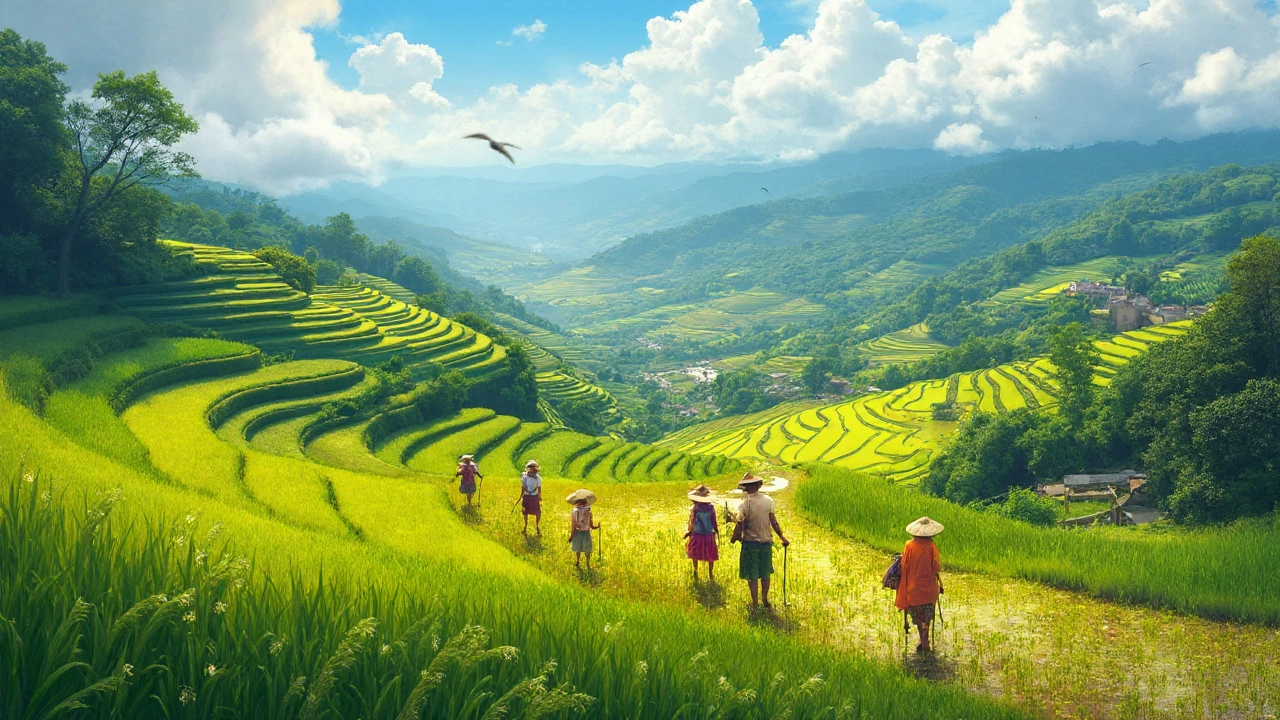
Explore which land shapes and conditions are best for rice crops. Learn about slopes, water control, soil tips, and rice field history.
Continue reading...When you grow rice, a staple crop that feeds over 60% of India’s population and thrives in wet, warm climates. Also known as paddy, it’s not just a food source—it’s a system that needs careful timing, water control, and soil care to succeed. Most farmers in India treat rice like a simple crop, but the best yields come from understanding its rhythm—when to flood, when to drain, and how to feed it without wasting money or water.
Water management, the single biggest factor in rice success, isn’t about watering every day. It’s about flooding fields at the right stage, then letting them dry slightly before the next flood. Too much water early on kills roots. Too little later on kills yield. Farmers who use soil moisture sensors, simple tools that tell you exactly how wet the ground is save up to 40% on water and get healthier plants. And it’s not just about irrigation—organic compost, made from farm waste, cow dung, or crop residue—boosts soil life and reduces the need for chemical fertilizers. Many small farmers in Punjab and West Bengal are switching to this mix and seeing better harvests with lower costs.
Rice varieties, like Basmati, Sona Masuri, or IR-64, aren’t interchangeable. Each needs different soil, water, and climate. Basmati thrives in the north with less rain, while Sona Masuri does better in the south with more humidity. Picking the wrong one for your region is like planting cactus in a swamp. And don’t ignore crop rotation, the practice of planting something else after rice to rest the soil. Growing lentils or mustard after rice fixes nitrogen and cuts pests naturally.
You’ll find posts here that cut through the noise. No fluff about fancy machines or expensive imports. Just real advice: how to fix waterlogged fields without draining them dry, why some farmers skip chemical sprays and still beat pests, and how to tell if your rice is ready to harvest by looking at the grains, not the calendar. These tips come from farmers who’ve been through droughts, floods, and price crashes—and kept growing. If you’re trying to grow rice in India, whether on a small plot or a few acres, what follows will save you time, money, and heartache.
Explore which land shapes and conditions are best for rice crops. Learn about slopes, water control, soil tips, and rice field history.
Continue reading...