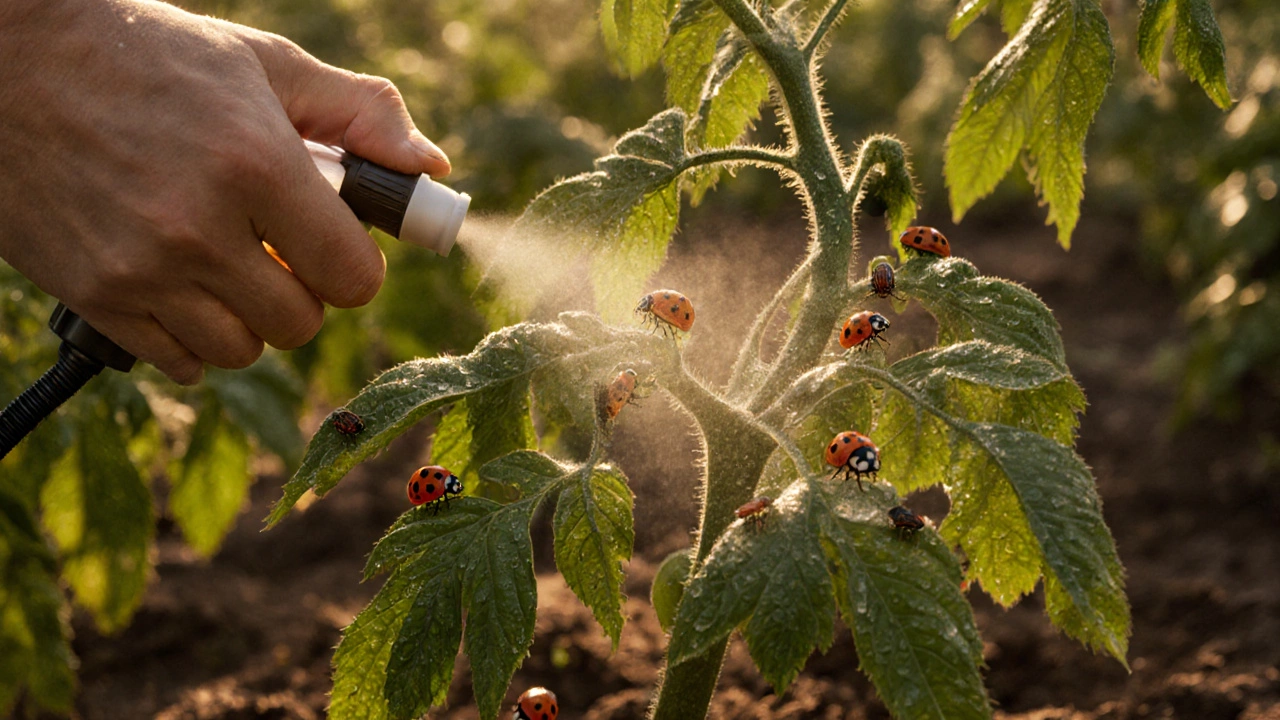
Safe Insect Killer: Natural Ways to Protect Plants Without Harm
When you need a safe insect killer, a non-toxic solution that targets pests without harming people, pets, or helpful bugs. Also known as organic pest control, it’s not just about killing bugs—it’s about keeping your whole garden healthy. Most store-bought sprays promise quick results but leave behind chemicals that hurt bees, earthworms, and even your vegetables. You don’t need poison to win this fight. In India’s humid climate, where pests like aphids, whiteflies, and spider mites thrive, the smartest gardeners use what nature already provides.
A beneficial insect, a natural predator like ladybugs or lacewings that eats harmful pests is often the first line of defense. Many gardeners in Mumbai and Pune have seen aphid outbreaks vanish after releasing a few hundred ladybugs. You don’t need to spray at all. Then there’s neem oil, a plant-based oil from the neem tree that disrupts insect feeding and reproduction without killing beneficials. It’s been used in Indian farms for centuries and works wonders on balcony tomatoes and terrace herbs. Mix it with water and a drop of soap, spray at dusk, and watch pests disappear while bees keep flying.
What makes something truly safe insect killer? It breaks down fast, doesn’t build up in soil, and doesn’t wipe out the good bugs. Garlic spray, chili-water mix, and even soapy water can do the job if used right. But timing matters. Spray in the early morning or late evening—not under hot sun—so you don’t burn leaves. And never spray when flowers are open; that’s when pollinators are working. The goal isn’t to wipe out every bug. It’s to keep pest numbers low enough that your plants stay strong.
You’ll find plenty of tips in the posts below on how to spot early signs of infestation, which plants naturally repel bugs, and how to build a garden that pests avoid in the first place. Some posts show you how to make sprays from kitchen scraps. Others explain why letting a few pests stay actually helps balance your garden ecosystem. You’ll learn what works in Delhi’s dry heat versus Chennai’s monsoon humidity. No fluff. No chemical ads. Just real, tested methods used by Indian gardeners who care about their soil, their bees, and their harvest.
Neem oil is the most powerful natural insecticide, proven to stop pests without harming bees, pets, or soil. Learn how it works, how to use it, and why other natural options fall short.