Suitable Land for Rice: What Soil, Slope, and Water You Really Need
When you think about growing rice, you might picture endless flooded fields—but not every patch of land can handle it. suitable land for rice, land that supports paddy cultivation through the right combination of water retention, soil texture, and gentle slope. It’s not just about having water nearby—it’s about how the land holds it, drains it, and feeds the roots. In India, where rice feeds over half the population, getting this right makes the difference between feeding a family and losing a season’s work.
clay-rich soil, a dense, fine-textured soil that traps water and resists drainage. Also known as heavy soil, it’s the backbone of most successful rice fields because it holds water longer than sandy or loamy types. But clay alone isn’t enough. The land needs a slight slope—just 1 to 2%—so water can flow evenly without washing away topsoil or pooling too deep. Too steep, and the water runs off before the roots can use it. Too flat, and you get stagnant water that kills roots and invites pests.
waterlogged soil, soil kept saturated for weeks during the growing cycle, essential for rice but deadly for most other crops. This isn’t just about irrigation—it’s about timing. Rice needs water early in its growth, but too much later on can rot the stems. That’s why farmers who succeed don’t just flood the land—they manage it like a slow-moving reservoir, letting it breathe between cycles. This is why posts on drip irrigation and soil aeration show up here: even rice farmers need to understand how water moves through the ground.
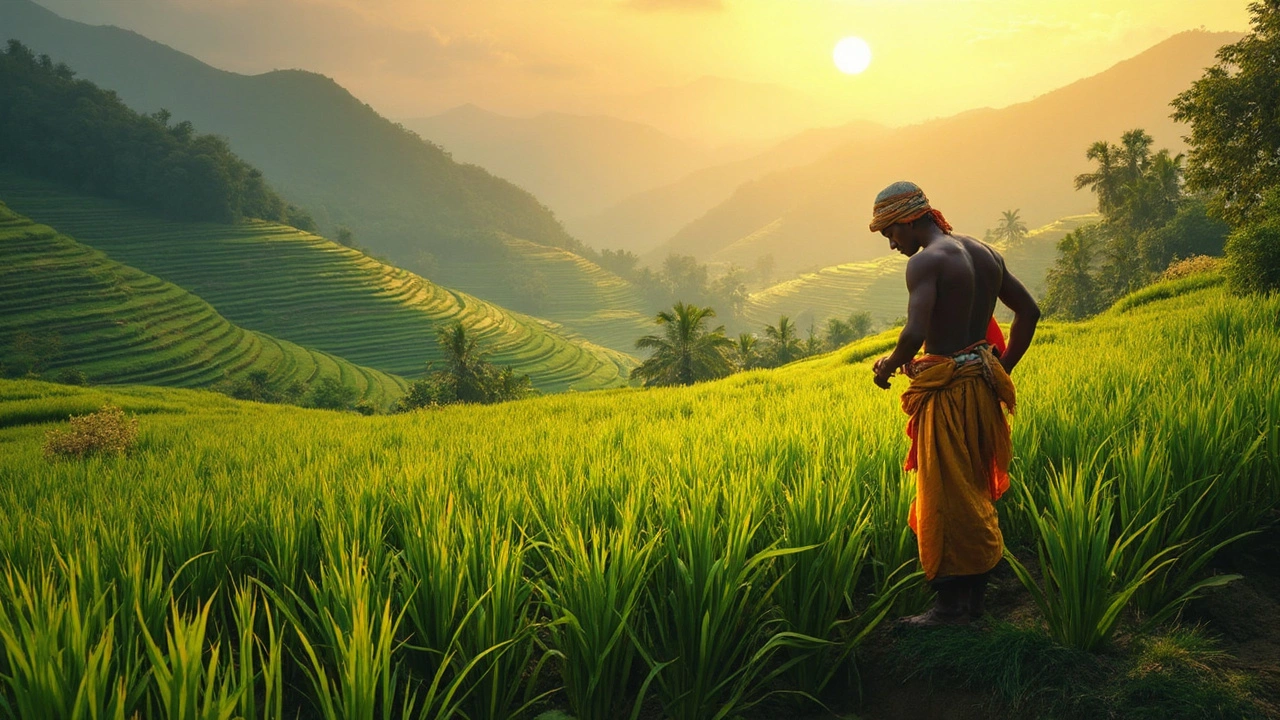
What about elevation? In the foothills of the Himalayas, rice grows on terraced slopes. In the Gangetic plains, it fills flat floodplains. The common thread? Consistent water access and soil that doesn’t let it escape too fast. You can’t grow rice on rocky hilltops or sandy coastal dunes—not without massive, unsustainable inputs. The land itself has to do most of the work.
And here’s the thing most guides miss: suitable land for rice isn’t just about what’s under your feet. It’s about what’s around it. Nearby water sources, drainage channels, and even neighboring crops matter. If your neighbor’s field drains into yours, you might get too much water. If your land sits higher than the canal, you’ll need pumps. Real rice farming isn’t about following a checklist—it’s about reading the land like a story.
That’s why the posts below cover things like fixing compacted soil, reviving old garden land, and managing water efficiently. They’re not just about flowers or balconies—they’re about understanding how earth holds life. Whether you’re a small farmer in Odisha or a backyard grower testing rice in a large tub, the same rules apply. The land speaks. You just have to listen.
Below, you’ll find real-world fixes, common mistakes, and practical tips from people who’ve tried—and failed—before getting it right. No theory. No fluff. Just what works when the next harvest depends on it.
Growing rice successfully starts with choosing the right kind of land. Rice needs environments with the right water management, soil type, and temperatures. Understanding these key factors can make or break a successful rice yield. Learn about the best conditions for rice farming, including topography, climate, and soil properties. This guide provides practical tips and interesting facts to help growers optimize their rice production.