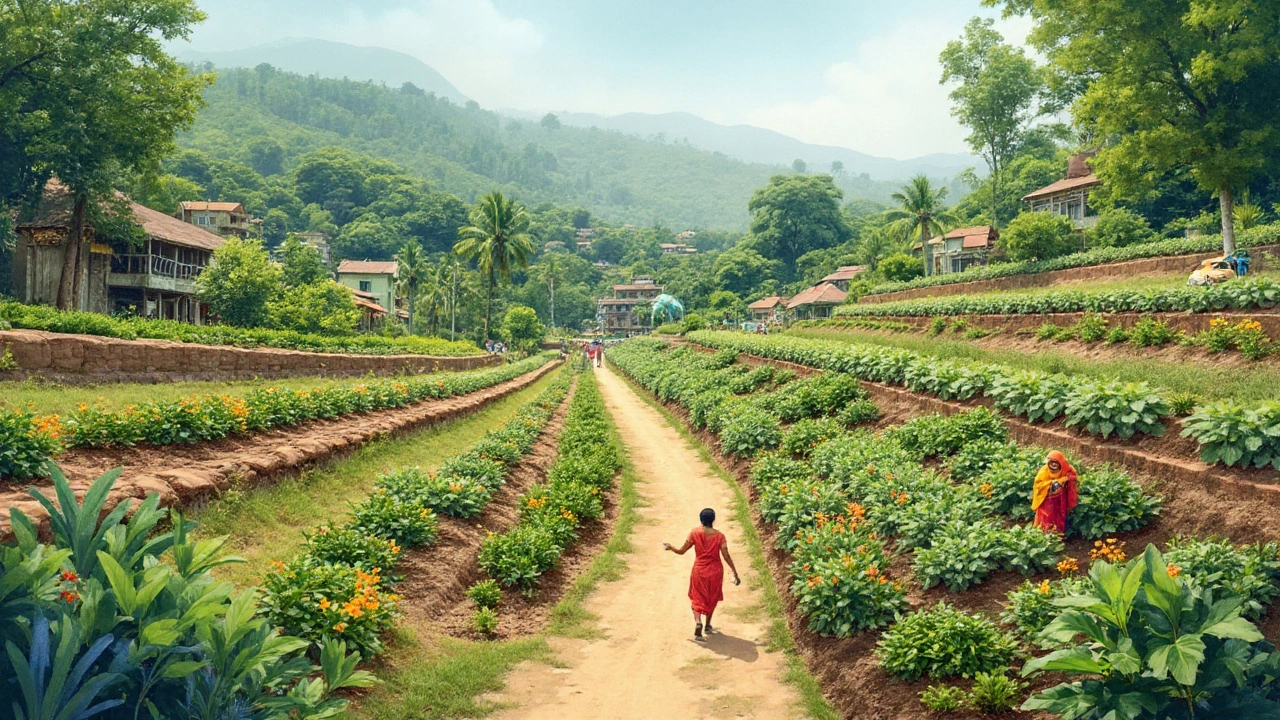
Swale Gardening: How to Use Swales for Water Conservation and Healthy Soil
When you hear the word swale, a shallow, vegetated ditch designed to capture and slow down rainwater runoff. Also known as contour ditch, it’s not just a hole in the ground—it’s a smart way to turn wasted water into garden fuel. In places like India, where monsoons dump tons of rain in weeks and the rest of the year stays dry, swales help you keep that water where it’s needed: in the soil, not running off to drains.
Swales work with nature, not against it. They’re built along the contour of land, so water spreads out slowly instead of racing downhill and washing away topsoil. This means less erosion, more moisture for roots, and fewer irrigation bills. They’re often paired with permaculture, a design system that mimics natural ecosystems to create sustainable, low-maintenance gardens because they don’t need pumps, pipes, or electricity. You don’t need fancy tools either—just a level, a shovel, and some mulch. Many Indian gardeners are starting to use them on terraces, farms, and even small balconies with raised beds to catch runoff from rooftops.
Swales also tie into rainwater harvesting, the practice of collecting and storing rainwater for later use in gardening and farming. Think of a swale as the first step: it doesn’t store water in a tank, but it stores it in the ground. That’s why it helps fix compacted soil, hard, dense dirt that blocks water and roots from moving freely. When water sits longer in the soil, it softens it, feeds microbes, and lets roots grow deeper. That’s exactly what you need for tougher plants like Vanda orchids or durian trees, which struggle when the soil dries out too fast.
People who use swales don’t just save water—they save time. No more daily watering. No more soggy roots from overwatering. No more guessing if your drip system is working right. Swales give you a passive system that works through every season. In the monsoon, they soak up the flood. In summer, they slowly release what they held. And if you plant native shrubs or deep-rooted perennials along the edges, they become living filters that clean water and attract pollinators.
You won’t find swales in every garden yet, but the ones that use them are seeing better growth, less stress on plants, and lower bills. The posts below show real examples: how to build one on a terrace, how to combine it with mulching to cut water use even more, and how it fits into a self-sustaining garden that doesn’t rely on taps or timers. Whether you’re dealing with hard soil, dry spells, or just want to grow more with less, swales offer a simple, proven fix.
Confused by swales and terraces? Discover their core differences, best uses, and tips for sustainable gardening. Learn how they manage water and control erosion.
Continue reading...