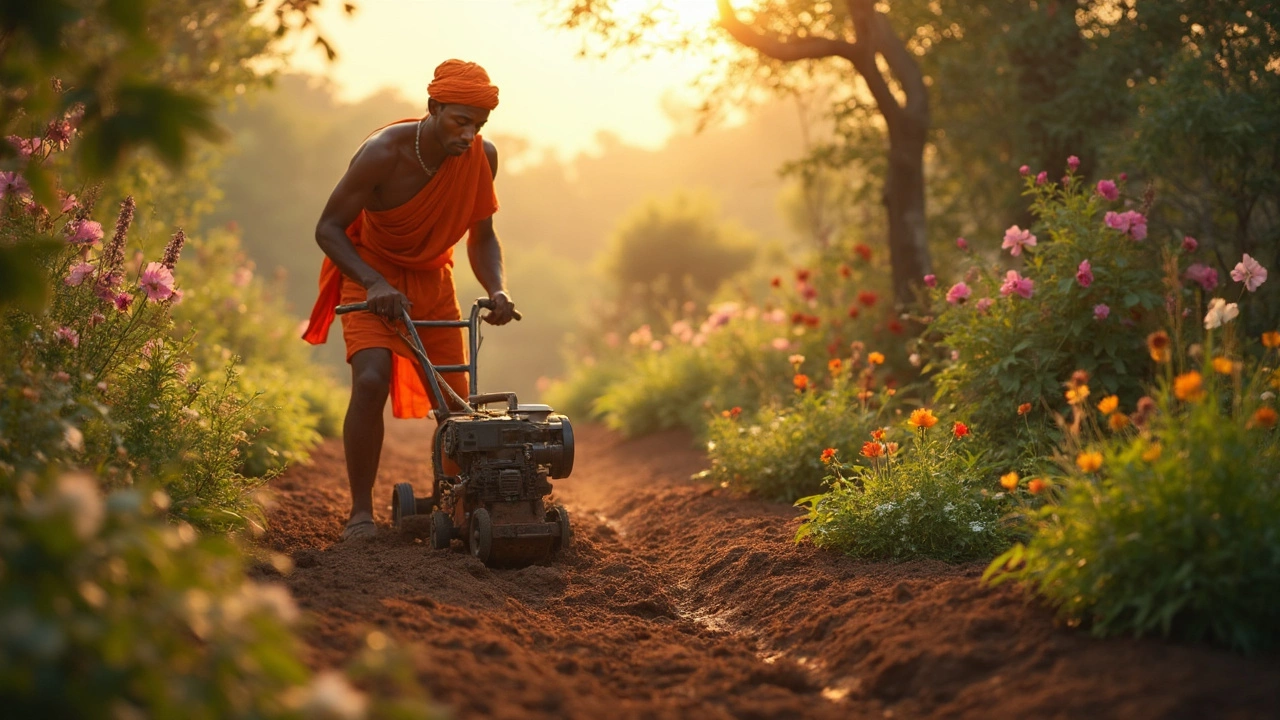
Tiller: What It Is, How It Helps Your Garden, and Why It Matters
When you’re starting a garden in India’s dry or clay-heavy soil, a tiller, a mechanical tool that churns and loosens soil to prepare it for planting. Also known as a rototiller, it’s not just for big farms—home gardeners use it to turn hard, baked earth into rich, workable ground. If your soil feels like concrete after the monsoon dries up, or if your seedlings keep dying because roots can’t spread, a tiller might be the fix you’ve been overlooking.
A tiller doesn’t just dig. It breaks up compacted soil, dense layers of earth that block water, air, and root growth, which is a silent killer in Indian backyards. Think of it like giving your garden a deep breath. Without it, even the best compost or fertilizer can’t reach plant roots. It also mixes in organic matter—like the compost you make from kitchen scraps—so nutrients spread evenly. This connects directly to posts about fixing compacted soil, a common problem in urban and terrace gardens across India, and how soil aeration, the process of allowing air to move through soil makes the difference between a struggling plant and a thriving one.
Most people think tilling is only for big plots, but even a small balcony garden with pots can benefit from pre-tilling the soil before filling containers. If you’ve ever tried planting in hard, dry earth and felt like you were fighting the ground, you know how frustrating it is. A tiller saves time, reduces back strain, and makes your garden more productive. It’s especially useful before planting vegetables like tomatoes or potatoes, or when reviving old garden beds that haven’t been touched in years. You’ll see why this tool shows up in guides about soil improvement, composting, and even rainwater harvesting—because healthy soil holds water better and lets roots grow deeper.
Some gardeners avoid tillers because they worry about damaging soil structure or killing beneficial microbes. That’s true if you overdo it. But used right—once a season, before planting—it’s one of the most effective ways to reset your garden. The posts below cover exactly that: how to use a tiller without hurting your soil, when to skip it entirely, and what alternatives like fork-aeration or mulching can do if you don’t own one. Whether you’re growing durian in the south or herbs on a Mumbai balcony, the condition of your soil decides everything. And a tiller? It’s often the first step to making that soil work for you, not against you.
Struggling with hard soil in your garden? A tiller might be your best ally! This article delves into how a tiller can assist in breaking up compacted earth, making it ready for planting. Discover practical tips for effectively using a tiller and learn why this tool could be a game-changer for your gardening efforts. We will also explore some interesting facts about soil types and which tillers work best under challenging conditions.