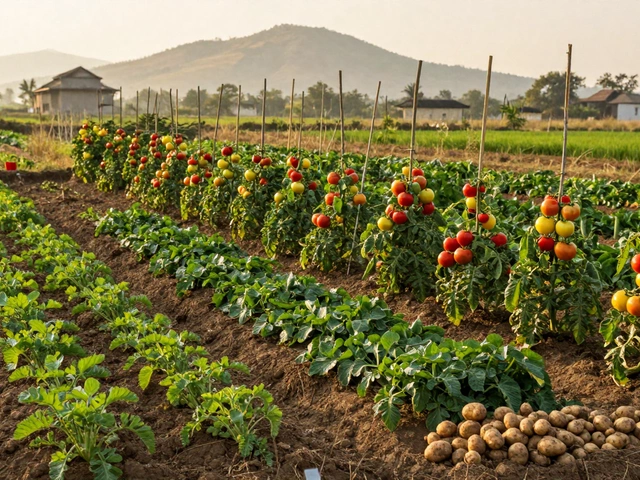
Tomato Cultivation in India: Best Practices, Common Mistakes, and Proven Tips
When you think of tomato cultivation in India, the process of growing tomatoes in India’s diverse climates using science-backed methods to maximize yield and health. Also known as Indian tomato farming, it’s one of the most common yet misunderstood gardening tasks across the country. Many gardeners assume tomatoes are easy because they grow wild in markets—but getting them to thrive at home? That’s another story. The real challenge isn’t just planting seeds. It’s understanding how India’s heat, monsoons, and soil types change what tomatoes need at every stage.
Success starts with soil, the foundation of healthy tomato plants, especially in India where compacted or sandy soil is common. Most home gardeners skip soil testing and end up with yellow leaves or rotting roots. The fix? Mix in compost, loosen hard ground, and make sure drainage is good—no standing water. Tomato roots hate wet feet, especially during monsoons. You don’t need fancy tools. A garden fork, some well-rotted manure, and a little patience do the job.
Then there’s watering, how often and how much you water tomatoes, which varies wildly by region and season in India. Running a drip system every day? That’s a mistake. Too much water invites fungus, especially in humid areas like Kerala or West Bengal. Instead, check the top two inches of soil—if it’s dry, water deeply. If it’s damp, wait. This isn’t guesswork. It’s observation. And it’s the difference between a handful of tomatoes and a basket full.
pest control, managing insects and diseases without harsh chemicals, is another make-or-break factor in Indian tomato growing. Neem oil isn’t just trendy—it’s proven. It stops whiteflies, aphids, and fruit borers without killing bees or poisoning your soil. Spray it early, before pests take over. Don’t wait until leaves curl and fruits drop. Prevention beats cure every time.
And don’t forget seasonal timing, when to plant tomatoes based on your region’s weather patterns in India. In North India, plant in late September for a winter harvest. In South India, you can grow year-round—but avoid the peak monsoon. In the hills, spring planting gives you the sweetest fruit. Timing isn’t optional. It’s the backbone of good tomato cultivation.
What you’ll find in the posts below aren’t generic tips. These are real fixes from gardeners who’ve been there—failed crops, saved plants, and small wins that add up. You’ll learn how to fix compacted soil that’s killing your tomatoes, why drip irrigation isn’t always the answer, and how homemade fertilizers beat store-bought ones in India’s heat. No fluff. No theory. Just what works when the temperature hits 40°C and your neighbor’s plants are turning brown.
Are tomatoes truly Indian? Discover where tomatoes come from, their fascinating journey to India, surprising facts, and pro gardening tips. Get the full scoop here.