Tomato Origin: Where It Came From and Why It Matters for Indian Gardens
When you bite into a ripe tomato, you’re tasting something that traveled thousands of miles and survived centuries of change. The tomato, a fruit botanically but treated as a vegetable in cooking, originally came from the Andes Mountains in South America. Also known as love apple, it was once thought to be poisonous in Europe and ignored for over 200 years before becoming a global staple. It wasn’t until Spanish explorers brought it back in the 1500s that tomatoes began their slow journey into kitchens worldwide—including India’s.
India’s climate is now one of the best in the world for growing tomatoes, but that doesn’t mean every variety thrives here. The wild ancestors of today’s tomatoes grew in dry, rocky slopes with intense sun and little water. That’s why modern Indian gardeners who treat tomatoes like delicate houseplants often fail. They overwater, use heavy soil, or plant them in shade. The truth? Tomatoes need heat, good drainage, and strong sunlight to produce sweet, juicy fruit. They’re not picky about fancy fertilizers—they’re picky about conditions that mimic their origin.
Understanding tomato origin isn’t just history—it’s a practical guide. If you know they evolved in a place with low humidity and high UV exposure, you’ll stop misting their leaves. You’ll stop planting them where rain pools. You’ll start choosing varieties bred for Indian summers, not European cool climates. Heirloom tomatoes from Mexico or Peru often struggle here, while hybrids like Pusa Ruby or Arka Vikas were developed specifically for our monsoons and heat. That’s why knowing where tomatoes came from helps you pick the right ones for your garden.
Even the way tomatoes are grown today ties back to their roots. In the Andes, they grew wild among other plants, not in neat rows. That’s why companion planting—like growing them with basil or marigolds—works so well here. It’s not magic. It’s biology. And when you see posts about drip irrigation schedules, soil compaction fixes, or natural insecticides like neem oil, you’ll notice a pattern: they all point back to one thing—growing tomatoes the way nature intended, not the way marketing says you should.
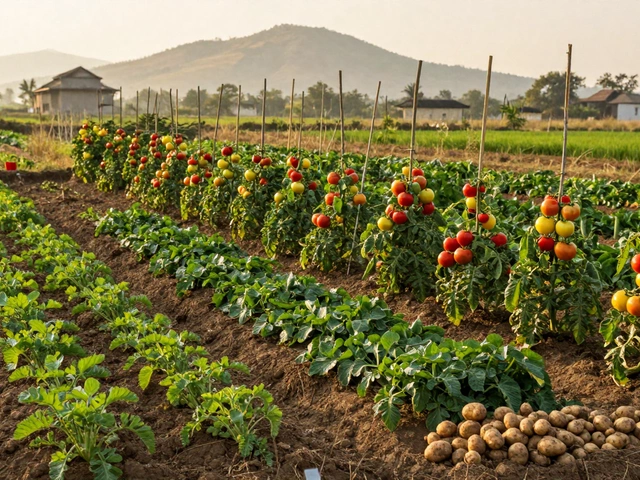
Below, you’ll find real-world advice from Indian gardeners who’ve learned this the hard way. No fluff. No theory. Just what works when your tomato plants are wilting under 40°C heat, or rotting after a sudden downpour. Whether you’re growing in a balcony pot or a backyard plot, the origin of the tomato holds the key to making it thrive where you live.
Are tomatoes truly Indian? Discover where tomatoes come from, their fascinating journey to India, surprising facts, and pro gardening tips. Get the full scoop here.